CONNECTED | Sep 17, 2026
Embracing the innovative designs of Isamu Noguchi

Every so often, I have one of those moments at work when I have to stop and think, this is a pretty great gig.
I was thinking that just the other day while meeting with Karina H. Corrigan, Deputy Chief Curator and H. A. Crosby Forbes Curator of Asian Export Art, and the wonderfully talented PEM intern Nina Bourne, who was translating for visiting artist Yao Desheng. Yao Desheng is currently in Salem painting details on Yin Yu Tang, and is one of few living Huizhou masons who still practice that art form.
He was also excited to work with the PEM Shop to offer some of his works on paper, which we’ll feature closer to the reopening of the Yin Yu Tang interpretative gallery next spring, following preservation work on the house. It’s always especially great when the work happening behind the scenes can eventually find its way into the hands of visitors and collectors.
Photo by Kathy Tarantola/PEM.
So all that is to say, it's not every Friday that you find yourself in the company of a distinguished curator, an exceptional young translator and someone preserving a skill that may otherwise disappear. A pretty remarkable day at work. An amazing learning experience and a good reminder of just how fortunate I am to be part of it. And, frankly, a subject for a whole different blog post.
But lately, we’ve been focused on something else: getting ready to install our merchandise selection for Isamu Noguchi: “I am not a designer”, an exhibition organized by the High Museum of Art in Atlanta that the entire PEM team has been working on for the better part of two years. It opens to the public with a curator talk and storytelling session for families on September 19.
Noguchi, of course, is internationally renowned for his vast array of designs for midcentury furniture, lighting and public plazas, among many other things. Although Noguchi was American and spent most of his life living in New York, he was deeply inspired by Japan; his father was the Japanese poet Yonejiro Noguchi. His mother, poet Leonie Gilmour, was influential in forming and encouraging her son's artistic interests.
Even if the Noguchi name doesn’t immediately ring a bell, chances are you know Isamu Noguchi's work. His designs and forms have become so influential and so widely reproduced, reinterpreted and replicated, that they have almost taken on a life of their own.
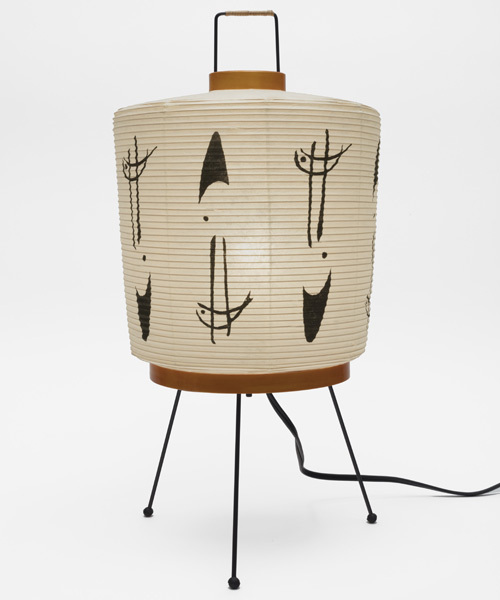
Isamu Noguchi, Akari 2A-UKAI, 1954. Paper, bamboo, metal. Photo: Kevin Noble. The Noguchi Museum Archives, 150911. © The Isamu Noguchi Foundation and Garden Museum, New York / Artists Rights Society (ARS), New York
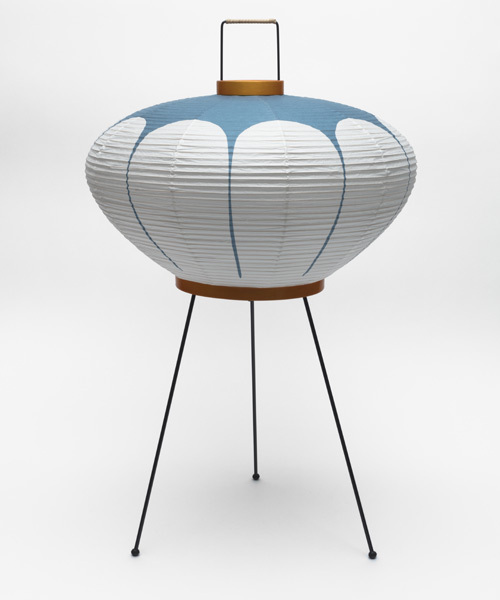
Isamu Noguchi, Akari 9AD, c. 1954. Paper, bamboo, metal. Photo: Kevin Noble. The Noguchi Museum Archives, 150941. © The Isamu Noguchi Foundation and Garden Museum, New York / Artists Rights Society (ARS), New York
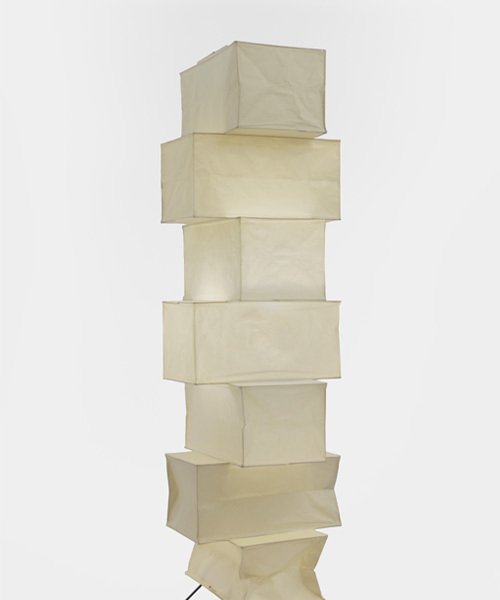
Isamu Noguchi, Akari UF4-L10, 1986. Paper, bamboo, metal. Photo: Kevin Noble. The Noguchi Museum Archives, 150988. © The Isamu Noguchi Foundation and Garden Museum, New York / Artists Rights Society (ARS), New York
That’s one of the things I find fascinating about working with subjects like Noguchi. You can encounter the work without necessarily knowing the name behind it. And then, when you start looking more closely, you realize just how much of the visual world around us has been shaped by one remarkable imagination.
Now we’re at the point where all the research, planning, conversations and logistics of the past couple of years start to become something very tangible: the installation itself.
Now stuff gets real.
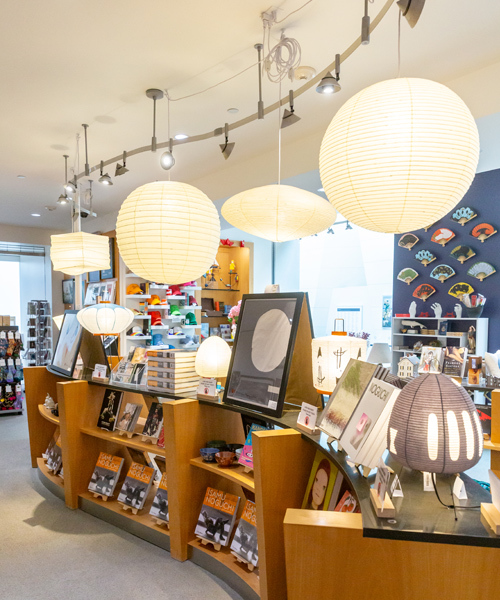
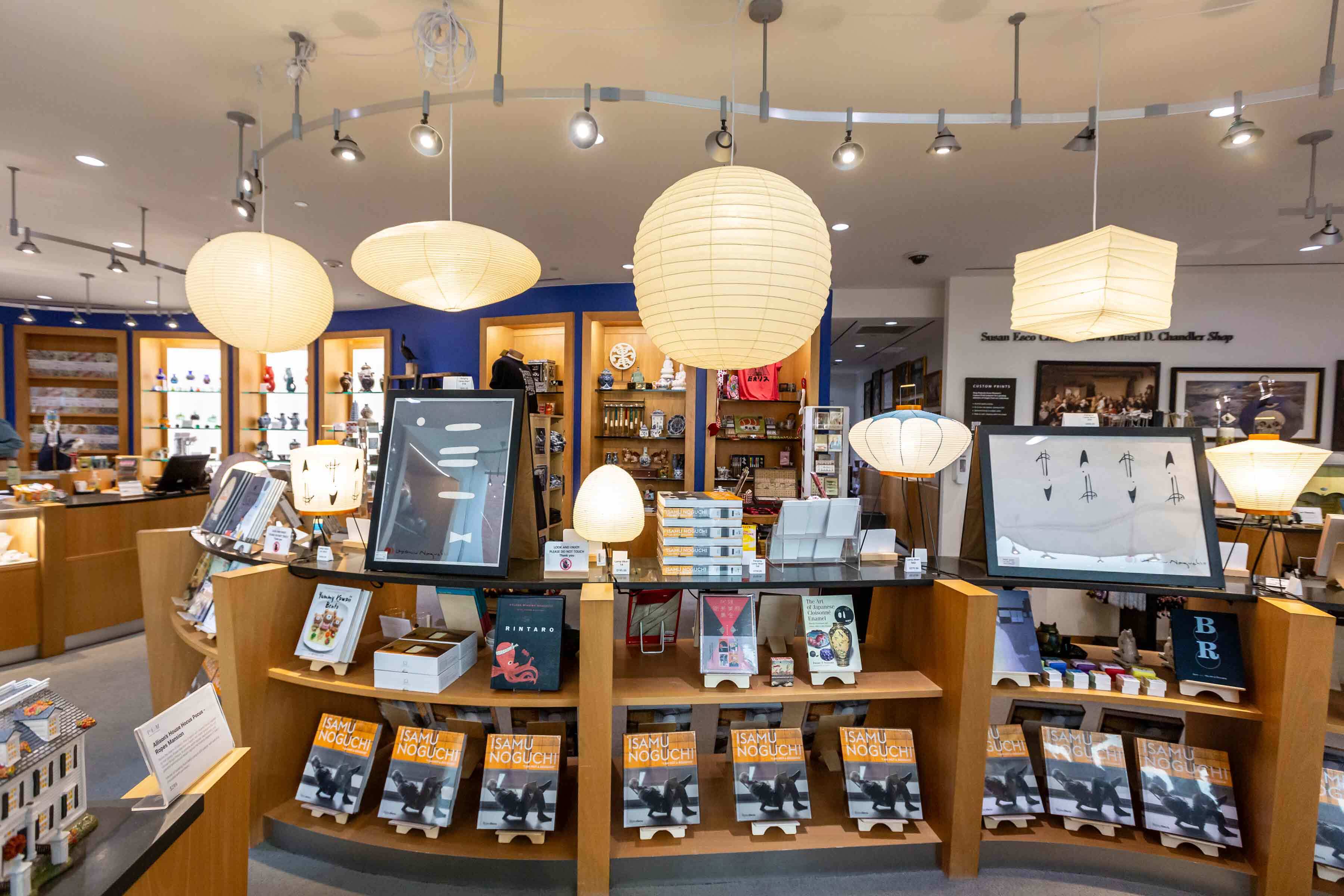
Akari lights now available at the PEM Shop. Photo by Kathy Tarantola/PEM.
But let’s go back a couple of years, to when PEM decided to take this exhibition on. My first instinct was to contact the people at the Noguchi Museum Shop in New York, who, I have to say, are among the loveliest and most helpful people in the museum world. If I could make one of those heart finger things that people do these days, I would do so unabashedly.
When I met with them, I was immediately reminded of my days of leading retail operations at the Isabella Stewart Gardner Museum. Not because of the content — Noguchi was a modern minimalist, while Gardner was very much a Gilded Age maximalist — but because of something much more intangible: their particular reverence for the founder.
At the Gardner, we always used to say that we spoke about “Isabella” as though she might walk into the room at any moment. At the Noguchi Museum, Noguchi's work isn’t simply the subject of the museum; his presence seems to permeate the place. There is a genuine sense that everything they do there is, in some way, still in conversation with him.
And then there was their museum shop.
Their approach to merchandising gave us some great inspiration for our own PEM Shop install for the show. It was minimalist, of course, but also thoughtful and considered, very much in keeping with Noguchi’s aesthetic without feeling overly precious.
What really caught my attention was the variety of Akari lighting and, especially, the way it was displayed. We took a cue from that for our own approach. The other great thing about working on a show like this is that it makes you look harder at your own collection. Suddenly, objects you may have walked past countless times start to look different. You begin looking for connections, influences, materials, techniques and unexpected ways into the story.
In this case, PEM’s Japanese Art collection has become a source of inspiration in itself. We’re looking at objects not only for what they are, but also for how they might help create connections around Noguchi, to Japanese craft and design, to materials and techniques and to the broader cultural context in which his work developed.
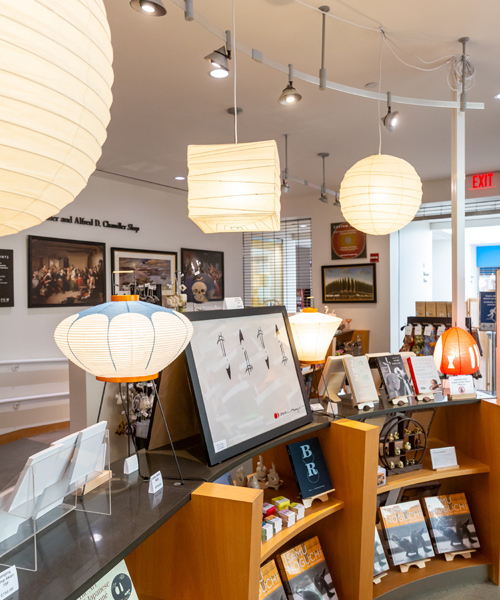
Photo by Kathy Tarantola/PEM.
That’s one of the unexpected pleasures of putting an exhibition together: Sometimes the show sends you looking into your own collection with fresh eyes. Nearly 20 pieces from PEM’s collection of Japanese art will be on view as part of the exhibition.
Akari may actually be where the Noguchi influence is most familiar to people who don’t necessarily know his name. His paper lanterns and lighting designs have been so influential that many people may already be living with something Noguchi-inspired without realizing it. (Ahem, looking at you, Ikea.)
And there’s another fascinating story behind those seemingly simple paper lights. While there are now countless interpretations and reproductions of the form, Noguchi’s original Akari designs continue to be made by Ozeki & Co., the family-run workshop in Gifu, Japan, with whom Noguchi developed his designs. So although the lamps are often replicated, they are never exactly like the original patterns, still fabricated today using the same wooden molds made in Noguchi's lifetime.
What I love about this story is that Noguchi didn’t simply borrow from a traditional craft. He pushed it somewhere new. He took the familiar materials and techniques of Japanese paper lantern-making and challenged them with new forms, scale, geometry and light. And that experimentation didn’t exist in isolation. The language of form, light, balance and space that he explored through Akari would continue to resonate throughout his sculpture.
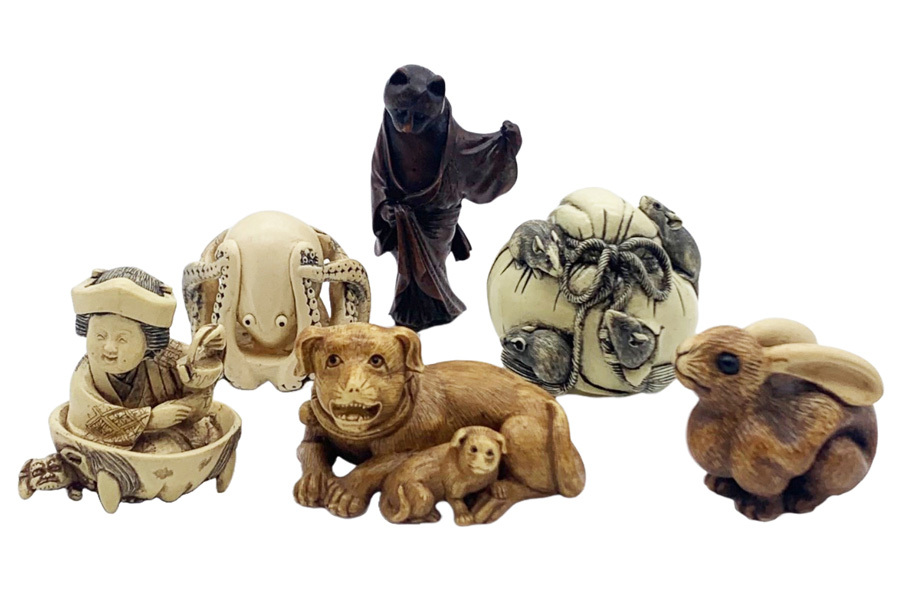
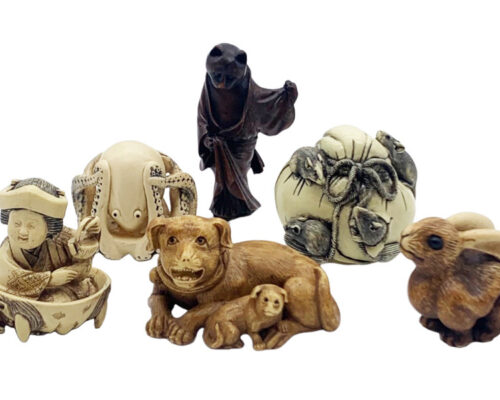
Netsuke reproductions for sale in the PEM Shop.
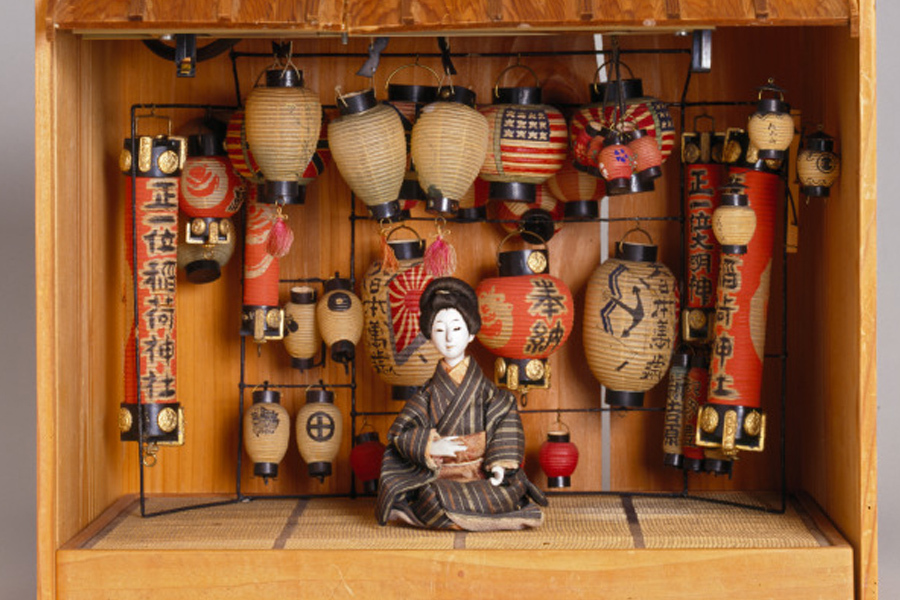
Artists in Japan. Model of a lantern shop, before 1906. Wood, silk, paper, metal, and pigment. PEM, museum purchase, made possible by the R. C. Billings Fund, 1906.
So something that can look incredibly simple — a paper lantern, a few ribs of bamboo or wire, a sheet of handmade paper, a light inside — turns out to be connected to a much larger story about craft, design, sculpture and the relationship between tradition and innovation.
Which, of course, is one of the reasons exhibitions like this are so much fun. You start with an object. Then you start pulling the thread. And before you know it, a fully formed exhibition opens, with an amazing gallery installation, interpretive and educational materials and yes, really cool items in the store.
And this is where our work with the Noguchi Museum gets particularly exciting for the PEM Shop.
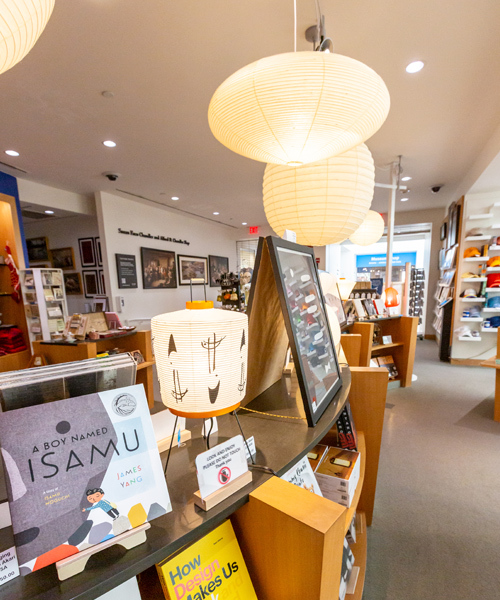
Photo by Kathy Tarantola/PEM.
Through a very special collaboration with the Noguchi Museum Shop, we’ll be offering more than a dozen different Akari designs for a limited time, including floor lamps, tabletop lamps and hanging lights. If you’ve ever admired these iconic forms, this will be a pretty special opportunity to see so many of them together, and maybe take one home.
We’ll also have a limited number of Noguchi prints, beautifully printed on washi paper. They are gorgeous. Trust me. If you have even the slightest midcentury modern aesthetic, you may want to get here early, as we don’t have many.
Alongside the Noguchi pieces, we’ll be offering a selection of other objects that reflect the beauty, craftsmanship and design traditions of Japan, all chosen to complement the exhibition and the ideas we’ve been exploring around it.
And if you want to get a preview, many of these pieces will be featured in our upcoming digital holiday catalogs for the PEM Shop and Marine Hall Mercantile. Sign up online (enter your email in the "Stay up to date" field at the bottom of this page) to make sure you’re on the list when they arrive in November.
This whole journey has revealed, for me, the power of art and the vision of one person, and how that vision can influence the world around us in ways that are easy to take for granted as we move through our daily lives.
Becoming more familiar with Noguchi’s work has been eye-opening. I have found myself looking at things through a new filter, noticing his influence on contemporary design in dozens of new items on the market. It’s amazing what you begin to see once you are tuned in to what to look for, and I know that applies to many other visionaries in the art world.
Once you’ve visited this exhibition, you too might start seeing signs of artists hidden in plain sight.
Isamu Noguchi: “I am not a designer” is on view September 19, 2026–January 3, 2027. Join us on September 19 for a curator talk and keep an eye on our events page for Noguchi-inspired art workshops and other events throughout the run of the exhibition.
Related posts
Blog
A Q + A with the architects who preserve and maintain Yin Yu Tang
8 Min read

BLOG
Reproducing 19th-century friendship rings from PEM’s collection
7 min read
BLOG
Vintage clothing and exhibition-themed jewelry come to the PEM Shop though creative collaborations
PEM’s Director of Merchandising collaborates with local makers on vintage fashion and exhibition-inspired jewelry
12 MIN READ

Press Release
PEM presents a new major retrospective on the design work of Isamu Noguchi
Read on