PEM presents a new major retrospective on the design work of Isamu Noguchi
Released June 17, 2026
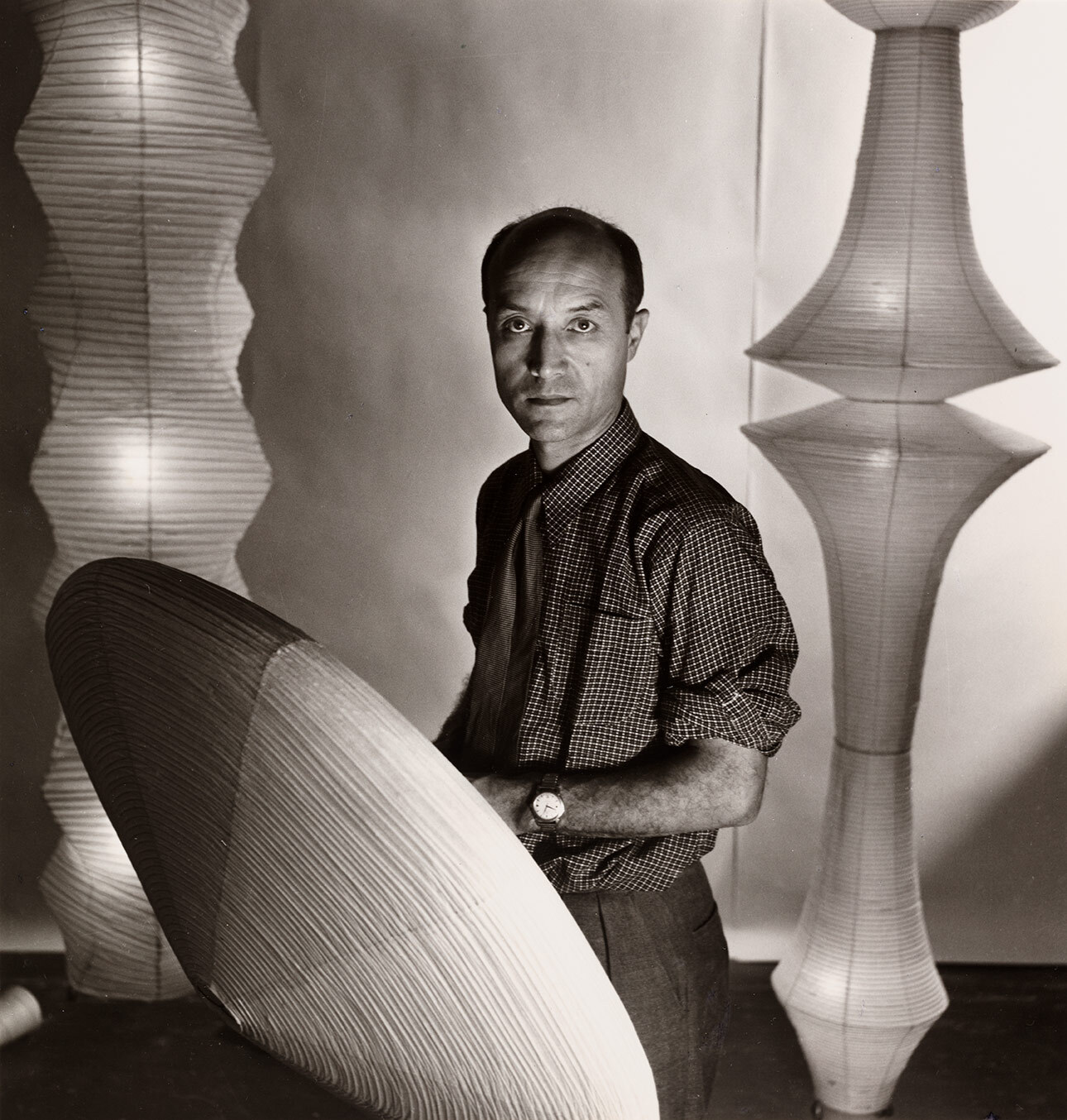
Louise Dahl-Wolfe, Isamu Noguchi, 1955, gelatin silver print. © 2025 Center for Creative Photography, Arizona Board of Regents/Artists Rights Society (ARS), New York. © 2025 The Isamu Noguchi Foundation and Garden Museum, New York/Artists Rights Society (ARS), New York.
PEM presents a new major retrospective on the design work of Isamu Noguchi (1904–1988).
SALEM, MA – This fall, the Peabody Essex Museum (PEM) presents Isamu Noguchi: “I am not a designer,” a sweeping retrospective examining the groundbreaking design work of one of the 20th century’s most influential artists. Organized by the High Museum of Art in Atlanta, the exhibition will be on view at PEM from September 19, 2026 through January 3, 2027. It offers a rare opportunity to explore Noguchi’s interdisciplinary practice across sculpture, architecture, furniture, lighting, ceramics, theatrical set design and landscape design.
Widely celebrated for redefining the traditional boundaries between art and design, through a lifetime of experimentation, Noguchi created works that transformed everyday environments. From iconic Akari light sculptures and modernist furniture to playgrounds, gardens and public monuments, the artist’s creative output reflects his belief that art should shape the spaces where people live and gather.
Louise Dahl-Wolfe, Isamu Noguchi, 1955, gelatin silver print. © 2025 Center for Creative Photography, Arizona Board of Regents/Artists Rights Society (ARS), New York. © 2025 The Isamu Noguchi Foundation and Garden Museum, New York/Artists Rights Society (ARS), New York.
Boundless creativity
This first major survey of Noguchi’s design practice in nearly a generation features rare objects, iconic works and archival materials spanning more than six decades of creative exploration. Visitors will encounter celebrated designs alongside lesser-known projects that illuminate Noguchi’s social consciousness and his belief in art’s civic and humanistic role. Noguchi exemplified an interdisciplinary, social-minded approach to being an artist-designer, and his never-ending search for modes of expression reflected his singular approach and worldview.
“Isamu Noguchi transformed how we understand the relationship between art, design and daily life. He designed with the purpose of improving the way people live,” said Ruthie Dibble, PEM’s Robert N. Shapiro Curator of American Decorative Art and the exhibition’s coordinating curator. “PEM is honored to present this major retrospective, which invites audiences to consider how creativity shapes our shared spaces and responds to the most pressing ideas of our moment.”
Cross-cultural exchange
Born in Los Angeles to a Japanese father and an Irish American mother, Noguchi was a citizen of the world who drew inspiration from global traditions and modern innovations, producing a body of work that challenged conventional definitions of sculpture and design. Though Noguchi famously insisted, “I am not a designer,” he dedicated himself to producing functional objects and spaces influenced by his global travel, the natural world and historical events.
Noguchi’s practice bridged cultures and disciplines, drawing from Japanese craft traditions, European modernism and American innovation. His designs — from sculptural furniture to visionary playgrounds — demonstrate how art can foster connection, encourage exploration and enrich public life. Noguchi traveled extensively throughout his life and, for the last two decades of his life, maintained studios in Japan and New York. He discovered impactful large-scale public works in Mexico, earthy ceramics and tranquil gardens in Japan, subtle ink-brush techniques in China and the purity of marble in Italy. He incorporated all of these impressions into his work, which utilized a wide range of materials, including stainless steel, marble, cast iron, balsa wood, bronze, sheet aluminum, basalt, granite and water.
Exhibition highlights
The objects and aesthetics Noguchi created remain incredibly influential and popular today. Visitors will leave the exhibition with a spark of curiosity about how good design enhances their lives. The exhibition features nearly 200 objects, many never or rarely exhibited, spanning all facets of his creative output. Highlights include the artists’ designs for Akari light sculptures, initially developed in 1951 using traditional Japanese materials and still produced today. Other highlights include sculptural models of potential and unrealized projects, such as the recently rediscovered plaster for Play Mountain (1933), tables and stools designed for manufacturers like Herman Miller and Knoll and a house model Noguchi designed in collaboration with architect Kazumi Adachi.
Perhaps no other single object has become more synonymous with Noguchi as a designer than the IN-50 Coffee Table. Unlike Noguchi’s previous, bespoke experiments with creating tables for private patrons, this design was put into mass production by furniture manufacturer Herman Miller, facilitating its rise to international acclaim and ubiquity. The table has been in near continuous production since 1947.
Akari lamps represent the culmination of Noguchi’s career-spanning quest to more broadly share the delight he found in illuminated sculptures. At the suggestion of the mayor of Gifu, Japan, a capital of traditional mulberry paper lanterns (chōchin), Noguchi began designing his own variations on the form, preserving the traditional translucent mino washi paper shade and bamboo frame but introducing an electric bulb. He called these Akari, after the Japanese word conveying both illumination and weightlessness. The exhibition showcases over a dozen different Akari designs innovated by Noguchi. Like the IN-50, Akari sculptures remain icons of modernist design.
Visitors to PEM’s presentation will explore thematic sections highlighting Noguchi’s creative process, his collaborations with architects and choreographers, and his enduring influence on contemporary design and environmental art. Visitors will encounter several large-scale installations, notably the stage set for choreographer Martha Graham’s Appalachian Spring (1944), one of Noguchi’s original designs of play equipment and a commissioned film capturing atmospheric footage and ambient sound in some of Noguchi’s site-specific plazas and gardens in Costa Mesa, California; Paris, France; and Detroit, Michigan. A section exploring Noguchi’s designs for parks, playgrounds and public spaces reveals a body of work that powerfully demonstrates the artist’s commitment to making art that is “a vital force in our everyday life.” An interactive near the end of the exhibition asks visitors to design their own playground or public park.
In a section dedicated to Noguchi in postwar Japan, visitors will encounter a selection of items from the PEM collection, including Japanese lantern-making tools, a miniature Japanese lantern shop model, a selection of Japanese pottery-making tools and a Japanese earthenware Haniwa figure from the late 5th or 6th century.
This diverse, interactive presentation will explore works that embrace function to understand Noguchi as a multinational, interdisciplinary artist and designer who shaped a more open, inclusive world.
EXHIBITION CATALOG
Isamu Noguchi: “I am not a designer” is a 368-page publication by the High Museum of Art and Rizzoli Electa. This comprehensive volume features more than 20 in-depth essays and shorter vignettes by an impressive international roster of scholars and curators, addressing all aspects of Noguchi’s design practice. In addition, a rich and diverse selection of more than 250 archival and contemporary images depict the works in the exhibition as well as illuminate and expand on Noguchi’s exceptional career. Essential reading for Noguchi fans, this book also appeals to lovers of modern art, mid-20th-century architecture and design and the creative ethos that imbues everything Noguchi. This limited edition is available in the PEM Shop.
SOCIAL MEDIA
Follow along and share your experience on social media using #PEMNoguchi
PUBLICITY IMAGES
Publicity images available upon request.
IMAGE CREDITS
Louise Dahl-Wolfe, Isamu Noguchi, 1955, gelatin silver print. © 2025 Center for Creative Photography, Arizona Board of Regents/Artists Rights Society (ARS), New York. © 2025 The Isamu Noguchi Foundation and Garden Museum, New York/Artists Rights Society (ARS), New York.
SPONSORS
Isamu Noguchi: “I am not a designer” is organized by the High Museum of Art, Atlanta. Major funding for this exhibition is provided by the Henry Luce Foundation and Terra Foundation for American Art. The exhibition at PEM is made possible by Carolyn and Peter S. Lynch and The Lynch Foundation, and Karla and Jeff Kaneb. We thank Jennifer and Andrew Borggaard, James B. and Mary Lou Hawkes, The Creighton Family, Chip and Susan Robie, Karla and Jeff Kaneb, Timothy T. Hilton, and an anonymous donor as supporters of the Exhibition Innovation Fund. We also recognize the generosity of the East India Marine Associates of the Peabody Essex Museum.

