CONNECTED | Jan 30, 2026
Curatorial insights into PEM’s 2025 collection acquisitions

PEM’s remarkable collection perennially astonishes and delights me. As we continue the complex and vital work of PEM’s multiyear collection relocation and documentation project, the collection continues to reveal new treasures — often hiding in plain sight — at every turn.
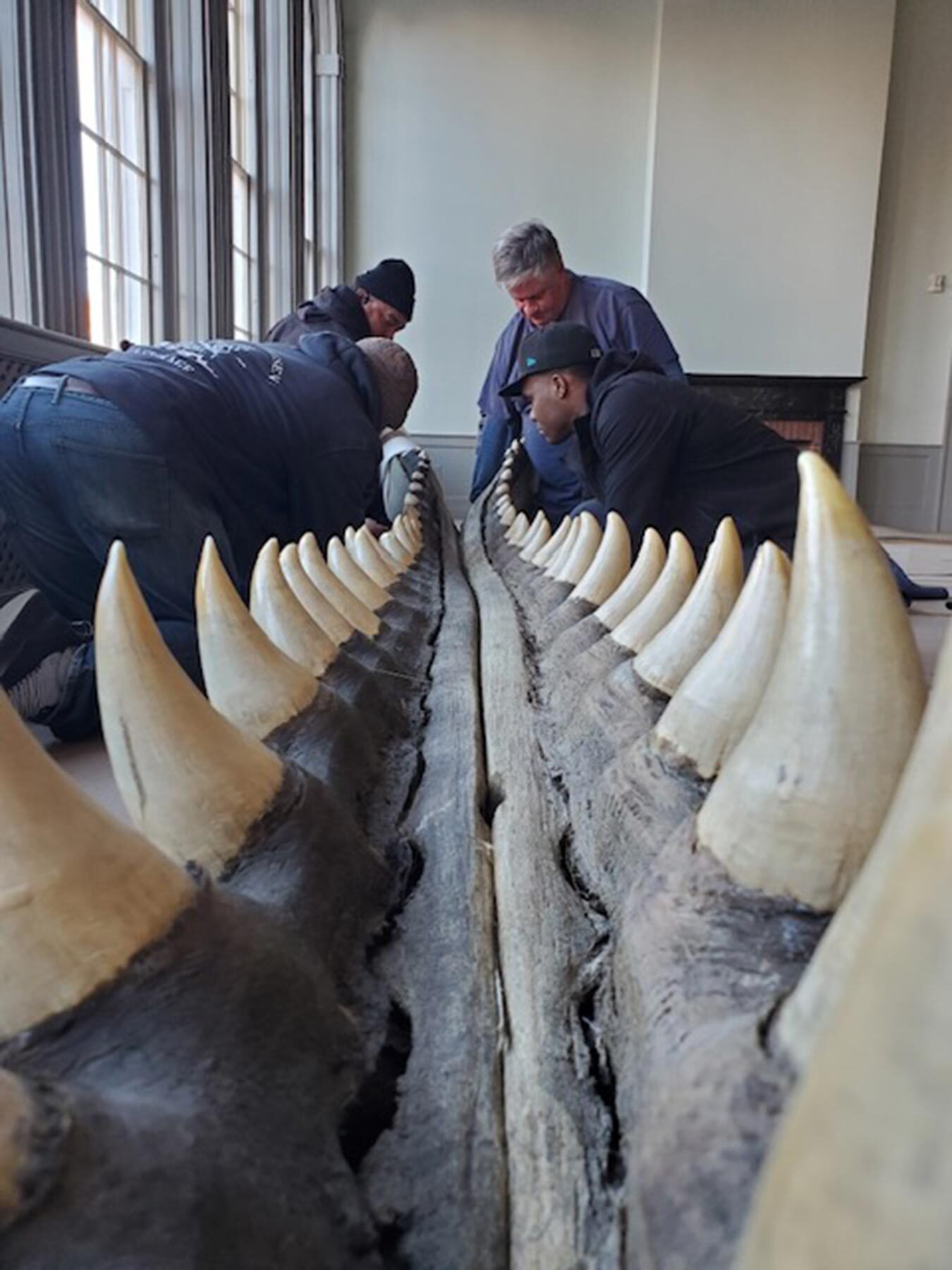
A historic work from PEM's collection, on its way to a new home in East India Marine Hall. Lower jaw of a very large sperm whale (Physeter catodon), collected about 1832. Gift of Captain John B. Osgood, 1837. M19079. Photo by Angela Segalla/PEM.
Last year, members of the Collection Management, Registration and Conservation departments worked with great diligence and enthusiasm to relocate more than 8,500 works from outdated storage facilities in Salem to PEM’s new state-of-the-art James B. and Mary Lou Hawkes Collections Center in Rowley, Massachusetts. Those objects came primarily from PEM’s fashion and textile and Native American art and culture holdings.
As we begin 2026, it promises to be an equally exciting and productive year for PEM’s collections as teams begin to process our American Decorative Art, Oceanic Art and Korean Art collections and rehouse them at the Hawkes Collections Center. As we work through this labor-intensive initiative, we are far better able to care for, understand and share the collections that we have been stewarding for over 225 years.
Adding a work to PEM’s collection has always been a commitment to the future: an exercise in trust, not only with those involved in the acquisition, but also with our predecessors and those who will benefit from accessing these works long into the future. A museum’s initiative to acquire a work of art is invariably a complex process involving many people, including donors, curators, registrars, collections managers, dealers, auction houses, fine art shippers and trustees.
Given the intensity and time commitment of all that work, it is critical to be judicious about what we add to PEM’s collection each year. It’s also vital not to preserve a collection in amber. We are stewards of a living collection, which is displayed in PEM’s galleries and exhibitions in diverse ways. We are also continually learning more about the works in our collections through our own research and the work of regional and international scholars. A component of our mission is to collect and care for works for future generations.
We expanded PEM’s collection in powerful ways in 2025. The works we acquired allow us to tell different stories and preserve and uplift the legacies of previously underrepresented artists. Through our stewardship, study, display and interpretation of these works of art, we bridge the gap across space and time.
I hope that this selection of PEM’s 2025 acquisitions will offer you a window into our ongoing efforts to expand and enhance PEM’s singularly fascinating collection.
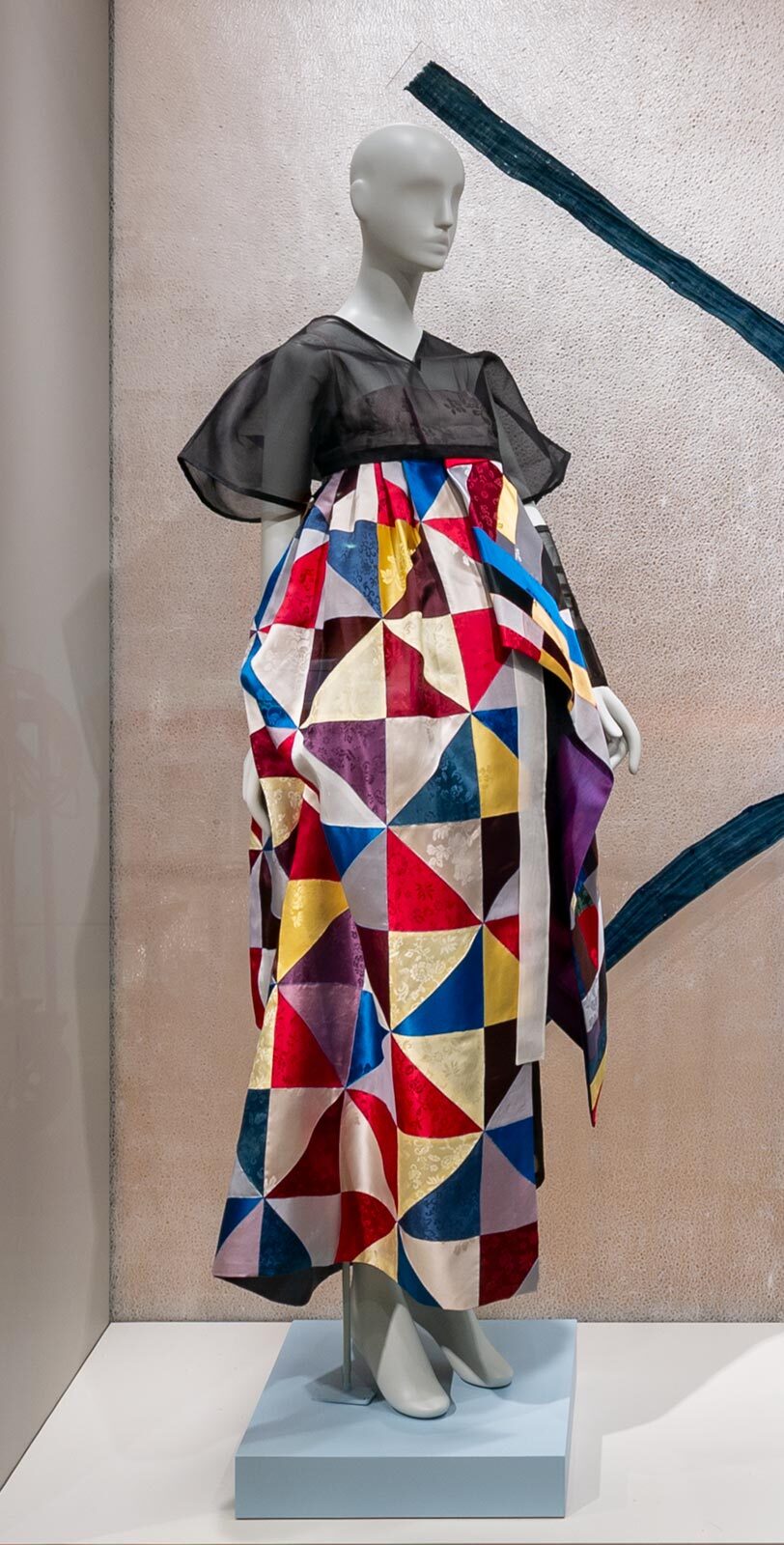
Wonju Seo, Bojagi Dress, 2022 Silk. Gift of Lisa Harrow and Marc Chodock, in memory of Andrew Harrow and Jay Chodock 2024.32.1 Copyright ©Wonju Seo, All rights reserved. Image by Kathy Tarantola/PEM.
Wonju Seo’s Bojagi Dress made its PEM debut last May in the new Yu Kil-Chun Gallery of Korean Art and Culture. This ensemble by a contemporary Korean American designer celebrates the beauty and versatility of bojagi (wrapping cloths) that are used to wrap gifts, carry small loads and store valuables in Korea.
Women often created bojagi from leftover fabrics, crafting bold, colorful patchwork designs that evoke modern abstract paintings. Wonju Seo, a formal painter who discovered the art of sewing after moving from Korea to the United States, incorporated this textile tradition into contemporary fashion to create this delicate and dynamic dress. This work helps to bridge PEM’s historic Korean Art collection — which includes older examples of bojagi and other Korean textiles — with our ever-growing exploration of fashion and design.
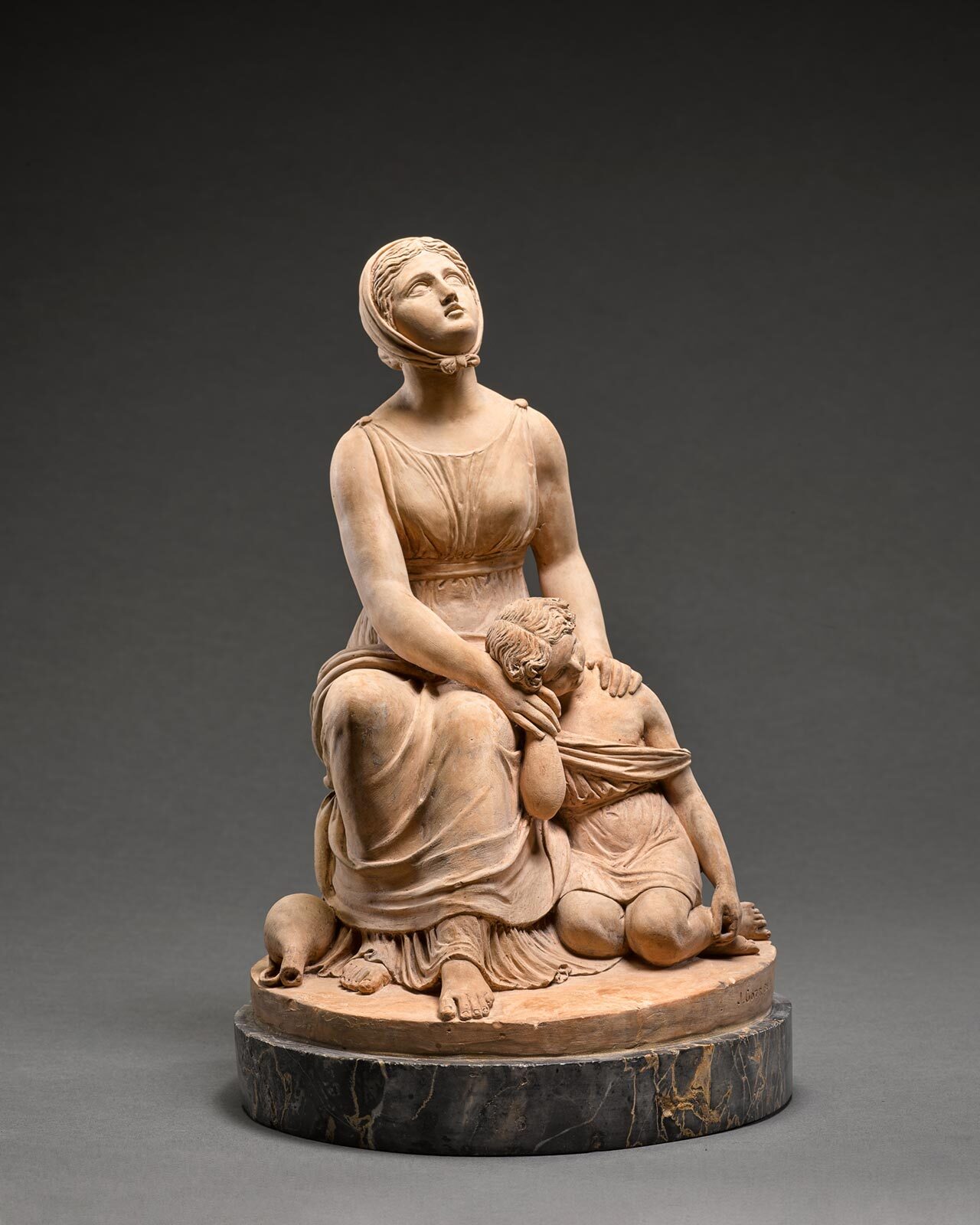
Joseph Gott, Hagar and Ishmael, about 1834. Terra-cotta, on a nero portoro marble base. Museum purchase, made possible by the Anna Pingree Phillips Fund 2024.61.1 Image courtesy of Dickinson, London.
When 19th-century British sculptor Joseph Gott was active in Rome (1824–1845), his terra-cotta and marble sculptural groups were widely popular among wealthy British collectors taking the Grand Tour of Europe. The story portrayed in this sculpture — Hagar and Ishmael — was popular not only for its drama, but also as a symbol of abolitionist politics in England and the United States.
Now little-known outside England, Gott and his contemporary John Gibson both apprenticed with celebrated Italian sculptor Antonio Canova. Each had an impact on the many American artists working in mid-19th century Italy, including Hiram Powers, William Wetmore Story, Harriet Hosmer and Edmonia Lewis. This work and many by Edmonia Lewis will be featured in the exhibition Edmonia Lewis: Said in Stone, opening at PEM on February 14, 2026.
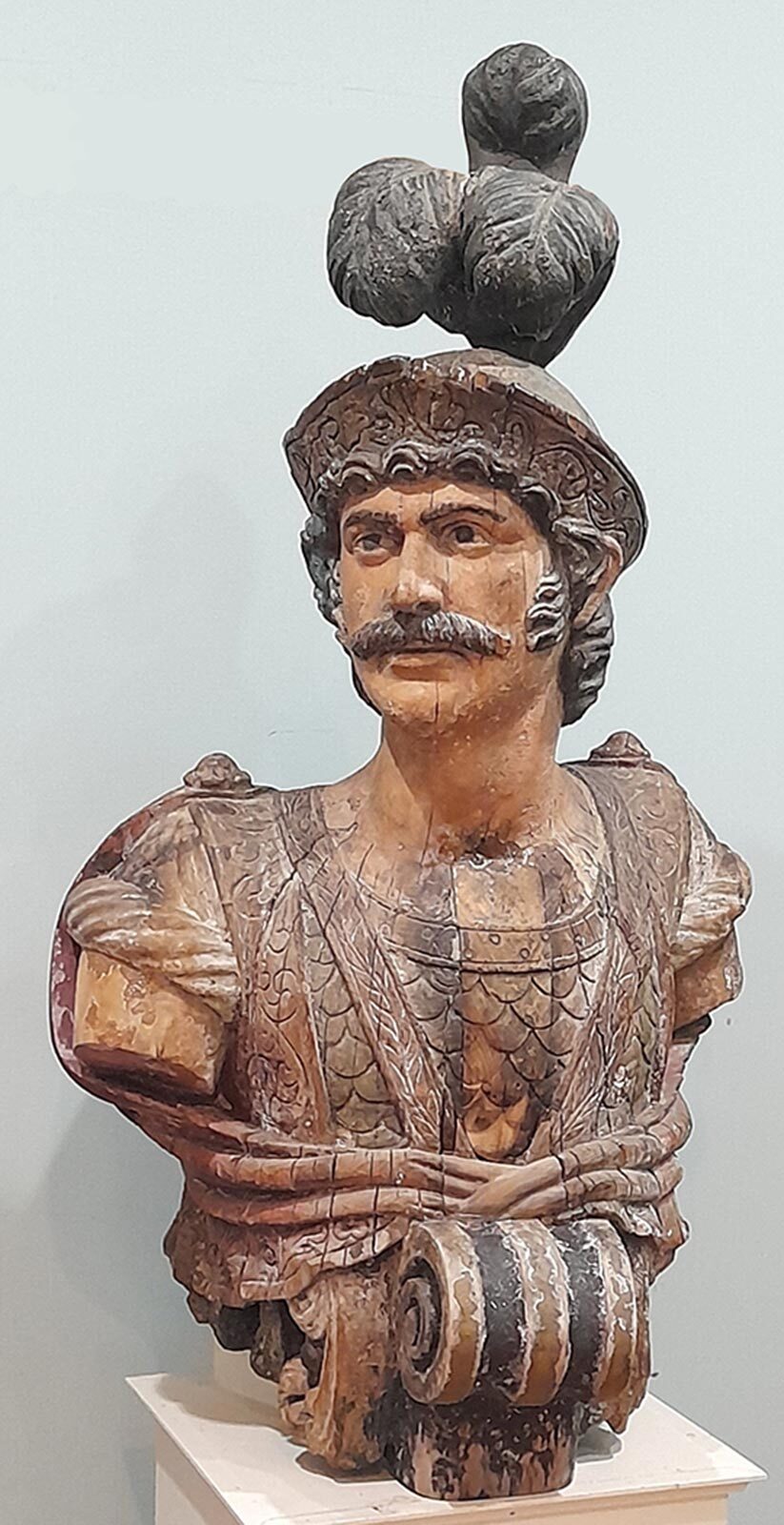
Attributed to Jeremiah Dodge, Figurehead from the ship Tamerlane, 1824. White pine and paint. Museum purchase, made possible by the Maritime Visiting Committee. 2025.4.1 Image courtesy of Ryan M. Cooper Nautical Antiques & Art.
Beginning in March, museum visitors will be able to admire this engaging figurehead carved by American sculptor Jeremiah Dodge for the ship Tamerlane in PEM’s newly reopened East India Marine Hall. Figureheads were designed to be seen from a low vantage point by people standing on a dock or waterfront street. Many ships carried figureheads simply for their overt beauty. But a figurehead may act as a visual symbol of the name of a ship, or of the values and emotions that an owner wants associated with their vessel. Built in 1824 in Wiscasset, Maine, for the shipping firm of Johnson & Sons, the ship Tamerlane was initially engaged in the transatlantic cotton trade to Liverpool, but later converted to a whaler sailing out of New Bedford.
Robert Swain Peabody (1845-1917), noted architect and founder of the firm Peabody & Stearns, once owned this figurehead as part of a large figurehead collection. He installed the collection outside his summer house on Peach’s Point in Marblehead. The majority of Peabody’s collection of figureheads were installed in East India Marine Hall in 1941 and donated to the museum in 1968, but the Peabody family retained the Tamerlane figurehead. Recently acquired by PEM with support from the Maritime Visiting Committee, this engaging sculpture will soon be reunited with others from Peabody’s collection in East India Marine Hall, where it will help visitors explore the role of figureheads as an art form.
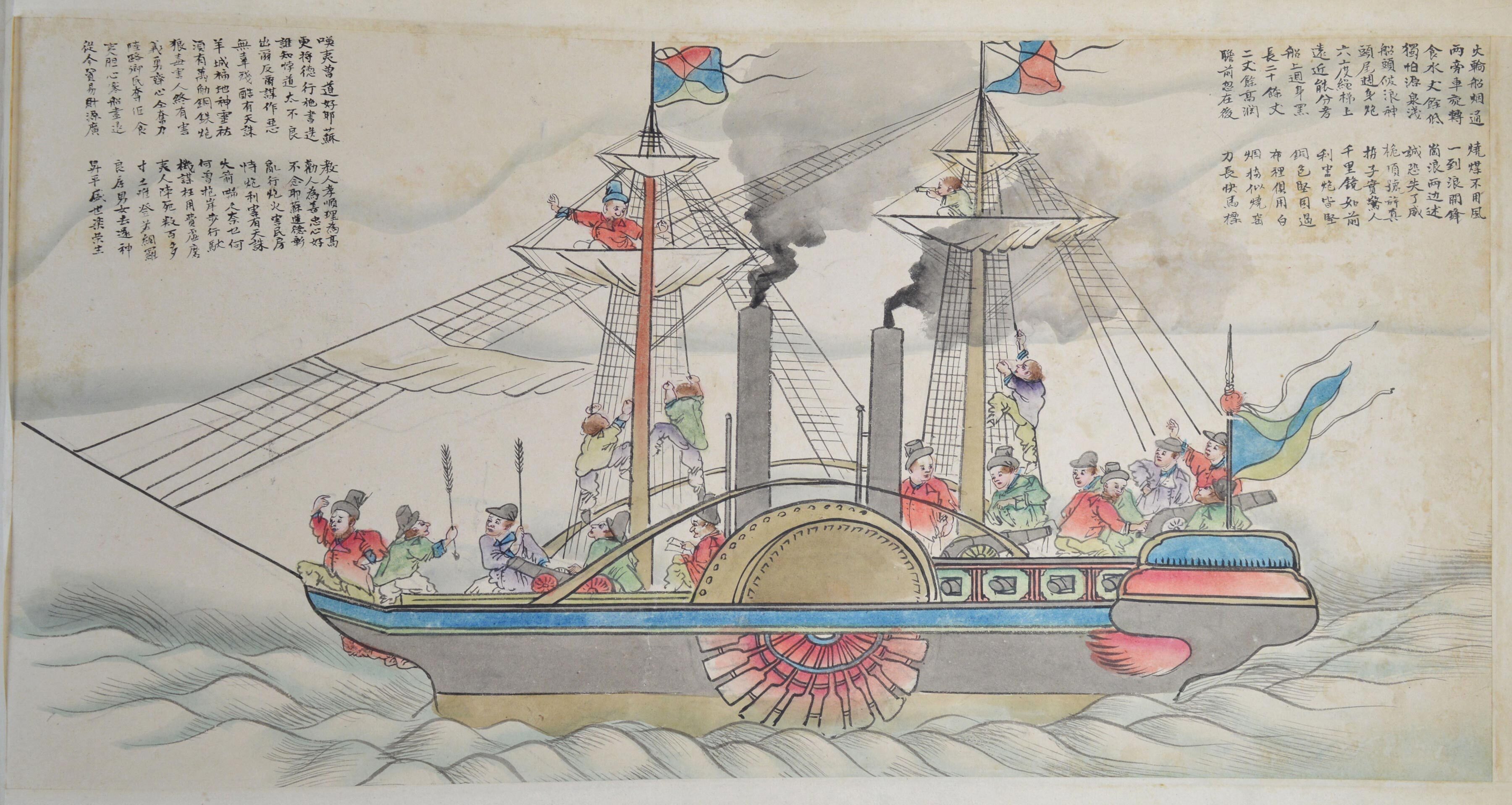
Artists in China. Opium War album, about 1860. Opaque watercolor on paper, silk. Museum purchase, made possible by the Frederick Townsend Ward Memorial Fund. 2024.35.1 Images courtesy of Asia Bookroom.
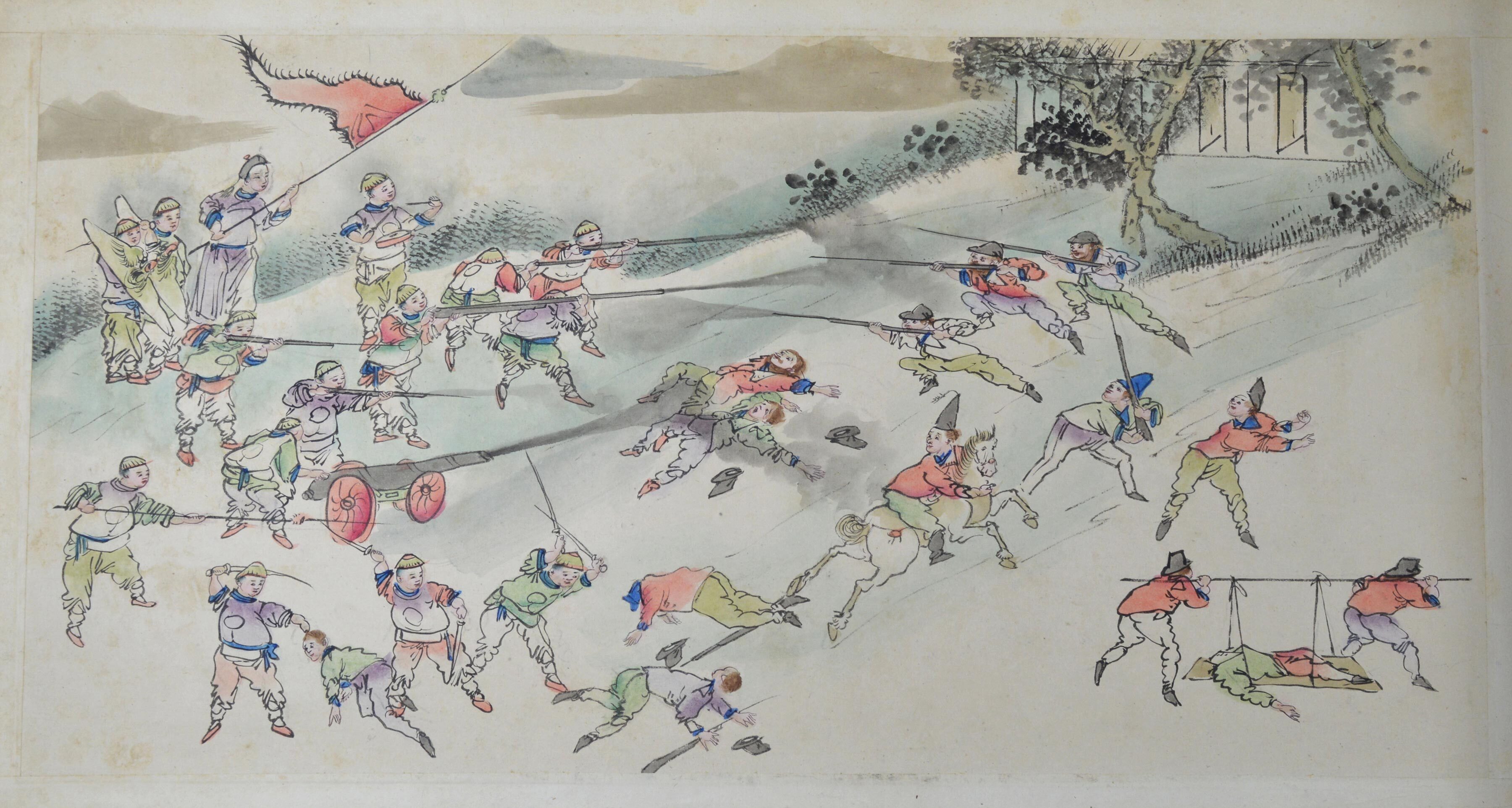
Artists in China. Opium War album, about 1860. Opaque watercolor on paper, silk. Museum purchase, made possible by the Frederick Townsend Ward Memorial Fund. 2024.35.1 Images courtesy of Asia Bookroom.
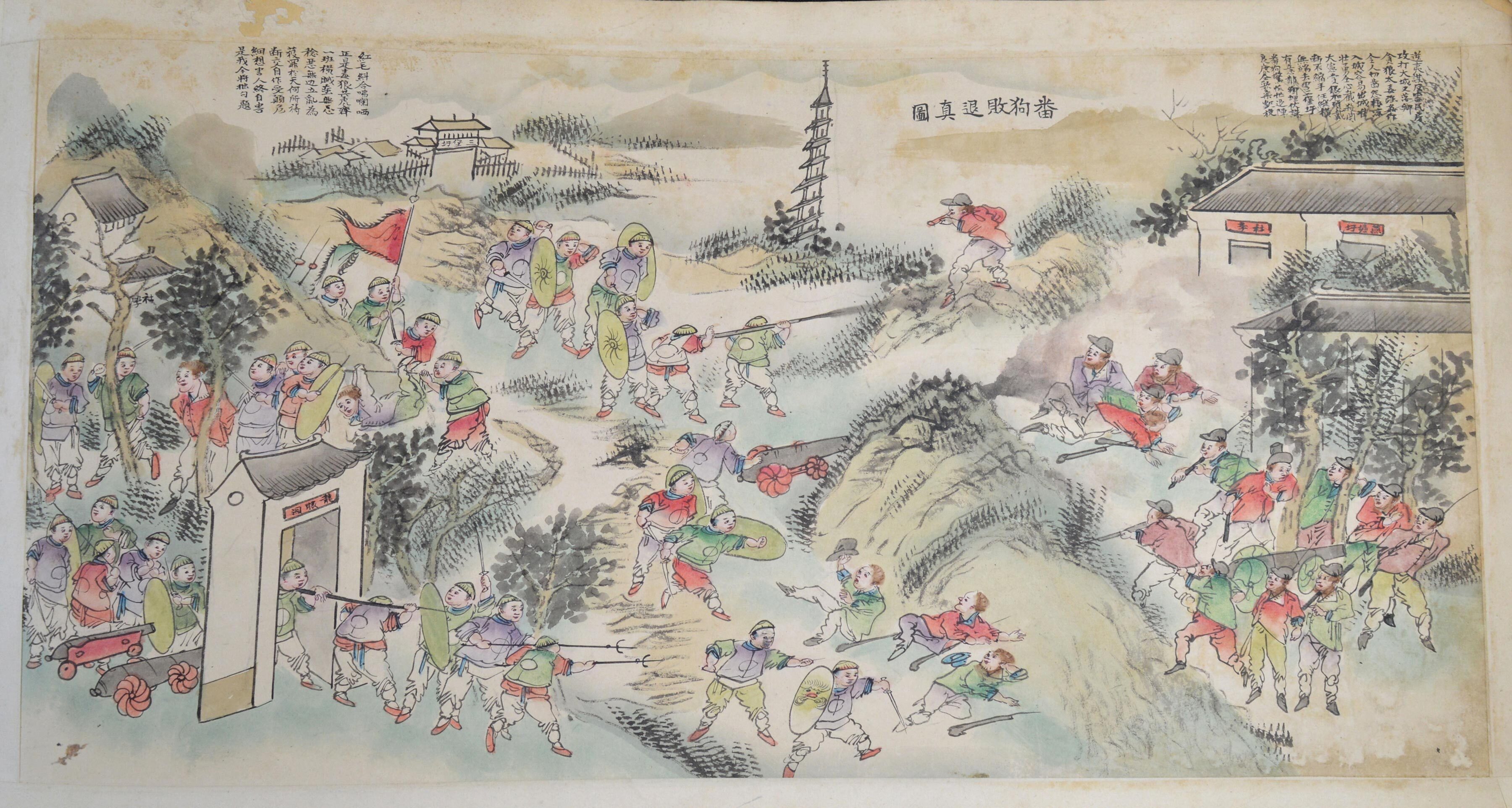
Artists in China. Opium War album, about 1860. Opaque watercolor on paper, silk. Museum purchase, made possible by the Frederick Townsend Ward Memorial Fund. 2024.35.1 Images courtesy of Asia Bookroom.
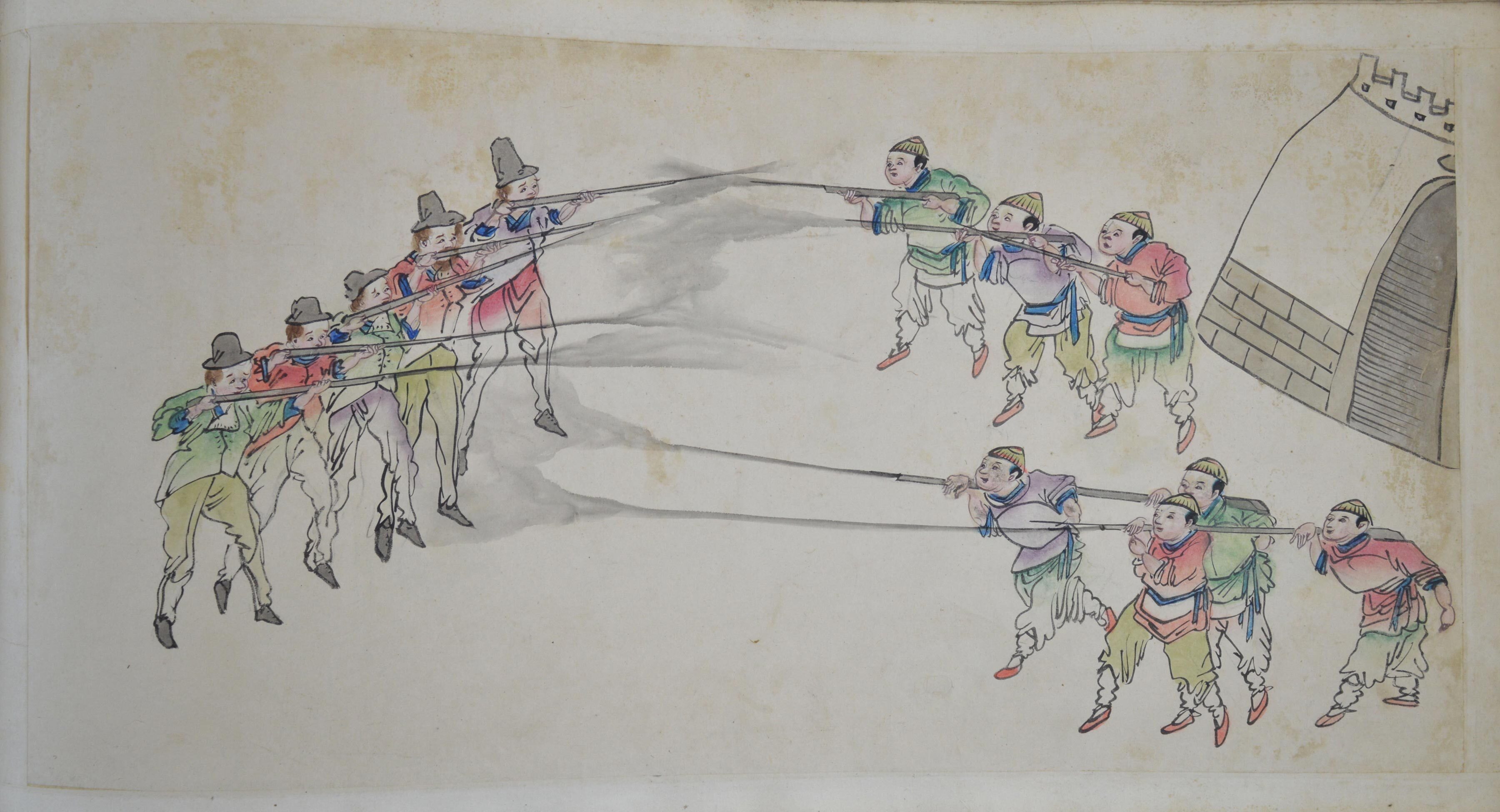
Artists in China. Opium War album, about 1860. Opaque watercolor on paper, silk. Museum purchase, made possible by the Frederick Townsend Ward Memorial Fund. 2024.35.1 Images courtesy of Asia Bookroom.
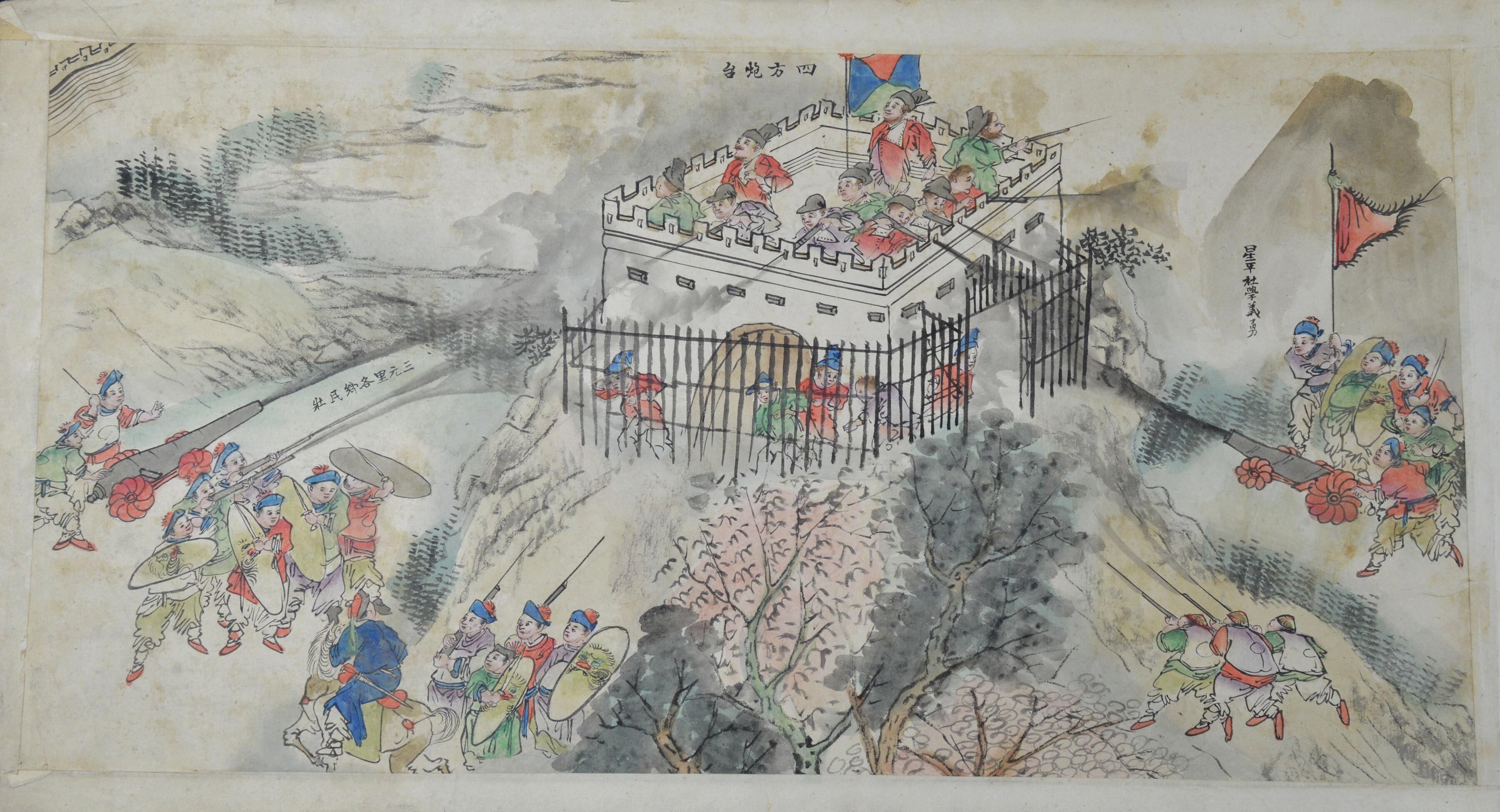
Artists in China. Opium War album, about 1860. Opaque watercolor on paper, silk. Museum purchase, made possible by the Frederick Townsend Ward Memorial Fund. 2024.35.1 Images courtesy of Asia Bookroom.
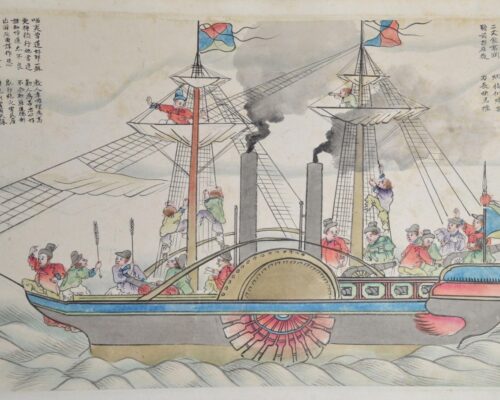
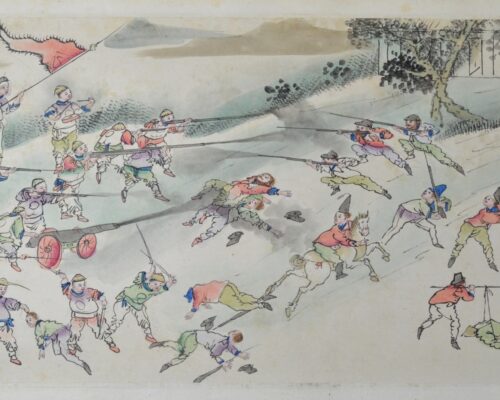
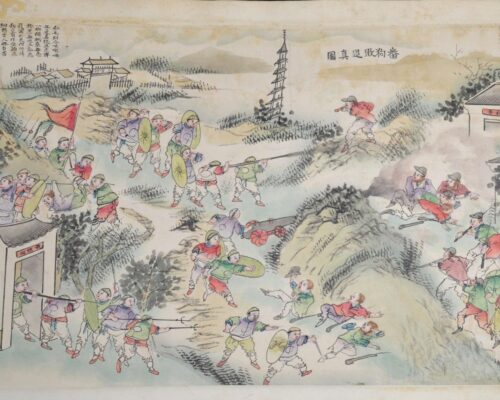
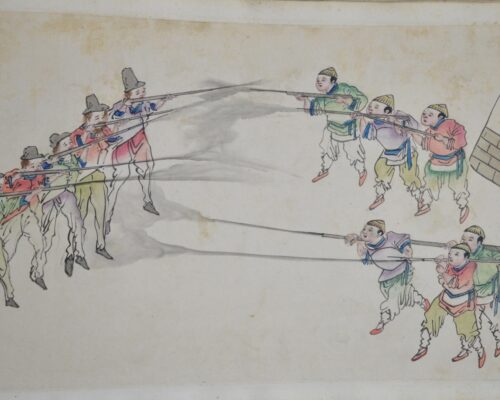
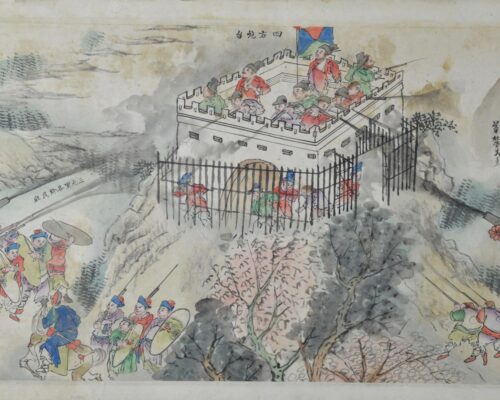
This rare album of 36 watercolors features scenes from the Opium Wars (1840-1842; 1856-1860) fought between China’s Qing court and Great Britain and France.
PEM holds over 5,000 works on paper made by artists in Guangzhou for foreign patrons. This album, perhaps also painted in Guangzhou, is stylistically quite different from the works already represented in the collection. It was likely made for an entirely different purpose and for a Chinese audience.
Some of the events depicted actually happened, but many represent Chinese propaganda or an imagined victory over British soldiers. In reality, Qing China suffered great losses in both wars, eventually leading to humiliating treaties, the cession of Hong Kong and the opening of multiple treaty ports for trade. We explored some of these themes in PEM’s past exhibition Power and Perspective: Early Photography in China, and we look forward to further exploring the history of this unusual album.
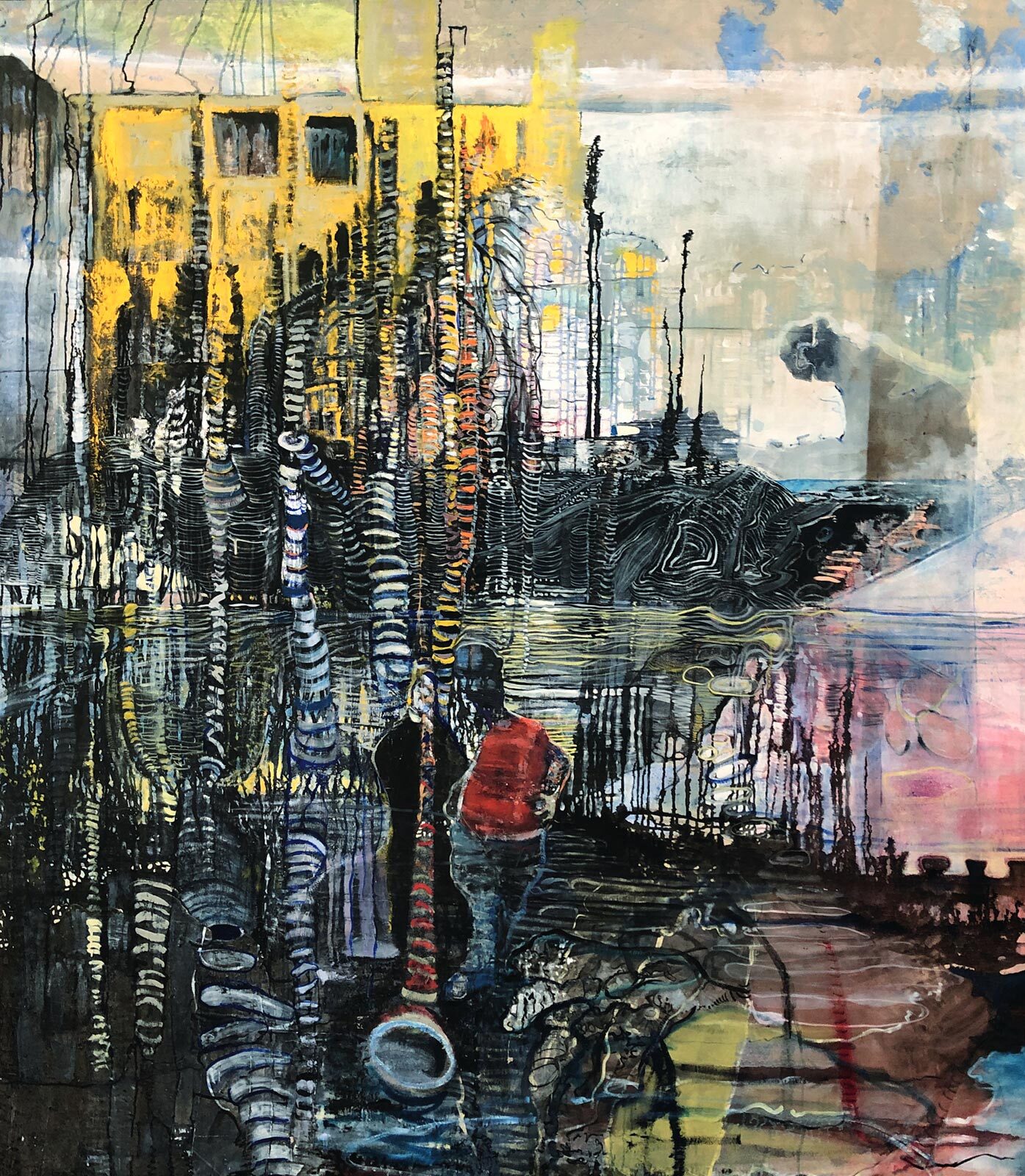
Joe Diggs, Dreads, 2016. Oil on canvas. Gift of LaShanda and Jonathan Chirunga. 2025.8.2 Image courtesy of the artist.
Based on Cape Cod, the painter Joe Diggs received his MFA from the Massachusetts College of Art and Design and lives and works on land owned by his ancestors for generations. Dreads is a mixed-media painting that explores the artist’s family history in Osterville, Massachusetts. Diggs notes in an artist’s statement that “my life and my paintings embody the contradictory dialectic of my existence as a land-owning Black man in America.” Diggs’ work shuttles between figuration and abstraction to convey the multiplicity of his identity and experiences as a Black artist in the 21st century: “I have always been pushed to define my work in only one way, but I cannot because I am many things at one time, all of which are layered into my paintings. Painting has always been my platform, my voice. To me, painting is magic.” We are deeply grateful to LaShanda and Jonathan Chirunga for generously donating Dreads and a second painting by Joe Diggs to PEM’s American Art collection.
In 2025, PEM acquired two different works of art inspired by Asian lacquer. Although made in wildly different contexts, each one highlights the deep impact of imported lacquer on global design during the 17th and 18th centuries.
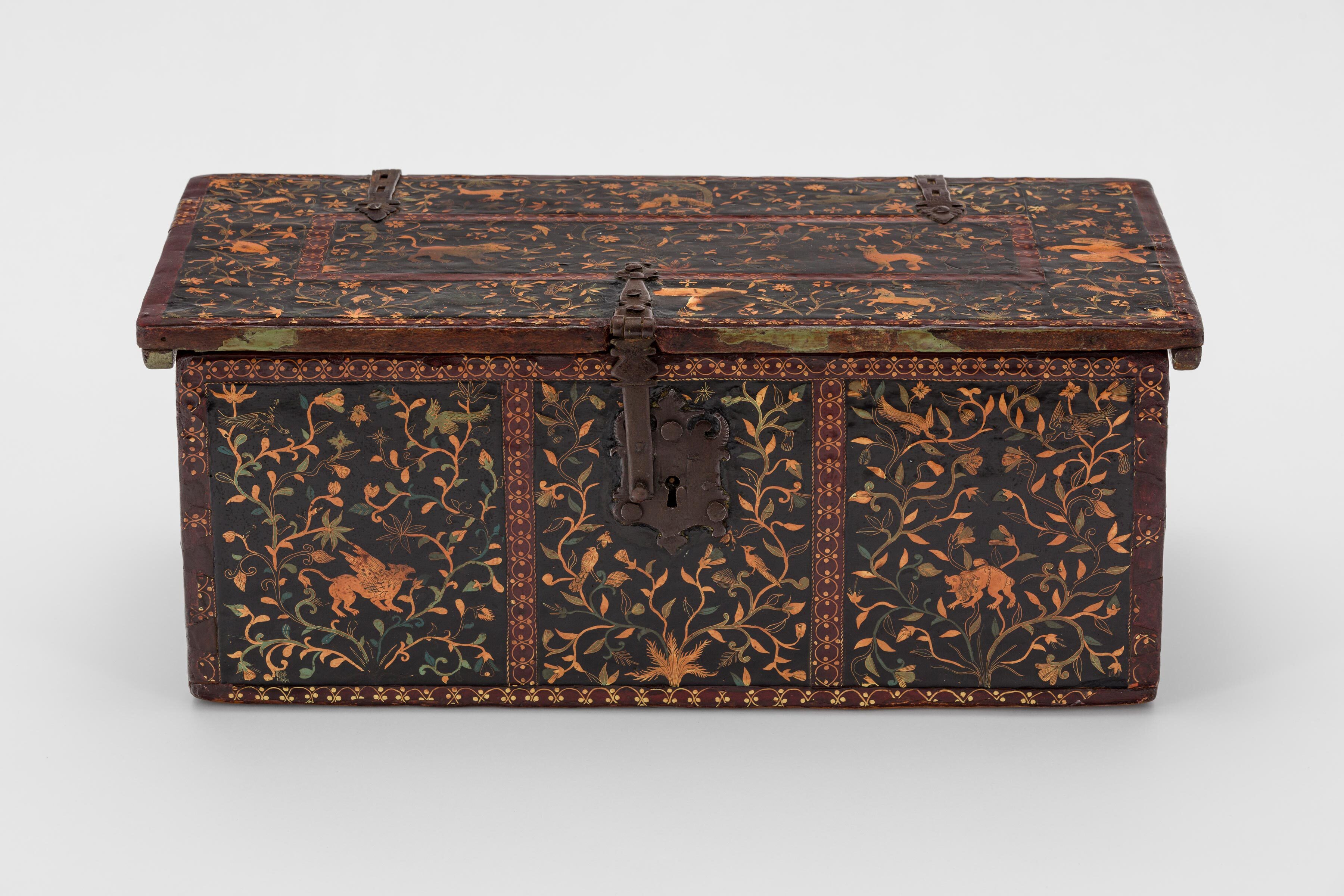
Artists in Colombia (Viceroyalty of Peru), Chest, mid 1600s. Cedarwood with barniz de Pasto and iron. Museum purchase, in honor of Dr. H. A. Crosby Forbes, made possible by the generosity of many donors 2025.21.1 Images courtesy of Amir Mohtashemi, Ltd.
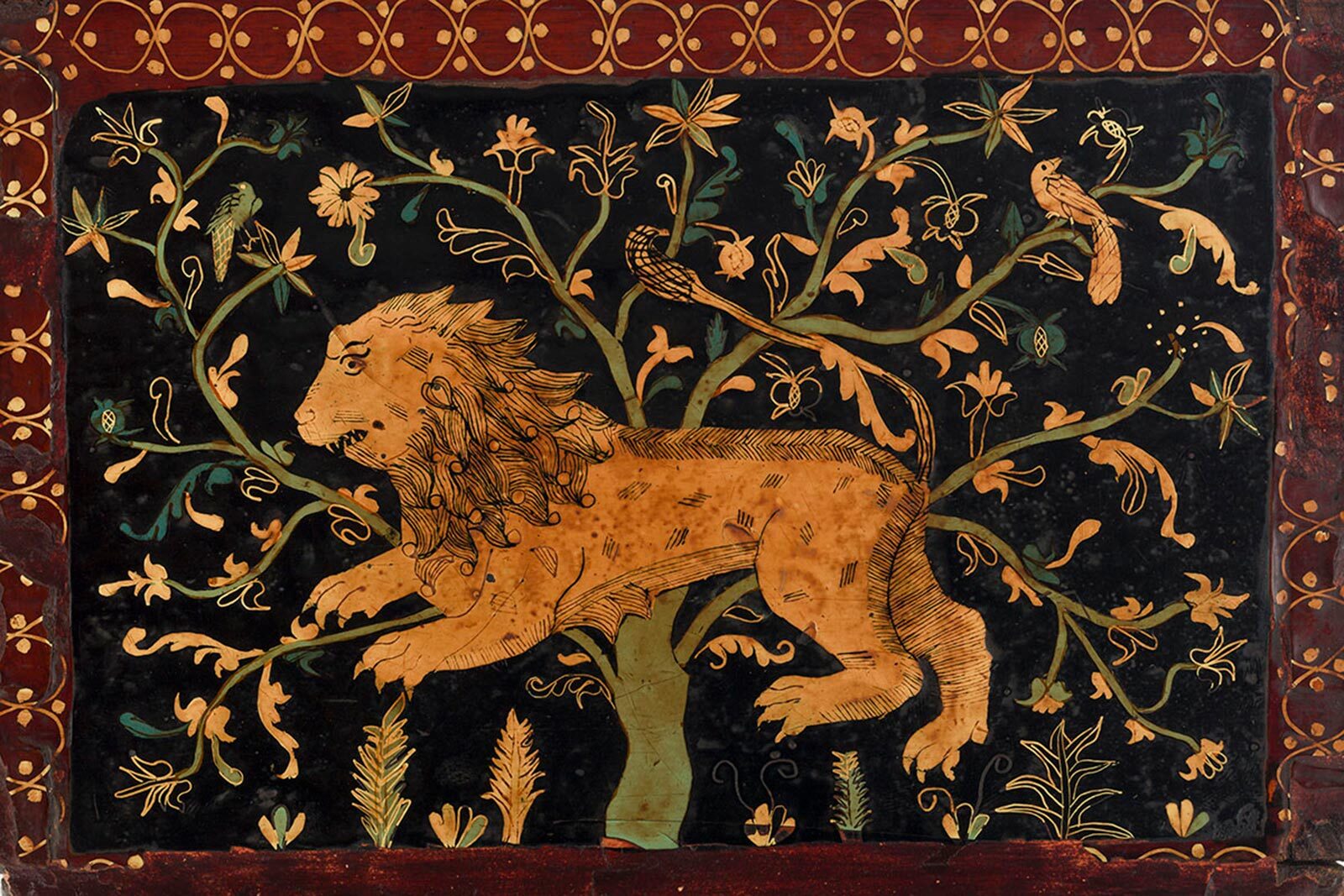
Artists in Colombia (Viceroyalty of Peru), Chest, mid 1600s. Cedarwood with barniz de Pasto and iron. Museum purchase, in honor of Dr. H. A. Crosby Forbes, made possible by the generosity of many donors 2025.21.1 Images courtesy of Amir Mohtashemi, Ltd.
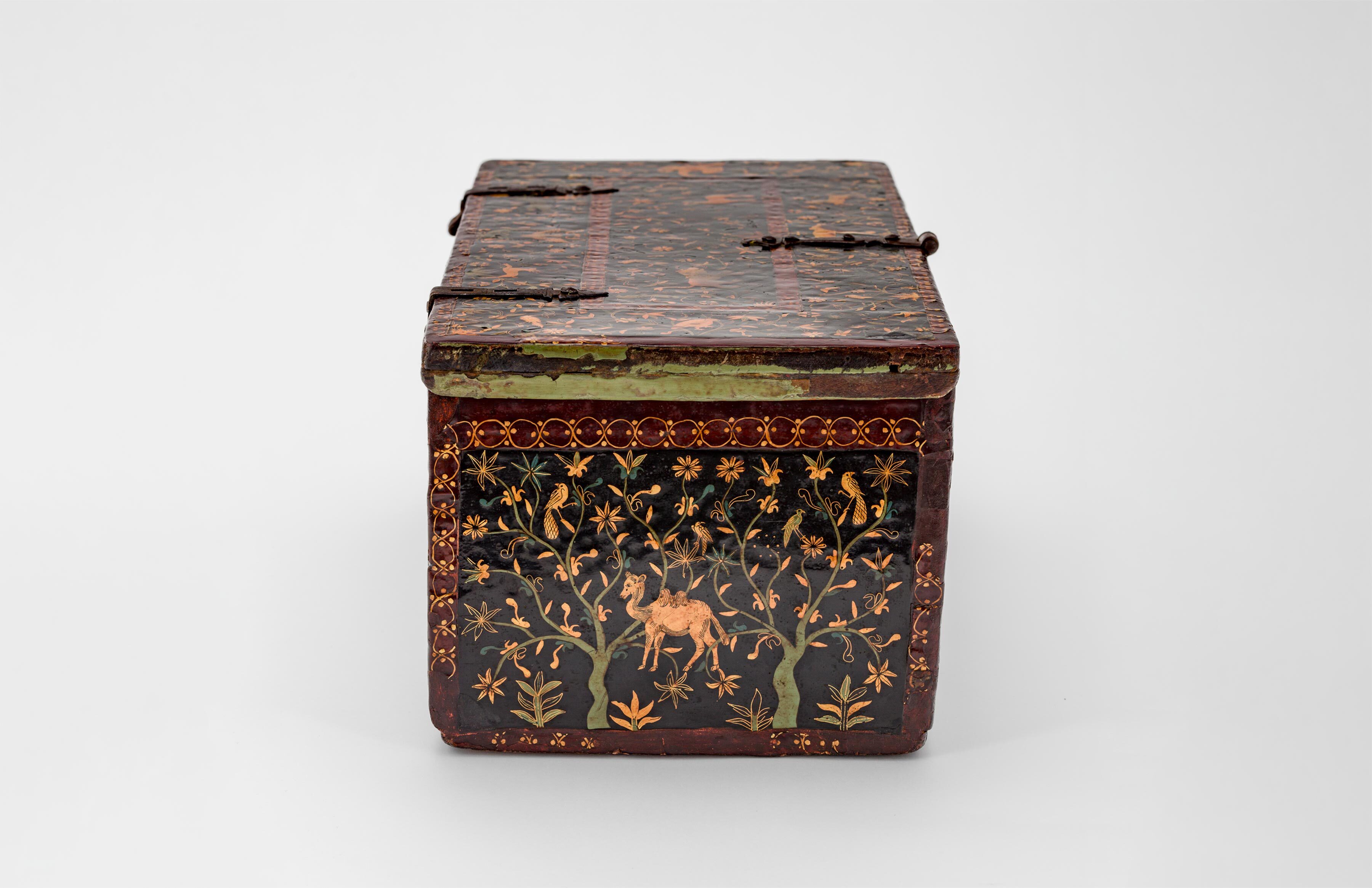
Artists in Colombia (Viceroyalty of Peru), Chest, mid 1600s. Cedarwood with barniz de Pasto and iron. Museum purchase, in honor of Dr. H. A. Crosby Forbes, made possible by the generosity of many donors 2025.21.1 Images courtesy of Amir Mohtashemi, Ltd.
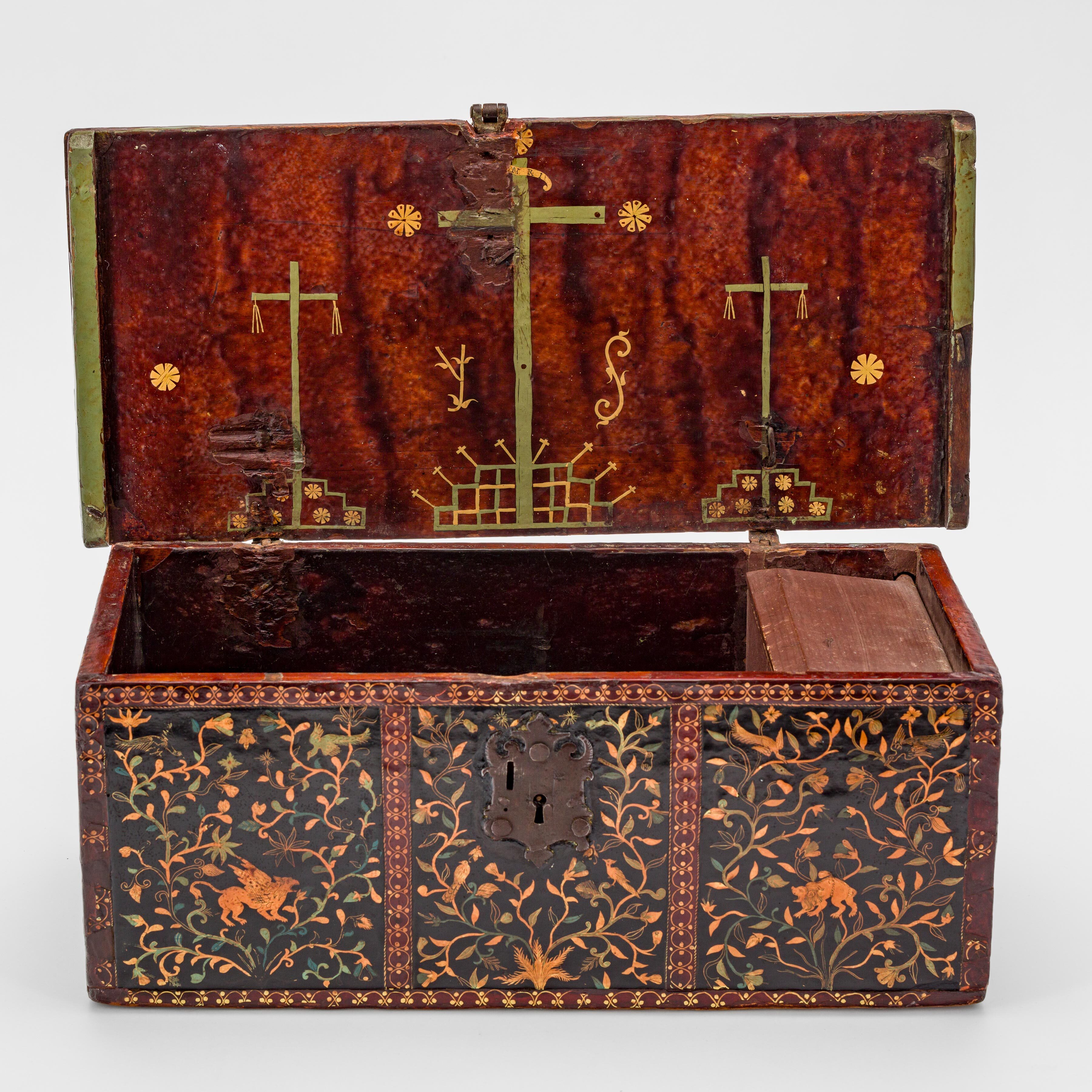
Artists in Colombia (Viceroyalty of Peru), Chest, mid 1600s. Cedarwood with barniz de Pasto and iron. Museum purchase, in honor of Dr. H. A. Crosby Forbes, made possible by the generosity of many donors 2025.21.1 Images courtesy of Amir Mohtashemi, Ltd.
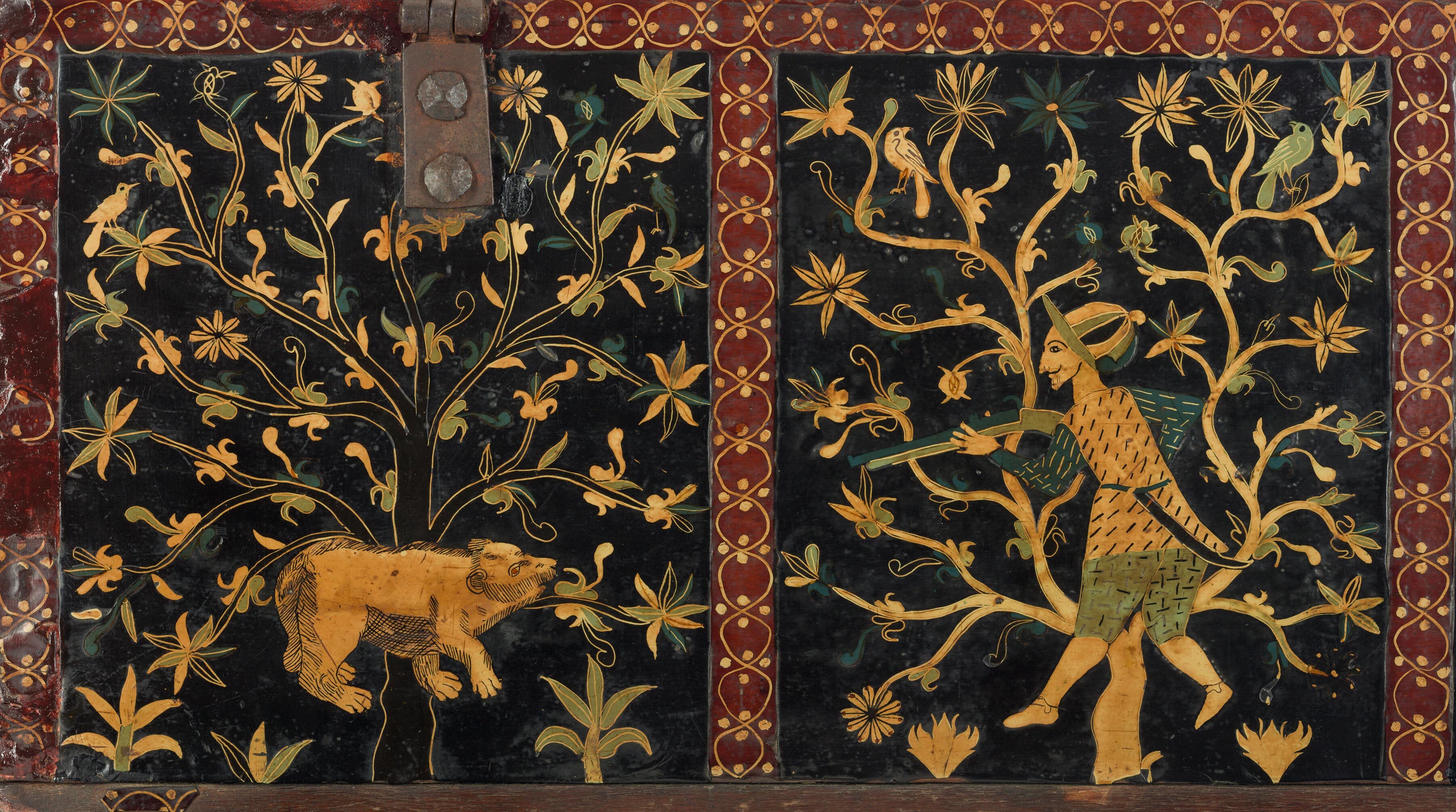
Artists in Colombia (Viceroyalty of Peru), Chest, mid 1600s. Cedarwood with barniz de Pasto and iron. Museum purchase, in honor of Dr. H. A. Crosby Forbes, made possible by the generosity of many donors 2025.21.1 Images courtesy of Amir Mohtashemi, Ltd.
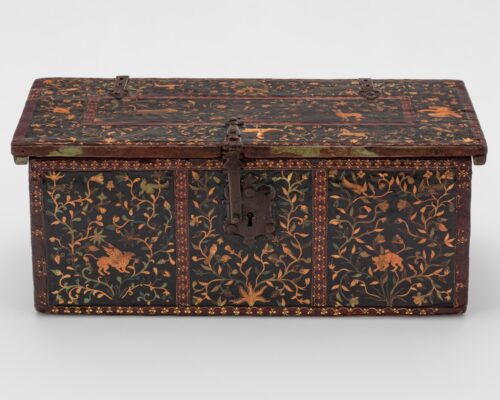
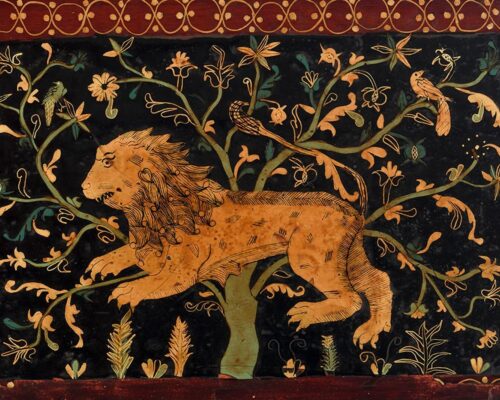
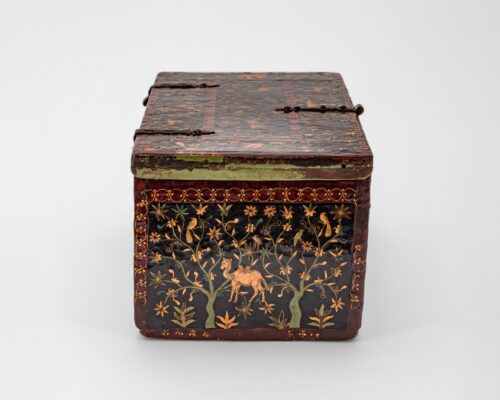
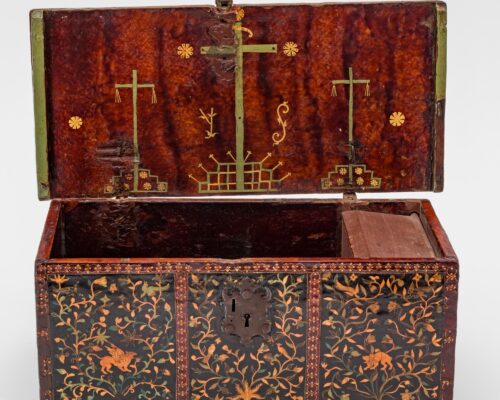
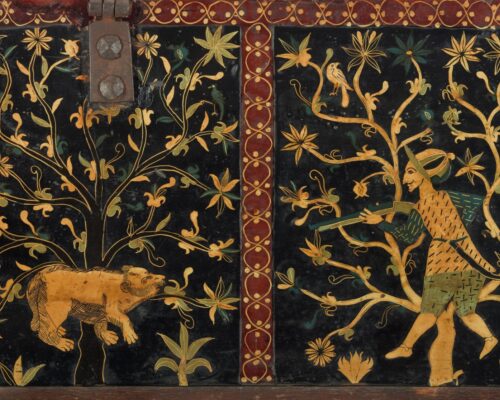
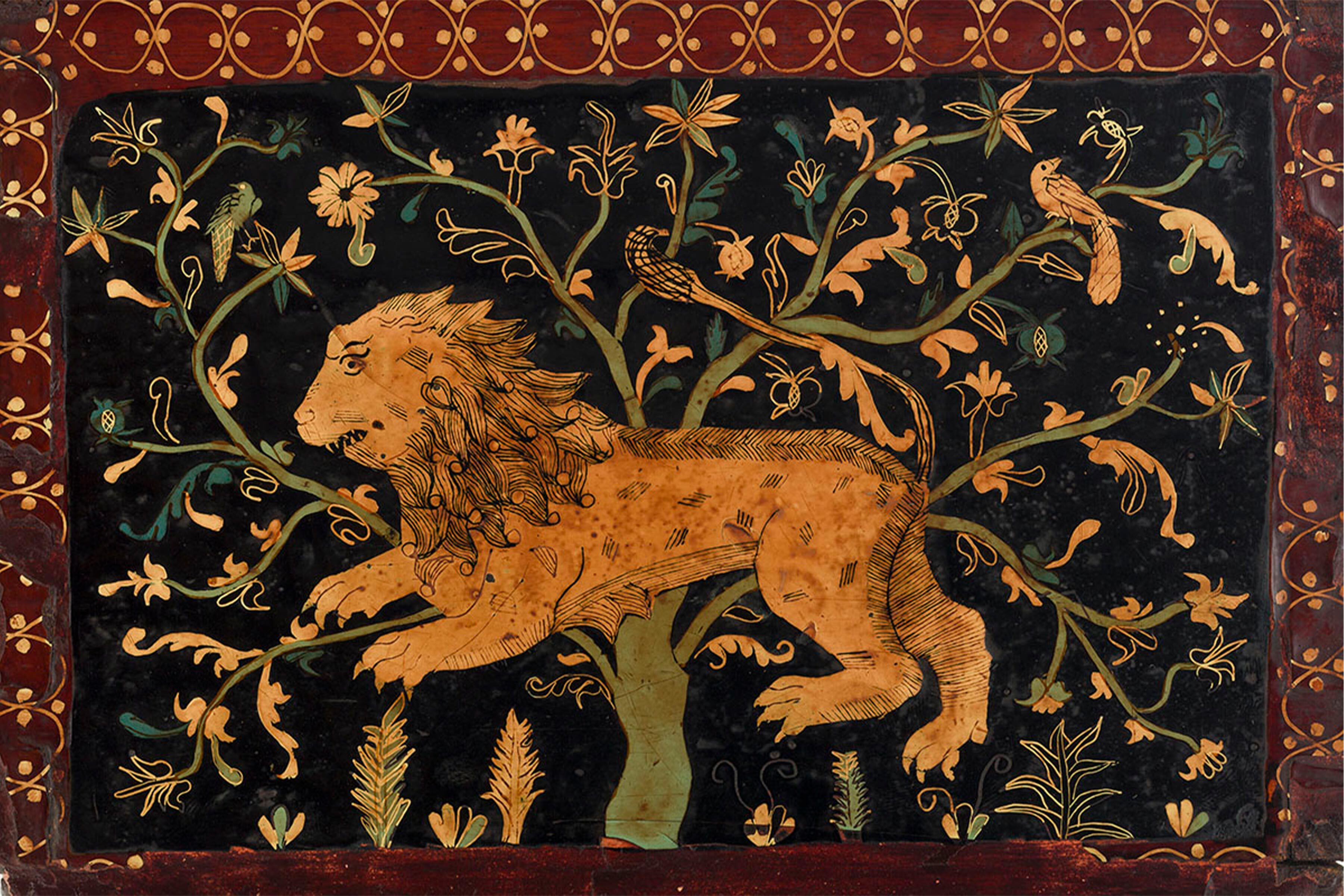
With the introduction of Asian luxury goods to the Viceroyalties of Mexico and Peru via the Manila Galleon trade, artists in Pasto (now in Colombia) and, to a lesser extent, in Quito (now in Ecuador), adapted Indigenous decorative resin techniques to new forms and motifs in the 17th century. Complex works of cross-cultural connection such as this chest are often described as barniz de Pasto (varnish from Pasto). This small Spanish Colonial chest is lushly decorated with trees and animals, three Christian crosses and the tantalizing initials “Y.S.”, set against a dark and shiny background and within red and yellow borders. Many of these decorative motifs were adapted from imported Japanese lacquer, Indian textiles and Spanish books.
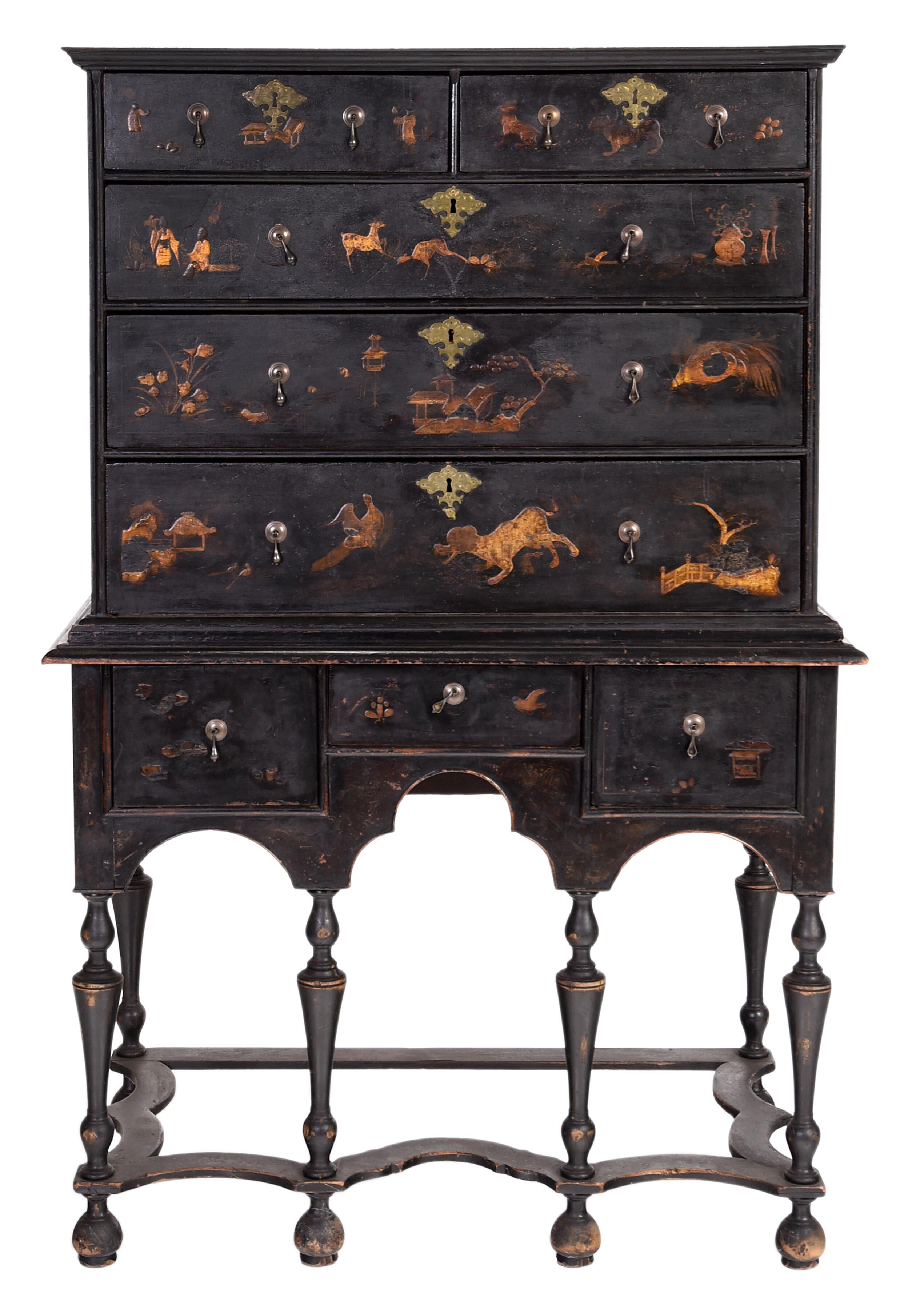
Artists in Massachusetts, Japanned High Chest, 1710–1720. Pine, maple, paint and brass. Museum purchase, made possible by an anonymous donor 2025.27.1 Images courtesy of Brunk Auctions
A second new acquisition demonstrates a different way that artists evoked the distinctive shiny black and gold surfaces of Asian lacquer without the knowledge or materials required to replicate it. Made in Boston, Massachusetts by an artist likely trained in England, this high chest from the 1710s is painted with a black-pigment resin-based varnish and ornamented with penwork and raised figures. Like the South American barniz de Pasto chest, the designs on the high chest feature animals, human figures and landscapes adapted from East Asian art.
PEM has long sought to acquire a superb example of 18th-century Boston japanned furniture, so we are particularly pleased to acquire this rare surviving high chest from the John and Marie-Teresa Vander Sande Collection.
And now, to conclude with something completely different!
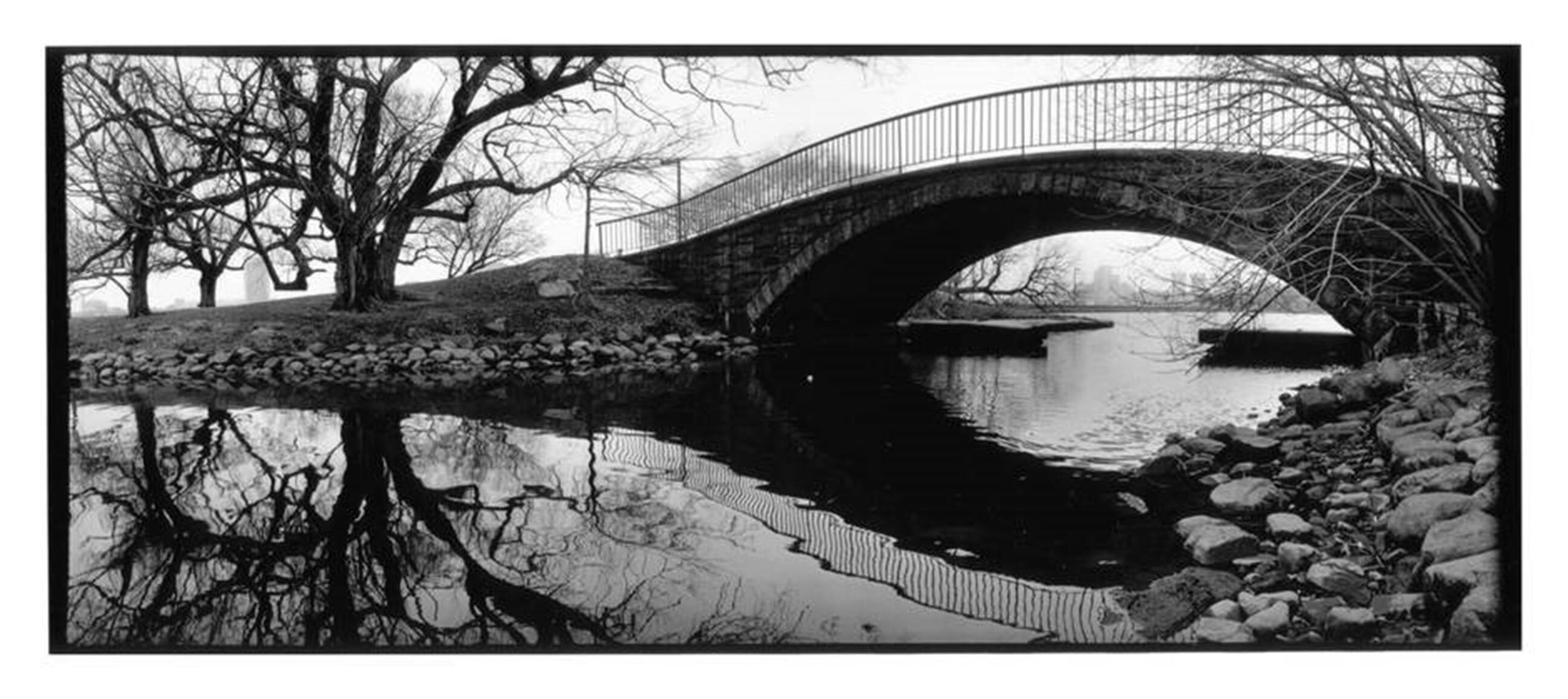
Archy LaSalle, Charles River Esplanade, Boston, 1993. Gelatin silver print. Museum purchase. 2025.22.1. Image courtesy of the artist.
The final 2025 acquisition I’d like to highlight is a gorgeous, large-scale gelatin silver print by Archy LaSalle, a Cambridge-based fine art photographer. LaSalle photographs urban and rural landscapes with his signature panoramic camera, a format that allows for an expanded vision that mimics the way he sees the world naturally.
Early in his career, LaSalle began documenting how the construction of the Orange Line of the Boston mass transit system changed the city’s South End, Roxbury and Jamaica Plain neighborhoods. The project garnered national and international attention and led to residencies in Venice and Paris.
LaSalle’s formal rigor and dedication to craft, as well as his legacy as a Boston-based educator and activist, contribute to the significance of his work. The 2025 addition to PEM’s Photography collection of Charles River Esplanade, Boston and five other works by LaSalle offer a holistic view of the artist’s career so far and begin to establish a significant body of his work at PEM.
We hope these acquisition highlights provide some insight into the ongoing and fulfilling work of collection development at PEM. We are grateful to the many generous donors who partnered with us to augment PEM’s collection in 2025. From exquisite historic works to thought-provoking contemporary explorations of humanity, these acquisitions reflect the broad range of experiences that define our collective history. We look forward to sharing many of these exceptional works of art with our community throughout 2026 and beyond.
The details in this post came from multiple PEM curatorial contributors: Ruthie Dibble, The Robert N. Shapiro Curator of American Decorative Art; Daniel Finamore, Deputy Chief Curator and The Russell W. Knight Curator of Maritime Art and History; Jiyeon Kim, Curator of Korean Art and Culture; Jeffrey Richmond-Moll, The George Putnam Curator of American Art; Stephanie Hueon Tung, The Byrne Family Curator of Photography; and Yao Wu, The Huang Family Curator of Chinese Art and Culture.
PEMcast
PEMcast 33: Time Traveling with Curious Objects
1 hr 22 min listen
Blog
Artist Edmonia Lewis visited Boston women sculptors in Rome in December 1865
6 min read
BLOG
Reproducing 19th-century friendship rings from PEM’s collection
7 min read
BLOG
Curator Q + A: Behind the scenes of the Yu Kil-Chun Gallery of Korean Art and Culture
6 min read