CONNECTED | Mar 09, 2026
Curator Q & A reveals insights into Edmonia Lewis’s life and work

We recently sat down with Jeffrey Richmond-Moll, PEM’s George Putnam Curator of American Art, to talk about Edmonia Lewis: Said in Stone, a major exhibition co-organized with the Georgia Museum of Art. Richmond-Moll shares why Lewis’ work matters now, what visitors will see in the galleries and how this exhibition invites all of us to participate in a larger “memory project” of carrying her legacy forward.
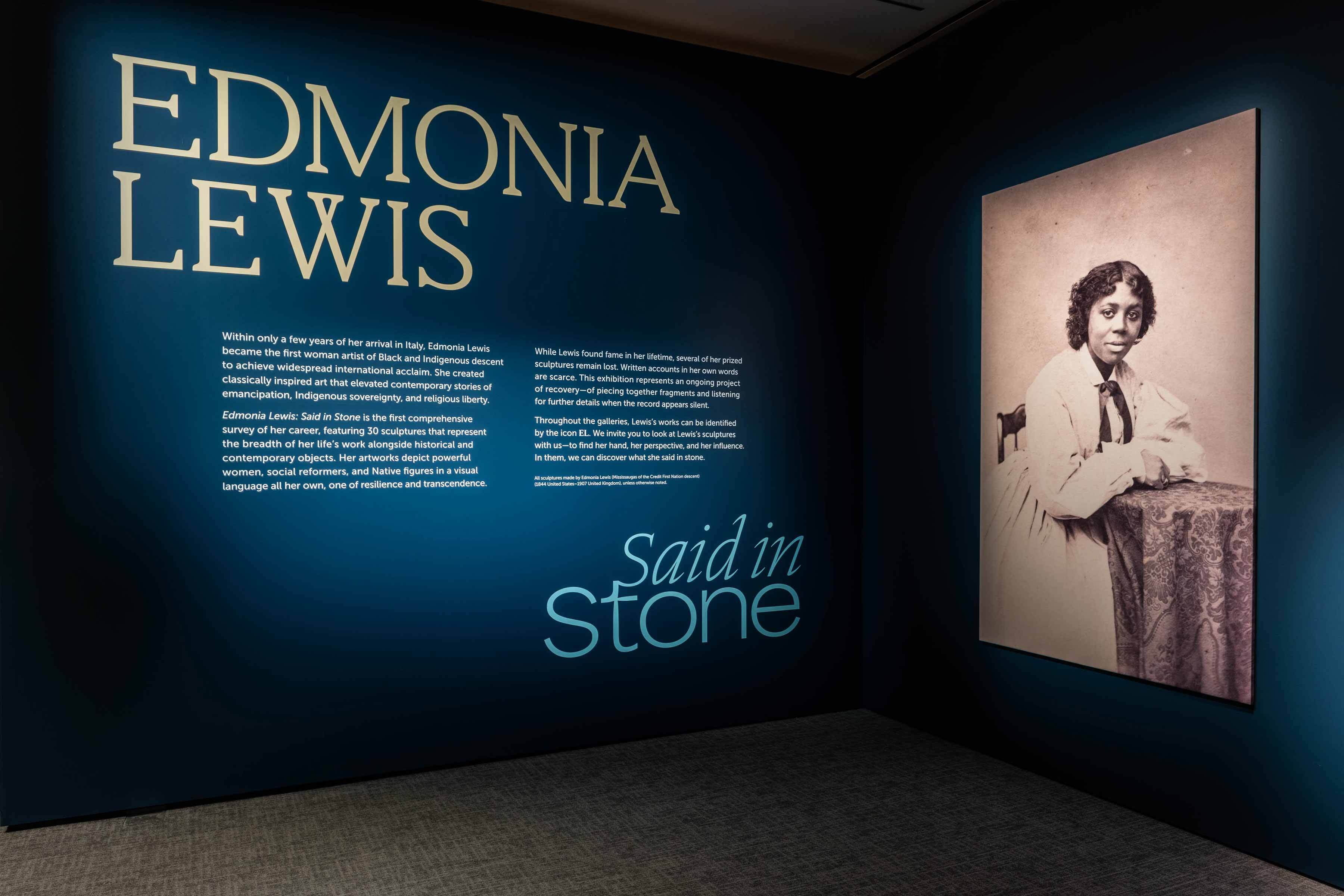
Edmonia Lewis: Said in Stone at PEM. Photo by Kim Indresano
Q: First off, who is Edmonia Lewis?
A: Edmonia Lewis was the first African American and Native American sculptor to achieve international acclaim in the 19th century. She was extremely well known in her day. After arriving in Boston in the 1860s, she gained a large following of patrons who supported her move to Italy, where she worked on an international stage. But after her death in 1907, her name fell out of popular awareness. Over the last century, sculptures have gone missing and much of the archival record of her life no longer survives. That has made it difficult to keep her story visible — especially as histories of American art have too often left artists of color out of the narrative. This exhibition pushes back against that kind of forgetfulness, recovering Lewis’ role in the larger American story.
Q: One of Lewis’s works has a remarkable “lost and found” history. Can you share that story?
A: Lewis debuted The Death of Cleopatra at the 1876 Centennial Exposition in Philadelphia, but it didn’t sell and was later sent to Chicago. From there, it was left behind, ended up in unexpected places (including a saloon and a racetrack), was even covered in house paint and was later stored in a shopping mall. Ultimately, thanks to the efforts of committed scholars and curators, it entered the Smithsonian’s collection, where it remains today as a true national treasure. The sculpture’s story — disappearing and reappearing — reflects something essential about Lewis’ legacy and what it has taken to recover it.
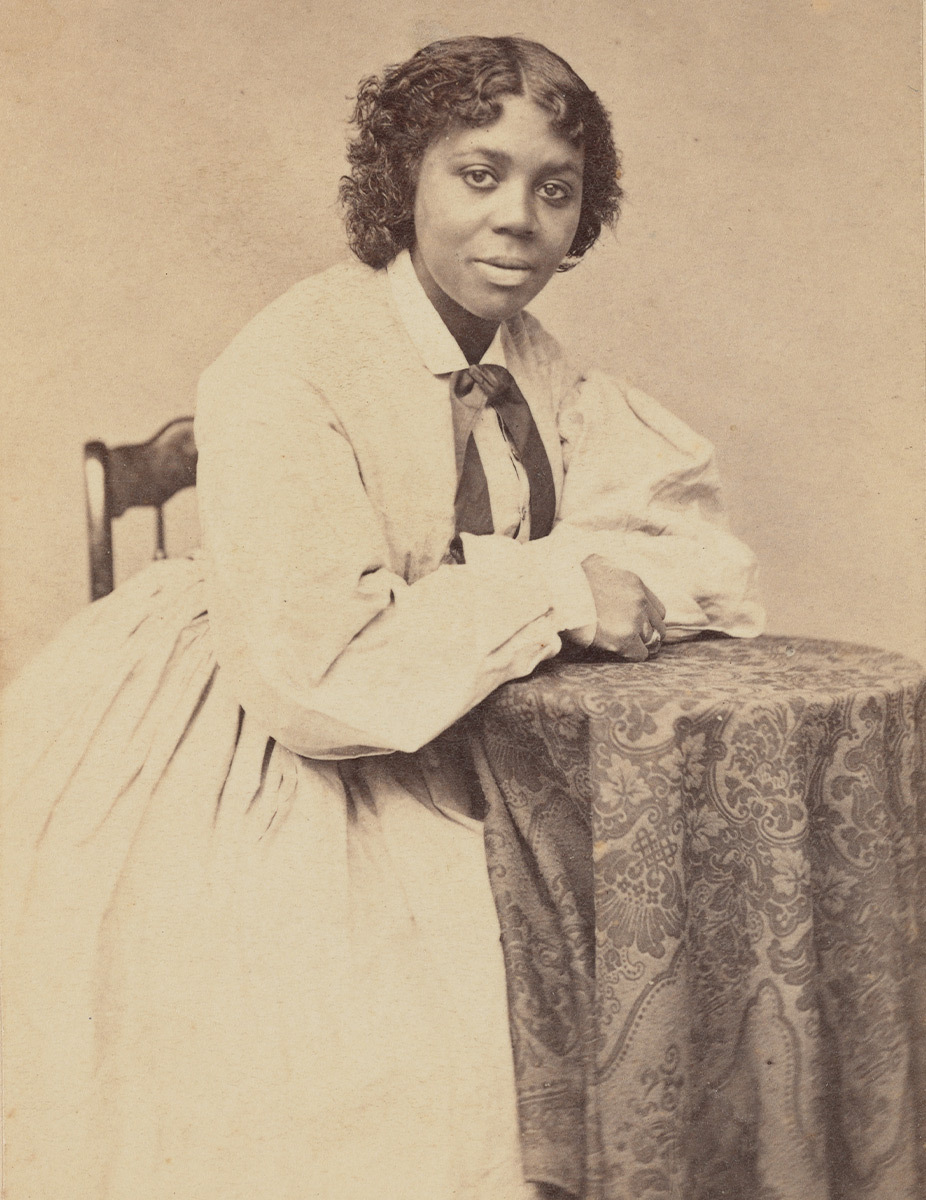
Augustus Marshall, Carte-de-visite of Edmonia Lewis, about 1870. Albumen on wove paper and cardboard. Collection of the Smithsonian National Museum of African American History and Culture, 2020.10.5. https://nmaahc.si.edu/object/nmaahc_2020.10.5
Q: How did Lewis persevere through the obstacles she faced — and why did Rome become so important?
A: Lewis’ story is one of surmounting obstacles from very early in her life, and those obstacles did not end when she became successful. She was continually asserting her legitimacy as an artist and her visibility on the world stage. After facing profound barriers, she moved to Boston and found support among abolitionists and social reformers: people who helped her begin a professional career. Italy, and Rome in particular, was where many sculptors of the time wanted to be. It was a center of marble carving, artisans, and an international community. Lewis famously said that the United States “had no room for a colored sculptor,” and that’s why she left. Even in Rome, she continued to insist on her authority and creativity in the face of long odds.
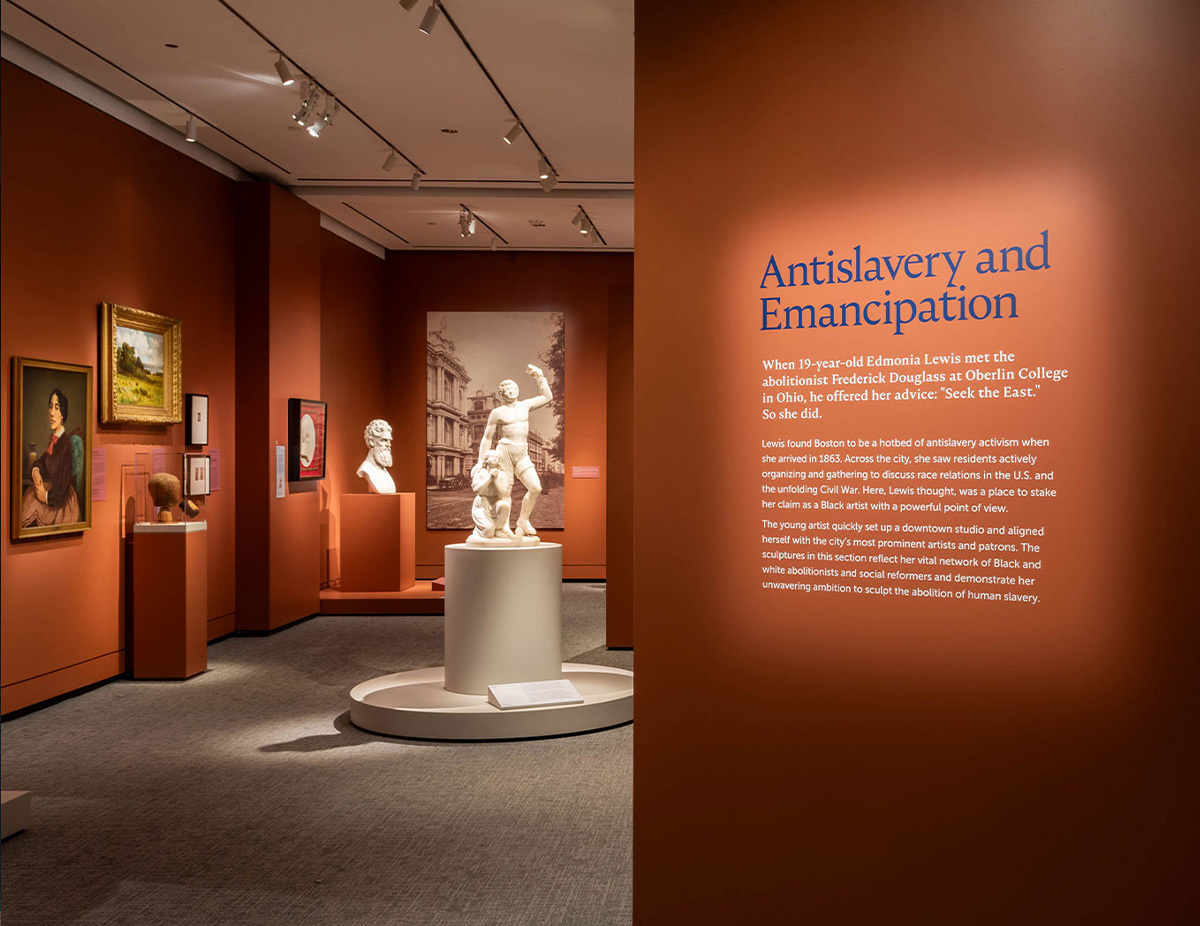
Edmonia Lewis: Said in Stone at PEM. Photo by Kim Indresano
Q: What will visitors see in Edmonia Lewis: Said in Stone? What themes run through her work?
A: Said in Stone includes 30 sculptures by Edmonia Lewis, the largest number ever brought together. This exhibition is the first large-scale survey of her art. We’re placing those works in conversation with works by fellow sculptors and painters, photography, archival materials and Indigenous belongings to give a fuller picture of her creative vision and the world her sculpture emerged from. Across her career, Lewis explored subjects tied to antislavery and emancipation, and later religious and mythological themes. Taken together, these works speak to larger themes of reform, resilience and community.
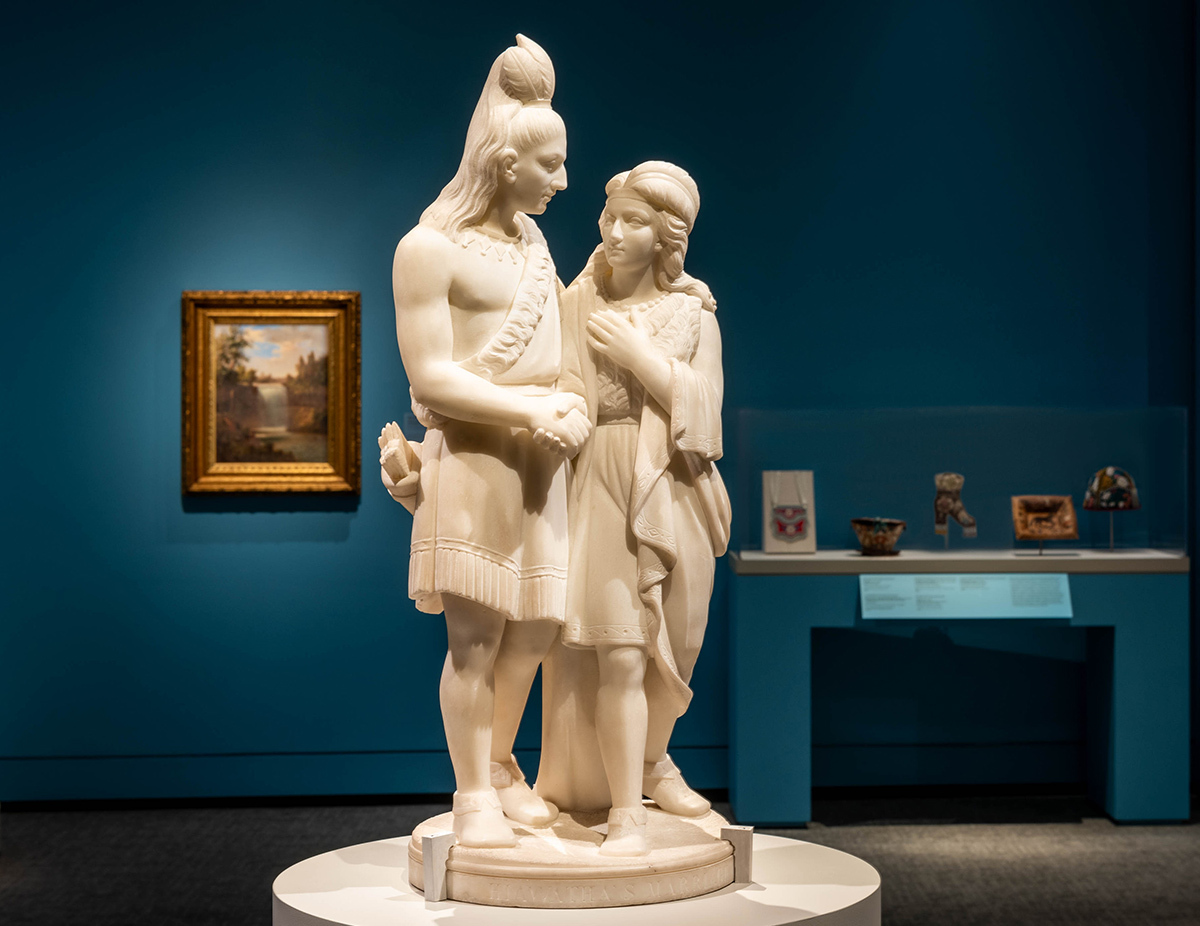
Edmonia Lewis: Said in Stone at PEM. Photo by Kim Indresano
Q: PEM worked with external advisors and collaborators to help shape this story. Why was that essential?
A: This exhibition reflects the institutional commitments of both partner museums. The Georgia Museum of Art has long been committed to collecting and exhibiting African American and African diasporic art, and PEM has a long history and commitment to Native American art and culture. In Said in Stone, we can tell a wide-ranging story of the first Black and Indigenous woman sculptor to find international fame. We convened an advisory group of artists and scholars to help us navigate a complex story shaped by entrenched racism, ongoing legacies and questions of how to place Lewis within her communities. Their guidance also helped us think carefully about how to bring Lewis’ sculptures into conversation with Indigenous belongings, and how to evoke the visual world that shaped her creative vision.
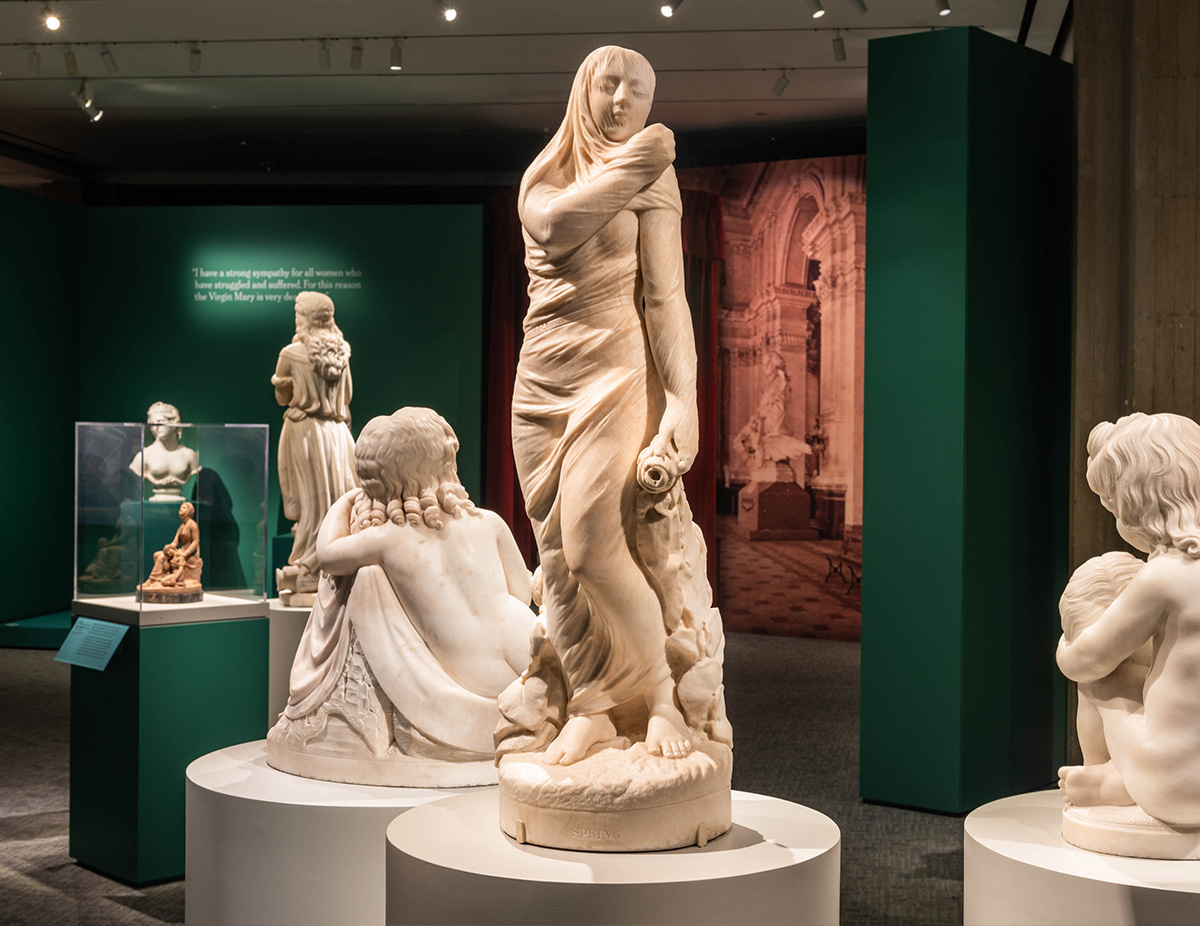
Edmonia Lewis: Said in Stone at PEM. Photo by Kim Indresano
Q: What do you hope visitors take away from the exhibition?
A: Edmonia Lewis might not be very widely known today, but we hope that through this exhibition, once you know Edmonia Lewis, you won’t forget her. Her art tells a powerful story of overcoming and of the transcendent force of sculpture to speak to causes that were central to her career — whether the rights of Black people in the 19th century, the rights of Indigenous peoples, or the ways faith and community can uplift the marginalized. We also hope visitors will want to participate in what I think of as a memory project: not only remembering Lewis, but asking who else deserves our memory, and whose stories we’re responsible for carrying forward.
Edmonia Lewis: Said in Stone is on view through June 7, 2026. Follow along on social media using #EdmoniaLewisatPEM. The exhibition moves to the Georgia Museum of Art from August 8, 2026 to January 3, 2027 and to the North Carolina Museum of Art from April 3 to July 11, 2027.
PEMcast
PEMcast 41: The storied life of Edmonia Lewis
35 min listen
Blog
Artist Edmonia Lewis visited Boston women sculptors in Rome in December 1865
6 min read
BLOG
Familiar faces: A painted detail echoes a figurehead from PEM’s collection
6 Min read

Blog
Reclamation of a Goddess
8 min read
