CONNECTED | Apr 09, 2026
Curator Q+A reveals insights into Edmonia Lewis’ lasting legacy and the power of marble

As the Peabody Essex Museum prepared to open Edmonia Lewis: Said in Stone, the first major retrospective dedicated to the groundbreaking 19th-century sculptor, we spoke with Lydia Peabody, Curator-at-Large at PEM and co-curator of the exhibition. In this conversation, Peabody reflects on Lewis’ renewed presence in popular culture, her extraordinary studio practice and the contemporary artists who continue to be inspired by her life and work.
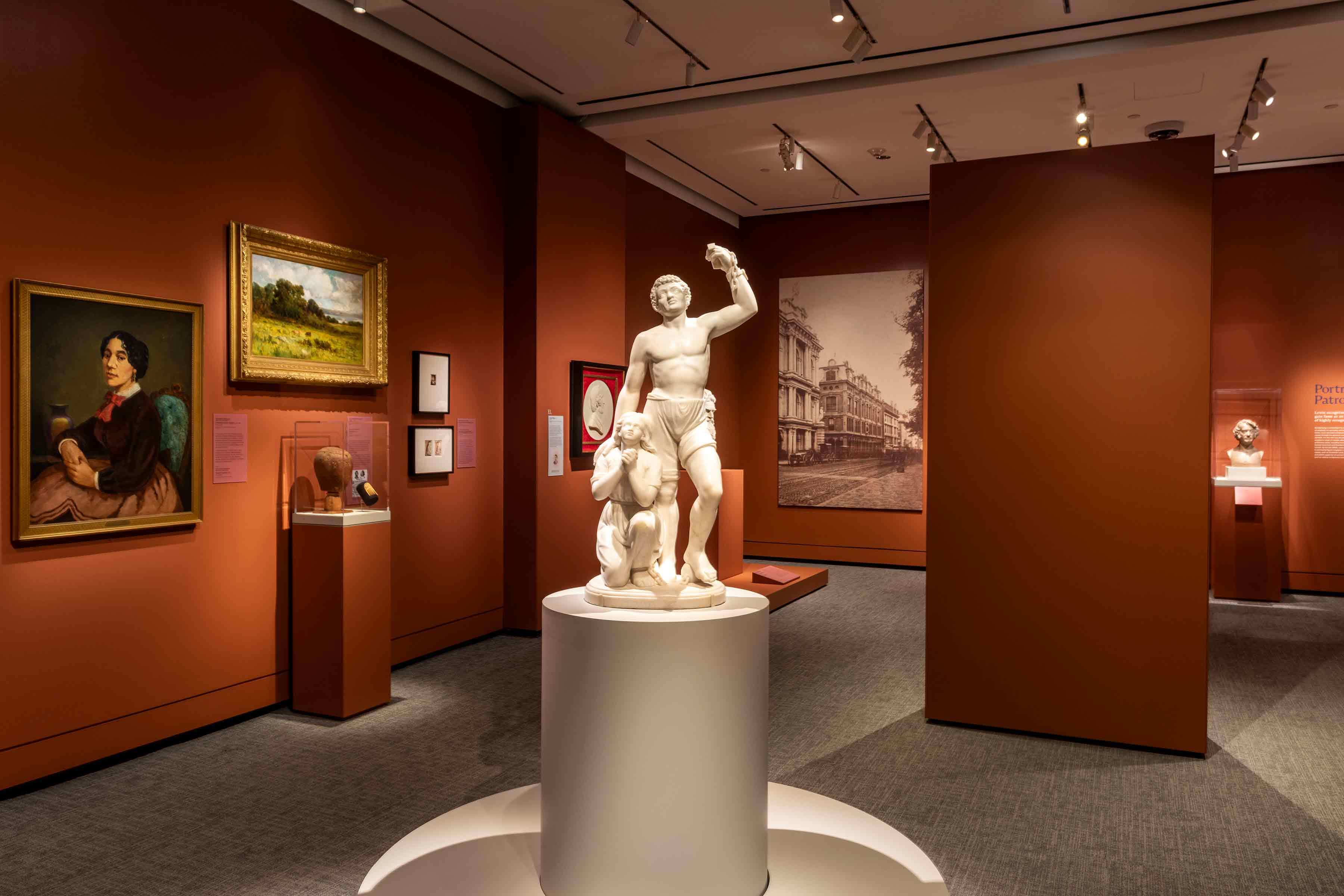
Edmonia Lewis: Said in Stone at PEM. Photo by Kim Indresano
Q: Edmonia Lewis has appeared recently in popular culture — including the Sex and the City reboot. What does it mean to see her showing up in places like that?
A: In And Just Like That, one of the characters is a filmmaker working on a project about Black women artists and creatives, and Edmonia Lewis is featured. There’s a scene where you see an image of Lewis — possibly Forever Free — in an editing room, and it was genuinely thrilling to see. She’s also been featured on a U.S. postage stamp. These moments signal that she’s entering public consciousness in a new way. Of course, she has long been influential to artists and women makers, but it’s fascinating to see her legacy surface through contemporary culture.
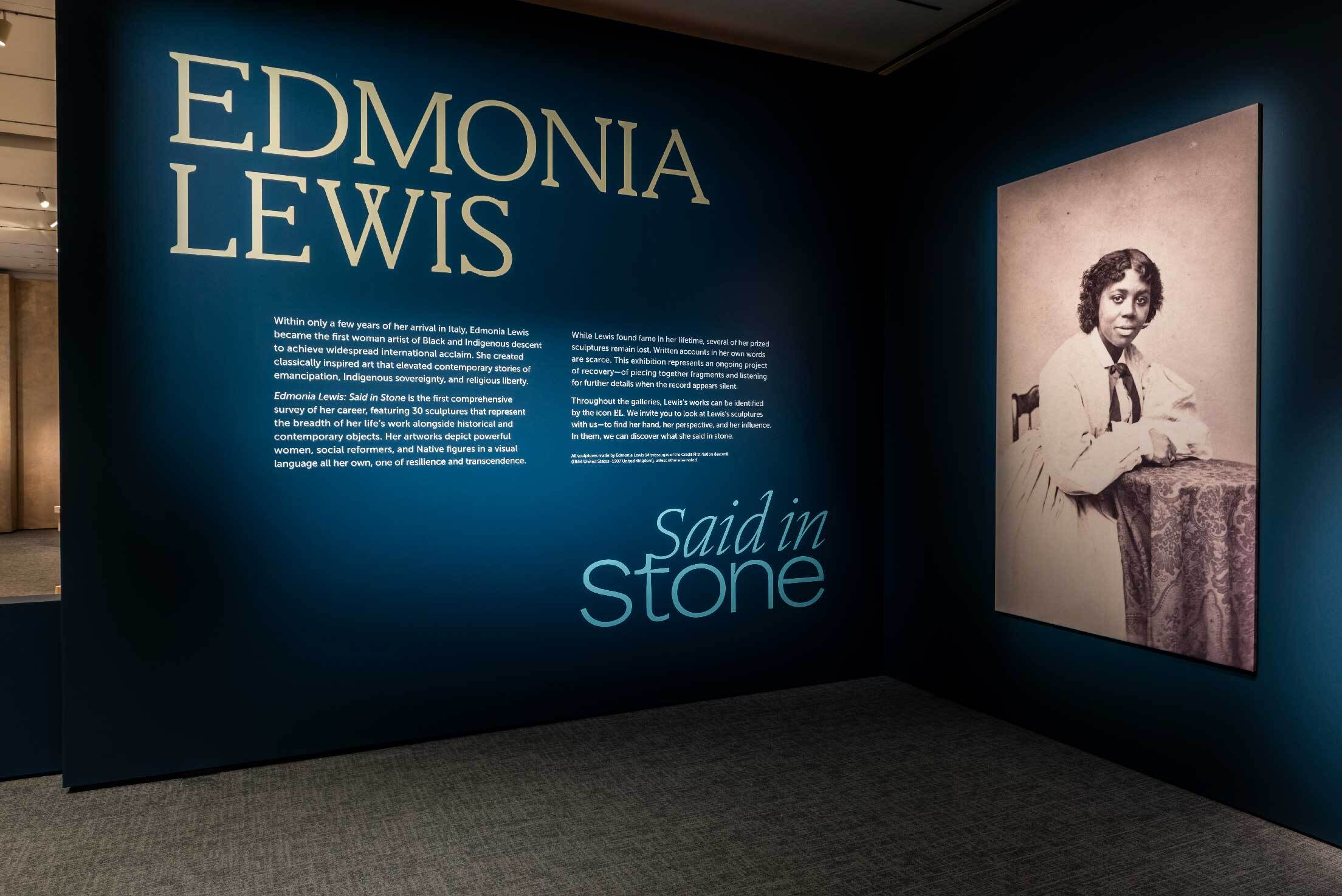
Edmonia Lewis: Said in Stone at PEM. Photo by Kim Indresano
Q: Why do you think Lewis is being rediscovered right now — and how has that momentum shaped this exhibition?
A: Her story is incredibly compelling. She was internationally famous in her lifetime, and then in the 20th century it was really Black women artists — especially those of the Harlem Renaissance and later — who kept her presence alive. What’s interesting is that Lewis seems to be rediscovered again and again. Through scholarship, through other artists’ work or through these pop-culture moments, she keeps resurfacing. This exhibition really aims to illuminate the full scope of her legacy and, hopefully, to make a lasting impact on how she is represented in art history.
Q: You open your catalogue essay with a contemporary artist’s story. Can you share that story?
A: Through research on living artists inspired by Edmonia Lewis, we connected with Gisela Torres, an American-born artist who has lived and worked in London for decades. She is of Afro-Cuban descent, and I came across her project Looking for Edmonia: Self-Portrait online and immediately wanted to know more.
Lewis’ death in London in 1907 — and that final chapter of her life — is the most understudied part of her story. It wasn’t until the early 2000s that scholars like Marilyn Richardson located her previously unmarked grave in London. It turns out that Torres lived nearby and had unknowingly walked past Lewis’ grave for years. When she learned this, she described feeling a kind of psychic connection — that Lewis had been there all along. That realization sparked a powerful body of work.
Q: One of Torres’ works appears at the end of the exhibition. What makes it so significant?
A: The piece we acquired is Conjure No. 3, a photographic print on marble. It shows Torres walking through the streets and neighborhoods in Italy where Lewis lived and worked. Marble was Lewis’ chosen medium, and it’s incredibly difficult to work with — both strong and fragile at once.
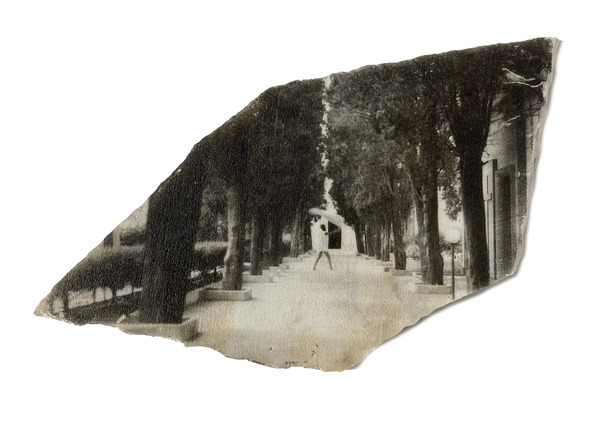
Gisela Torres, Conjure No. 3, 2020. Marble and paper. Museum purchase. 2025.19.1. © Gisela Torres. Peabody Essex Museum. Image courtesy of the artist.
By printing photography onto marble fragments, Torres was engaging directly with Lewis’ material language. The work feels like a conjuring — a way of calling Lewis’ spirit into the exhibition. It’s installed at the end of the show, beautifully lit, and paired with a video from the same series. From the series Looking for Edmonia (Self-Portrait), Torres dreams of Lewis in this work. Two plaster casts of Torres’ head appear face to face, one awake and one asleep. Visions of Rome’s Ponte Sant’Angelo, Via Canova, and Borghese Gardens stream across their surfaces. The visitor can hear footsteps echo as Torres follows Lewis through these landscapes, as well as Torres whispering Lewis’ name and singing Peggy Lee’s “Is That All There Is?” For Torres and other Black artists, conjuring Lewis is a project of reclamation. I hope visitors experience it as both contemporary and deeply historical.
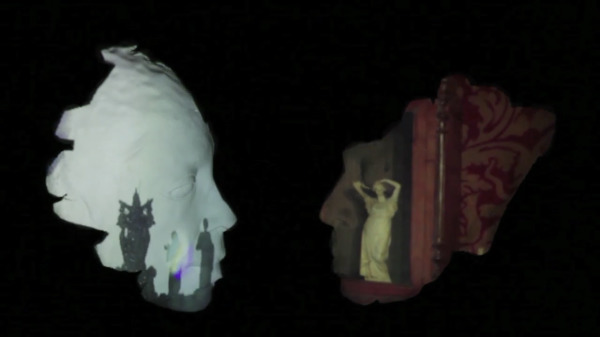
Gisela Torres, Still from Reverie and Slumber, 2020. 3D print projection video with sound. © Gisela Torres. Image courtesy of the artist.
Q: Lewis worked in marble at a monumental scale. What did researching her studio practice reveal?
A: She ran a full studio enterprise. At the height of her career in Rome, she oversaw more than 20 assistants and managed every stage of production — from clay modeling to plaster casting to carving marble using pointing devices. She was a master artist and a leader. It’s astonishing to imagine her directing that level of production, given the obstacles she faced as a Black and Indigenous woman in the 19th century.
Q: Lewis seemed to be everywhere — Boston, Rome, London — and connected to major historical figures. How do you understand that part of her story?
A: She was incredibly entrepreneurial. She understood the power of photography, knew how to build networks and cultivated relationships and alliances very intentionally. These circumstances weren’t accidental — she made them possible through strategy, intelligence and persistence.
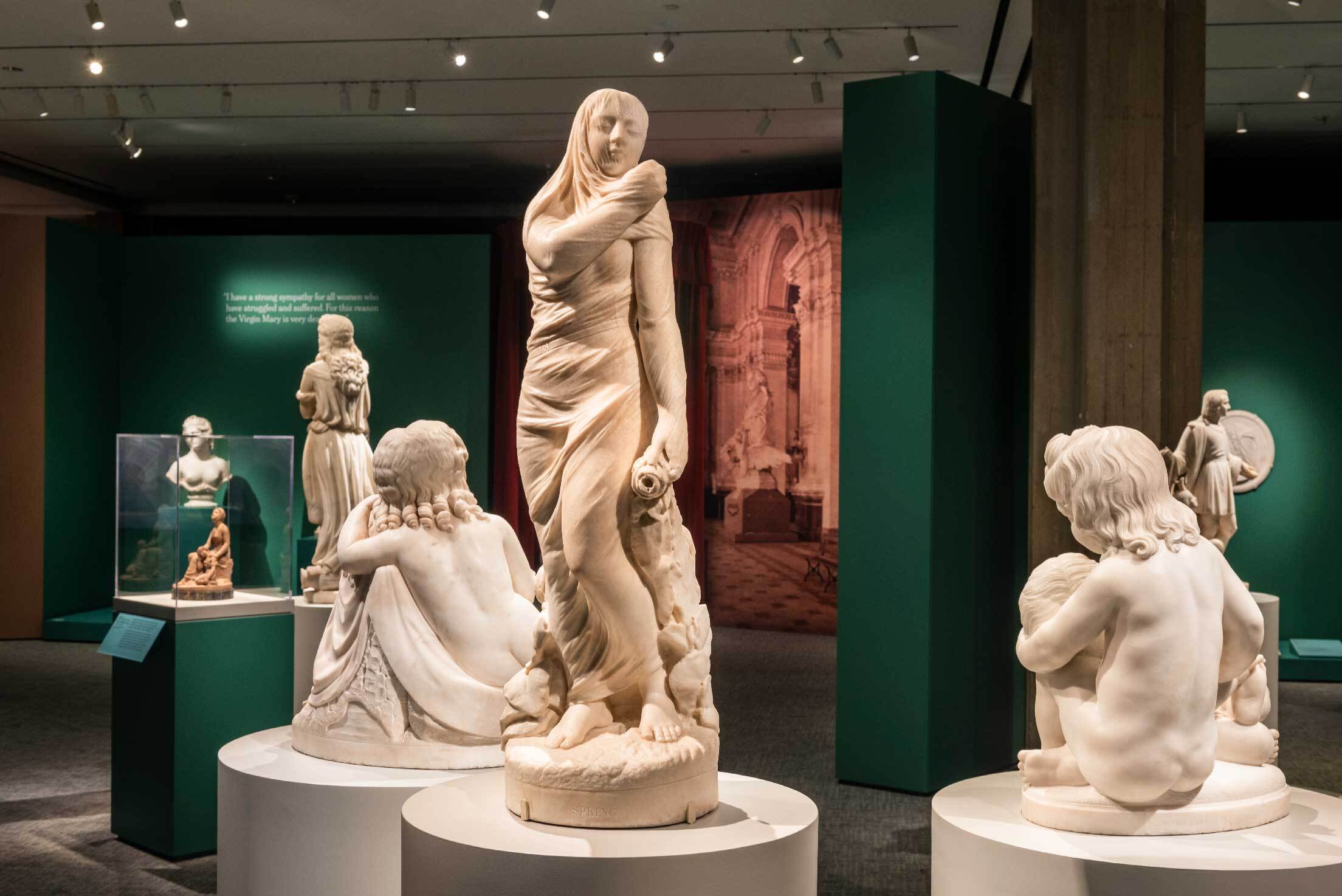
Edmonia Lewis: Said in Stone at PEM. Photo by Kim Indresano
Q: What do you hope visitors take away from this exhibition?
A: Her biography is extraordinary, but we didn’t want the story to eclipse the work itself. These sculptures are truly singular. She takes the language of neoclassical sculpture — a form historically used to depict power — and uses it to represent emancipated people, freedom and dignity. That’s radical. I hope visitors leave thinking about her mastery of marble, her innovation and her lasting influence. And I hope they say to others: “You have to see this exhibition. I had no idea who she was — and her work is incredible.”
Edmonia Lewis: Said in Stone is on view through June 7, 2026. Follow along on social media using #EdmoniaLewisatPEM. The exhibition moves to the Georgia Museum of Art from August 8, 2026 to January 3, 2027 and to the North Carolina Museum of Art from April 3 to July 11, 2027.
Keep Exploring
PEMcast
PEMcast 41: The storied life of Edmonia Lewis
35 min listen
Blog
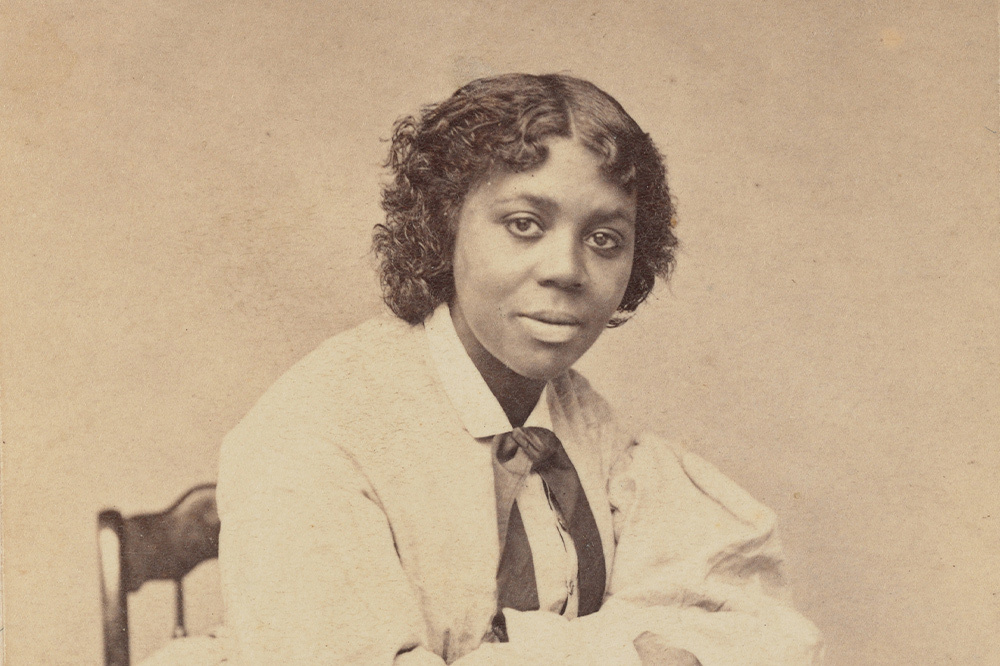
Artist Edmonia Lewis visited Boston women sculptors in Rome in December 1865
6 min read
Blog
Jacob Lawrence’s inclusive America
6 min read

Blog
Second discovery of Lawrence lost work
5 Min read
