CONNECTED | Sep 28, 2026
Curator Q+A: Behind the scenes of Isamu Noguchi: "I am not a designer”

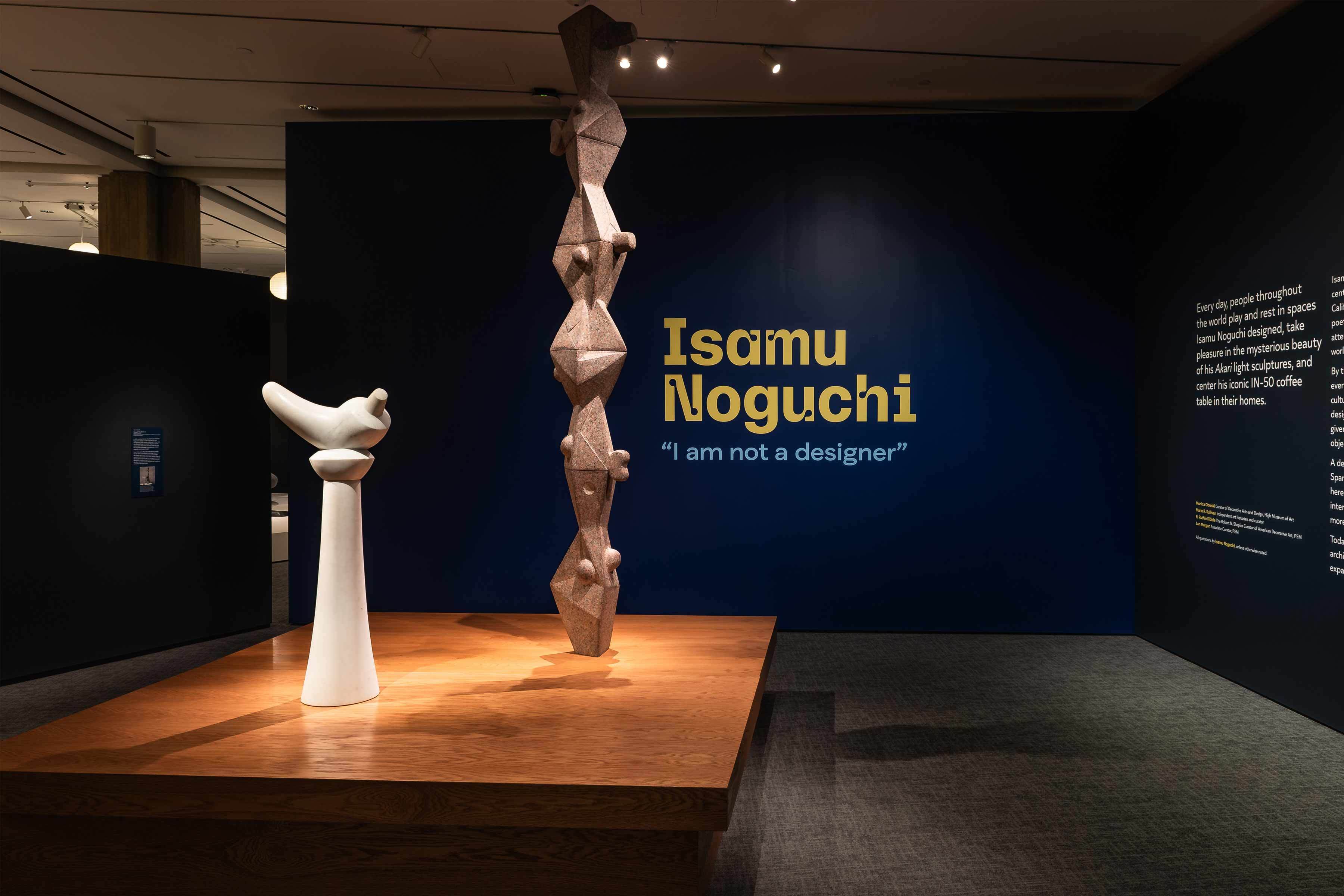
Sculptor Isamu Noguchi enjoyed a wide range of interests: coffee tables, light fixtures, dance costumes, public parks. Organized by the High Museum in Atlanta, Isamu Noguchi: "I am not a designer” made its New England debut at PEM in September as a retrospective of the design career of one of the 20th century's most critically acclaimed artists. Ruthie Dibble, PEM’s Robert N. Shapiro Curator of American Decorative Art and organizing curator of the exhibition at PEM, dives into Noguchi’s life and work.
Isamu Noguchi: “I am not a designer" at PEM. ©2026 PEM, Photo by Kim Indresano/PEM
Q: Why is this show titled "I am not a designer"?
A: In 1949, in an interview, Noguchi said, "I am not a designer. The word design implies catering to the quixotic fashion of the time.” He was essentially saying, "I don't want to be thought of as someone who's just responding to the moment. I want to be thought of as someone who's making art in response to big, enduring questions."
We loved bringing that into the title because this exhibition is a revisionist look at his career. He said these words, but if you look at his career in the decade leading up to that interview, he had made some of his most iconic pieces of furniture and lighting. And in the years after, he would go on to design urban spaces, theater sets, all kinds of objects that we would call “design” now because of their functionality. The show puts two elements of Noguchi in conversation: his design work, and how he described it. It really establishes him as one of the 20th century's most impactful designers.
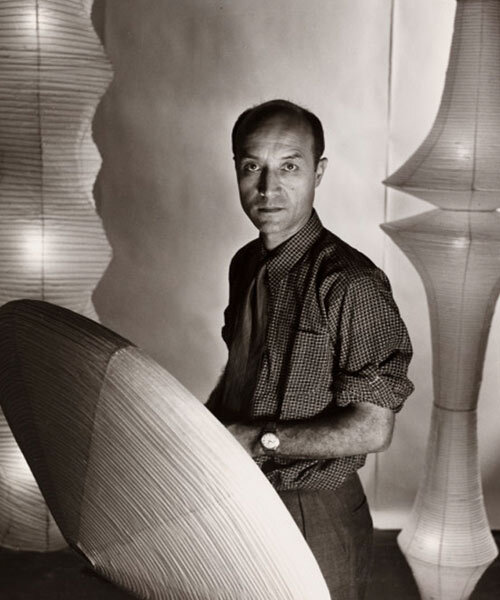
Louise Dahl-Wolfe, Isamu Noguchi, 1955. Gelatin silver print. © 2026 Center for Creative Photography, Arizona Board of Regents / Artists Rights Society (ARS), New York. © 2026 The Isamu Noguchi Foundation and Garden Museum, New York / Artists Rights Society (ARS), New York
Q: Who was Noguchi as a person? Where did he live and work?
A: Isamu Noguchi had a long and very rich life that brought him all over the globe. When he was born, he was living in Los Angeles with his mother, Léonie Gilmour, who was a progressive educator. His father was the renowned Japanese poet Yonejiro Noguchi. Léonie and her son, when he was about two years old, moved from Los Angeles to Japan, where Isamu Noguchi lives and grows up for over a decade. When he's in his early teens, he starts agitating with his mom to go back to the United States, and she ends up sending him to a progressive high school in Indiana. Then, because of World War II, he ends up in a different educational environment, but still in Indiana. He spends these formative years in the heartlands of the United States.
When he graduates from high school, he ends up going to New York City. He enrolls in medical school at Columbia, but he is quickly drawn into the avant-garde art world in New York City. From there, he's all over. He ends up in Paris, where he trains with the sculptor Constantin Brâncuși. He also receives a grant to travel all over the world to study the "architecture of leisure," as he calls it. He travels all over Europe and Asia, including Japan. After World War II, he ends up back in Japan for the longest period of time since his childhood. Although he is really a New Yorker at heart, he ends up spending a significant amount of time later in life in Japan and eventually established a second studio there that was focused on stone carving. He's really a citizen of the world, but we're proud to claim him as an American as well.
Q: How did Noguchi redefine traditional boundaries between art and design?
A: I think he wasn't necessarily interested in them. He just blew through them. He ignored them. He made all of the objects out of his studio with the same amount of care and ambition. He always said that just because something is reproducible and reproduced, it's still as much a work of art as anything else. He also was canny and careful with words. You can think about his father being a poet. He claimed all his work as “sculpture.” He had a really expansive definition of sculpture that most people wouldn't agree with. He said, "Everything I do is sculpture." That was his way of placing himself outside of conversations about fashion and commerce and design that he wanted to be a part of as a successful designer but he didn't necessarily want to be in the center of. He wanted to be doing his own thing.
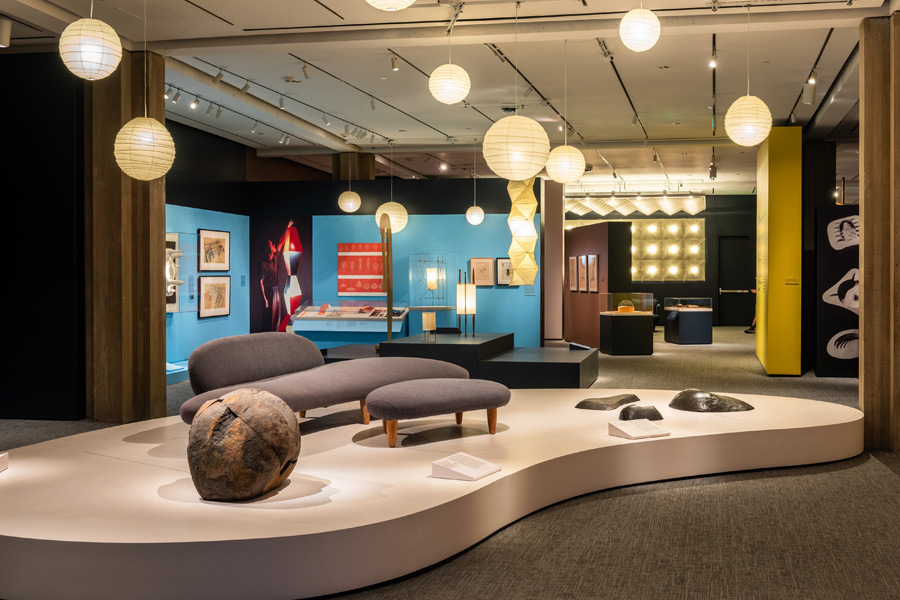
Photo by Kim Indresano/PEM.
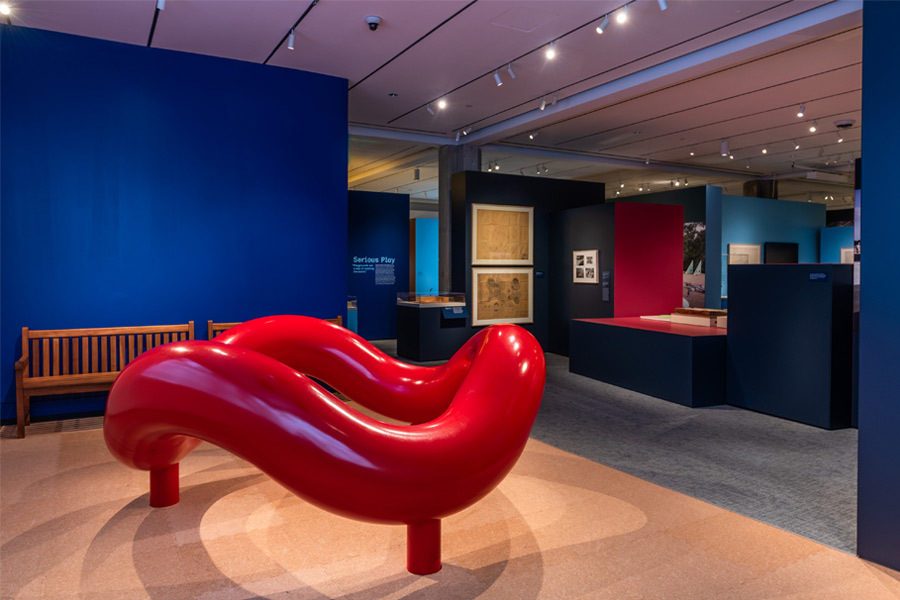
Photo by Kim Indresano/PEM.
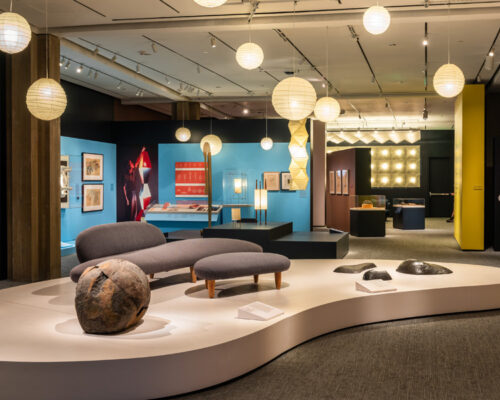
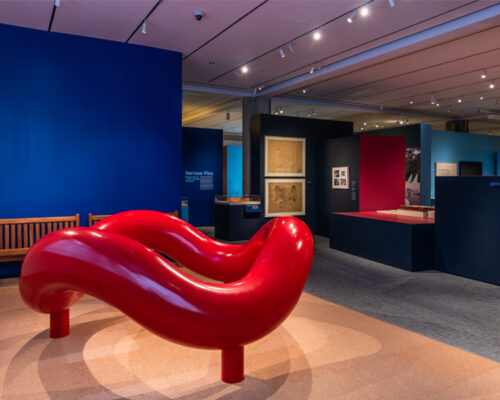
Q: What sort of things did Noguchi design?
A: Noguchi designed across a truly interdisciplinary range of professions. He designed furnishings — like if you think of industrial design, lighting. He designed one of the earliest baby monitors. He designed utensils, ashtrays. He also went big. He did a lot of set design for dance choreographer Martha Graham and other performers. He did costume design. And then later in his career, he becomes successful designing urban spaces, playgrounds and gardens. This exhibition is touring during the 50th anniversary of Playscapes, which is the Noguchi playground in Atlanta that was commissioned by the High Museum of Art, our partner in this exhibition. Truly, he could work at an incredible range of scales and across media. He owes a lot to the collaborators that he worked with. He was able to bring in architects and other industrial designers to help him realize his visions.
Q: Talk about his famous Akari light sculpture. Why do people love it?
A: Akari is a Japanese word that means both illumination and weightlessness. That was really important to Noguchi. These light fixtures are not named after the object, the paper or the bamboo. They're named after the kind of sensory effect they have. Akari are both traditional and modern. Noguchi creates them first in 1951. He's working with a traditional manufacturer of Japanese paper lanterns in Gifu, Japan, but he's innovating the designs. He takes the traditional materials, the paper and the bamboo, but he starts coming up with his own shapes and forms. He's just iterating, iterating, iterating over decades. He's producing different forms and examples, including making the bamboo ribbing kind of waves of picturesque imperfection. Those are so appreciated.
I think one of the reasons is because they're very flexible in their design sense. You'll see Akari in high modern spaces because they are modernist, but you'll also see them in spaces that are full of natural wood and more traditional things because they have that warmth rooted in their materials. Also they're just cool. They have that ineffable coolness to them that makes people want them.
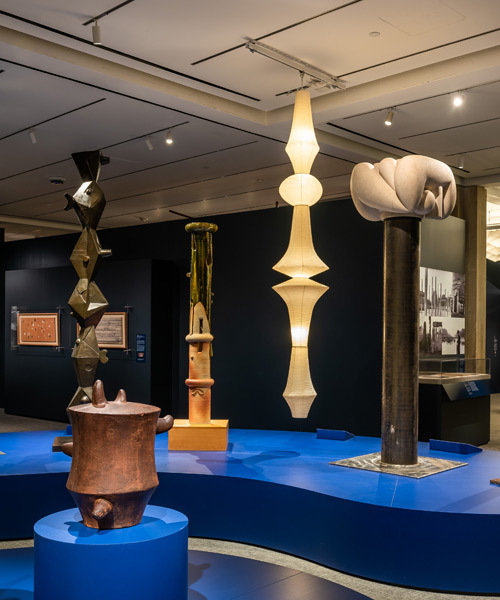
Photo by Kim Indresano/PEM.
Q: Those cool lights (or at least, knockoffs) are everywhere once you start looking for them. How did Noguchi’s designs become so prevalent in our everyday lives?
A: Isamu Noguchi's designs came into people's lives in the mid-20th century through magazines and catalogs and department stores. Some are still in production today, and you can shop online for them. That includes the Akari and many of his furniture designs. The other way that Noguchi's work is in people's lives is in his contributions to public spaces. There are about 45 public sites around the world that Noguchi designed some element of — sculptures, but also landscaping and plantings sometimes, and the entire urban space. I think that's the way that most people encounter Noguchi. Walking through the streets of New York City or along the riverfront in Detroit, you will experience a Noguchi design whether you know it or not.
Q: How did Noguchi’s designs shape a more inclusive world?
A: If you enter into a space that Noguchi designed, it's a place to rest, it's a place to call your friend on the phone, it's a place to watch your kids play. So many of his works are equally beautiful, equally appreciable, equally easy to engage from so many different angles. There's no one way that you have to walk through a space to appreciate a Noguchi garden, or one way you have to conduct yourself or move your body. You can play, you can be contemplative. In that way, he directly impacted so many people's lives. I think the way in which he designed for a kind of open-ended enjoyment of a space is really democratic, and it speaks to this kind of personal and, I think, political commitment that he had to inclusivity.
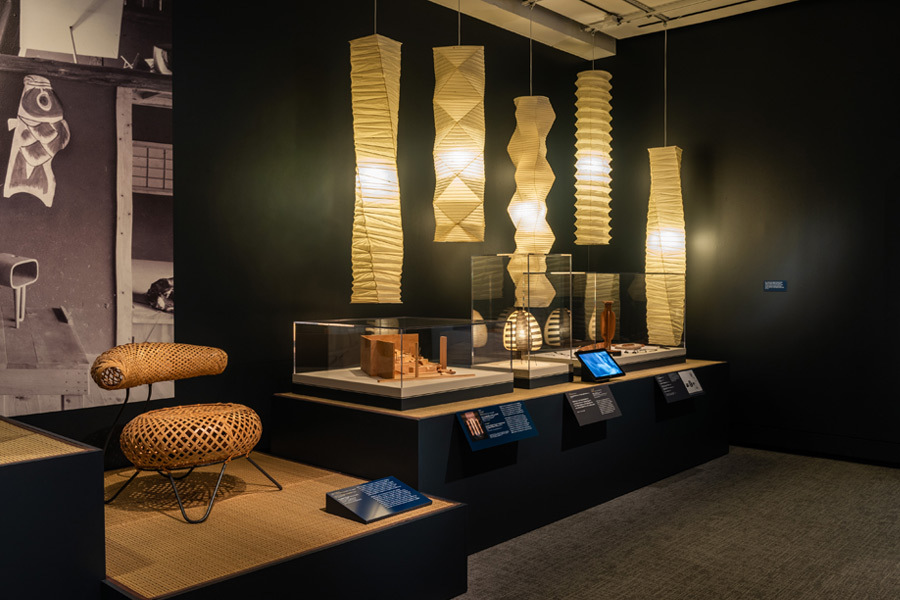
Photo by Kim Indresano/PEM.
Q: Why are his designs so enduring?
A: The one that I think about when I look at his work and read his writings is timelessness. Noguchi was very disciplined about looking at things that had enduring design appeal. He spent a lot of time thinking about nature, natural elements, and how to adapt them to his work, and also historical elements and materials. That kind of discipline he had about looking and being in conversation with things that were not about fashion, were not about a certain moment, is part of what makes his design so enduring. Because when you look at his tables, I think what you see is more an artist's conversation with the earth, with stone, with organic forms, rather than an artist's response to 1945 or 1946. Whether or not people immediately pick up on that, I think it's that commitment to timeless design that makes his work so enduring.
One highlight of the show is a collection of tables that Noguchi designed over four decades. To see them together is really such a treat because you see him starting in 1940 all the way through the 1980s engaging with the same forms, but constantly thinking of new ways to produce them — different materials, different techniques, different levels of functionality; different colors, even. I love that space because you get a sense of how pursuing one type of functional object, the table, really allowed him to range creatively.
Q: Some of Noguchi’s designs are in conversation in the gallery with objects from PEM’s collection of Japanese art. Why are you excited about bringing this exhibition to PEM?
A: Since 1799, we've been collecting objects that are ingeniously designed to solve problems and respond to conditions all over the world. I really love that this show allows us to talk about a more modern chapter and what design looks like in the 20th century. I also think that Noguchi's mindset really maps to PEM and the ethos here. He was so interested in global history and art and culture and also specifically Japanese art and culture, and that global curiosity is such a PEM thing. I think the context that we can create for visitors who see the show and then walk through our galleries is really unique and a distinctive contribution we make to the show. I hope that visitors will walk out back into the world and have curiosity about good design and how good design shapes our lives. Lastly, I hope that people will experience a sense of joy and optimism in just seeing what it looks like for one person to pursue their calling, their vocation, over many decades. I think it's inspiring and is something that we can all take away a bit in our lives.
Isamu Noguchi: “I am not a designer” is on view through January 3, 2027. Keep an eye on our events page for Noguchi-inspired art workshops and other events throughout the run of the exhibition.
Related posts
Blog
Embracing the designs of Isamu Noguchi
12 min read

Press Release
PEM presents a new major retrospective on the design work of Isamu Noguchi
Read on
PEMcast
PEMcast 35: The Curious Life of Reverend William Bentley
39 Min listen
Collection
Japanese Art
