CONNECTED | Apr 15, 2026
Touring PEM’s trees for Arbor Day

The PEM Arboretum came into being in the winter of 2023 as a way of promoting and caring for the “living collections” of the museum. Arbor Day is an opportunity for us to take advantage of one of the more enjoyable aspects of our Level II Arboretum certification, which is having the chance to offer programs to engage and educate the public on our arboretum and the importance of green spaces, especially in urban areas. We decided to offer a tree-focused walking tour through Salem’s historic McIntire District this year in honor of Arbor Day.
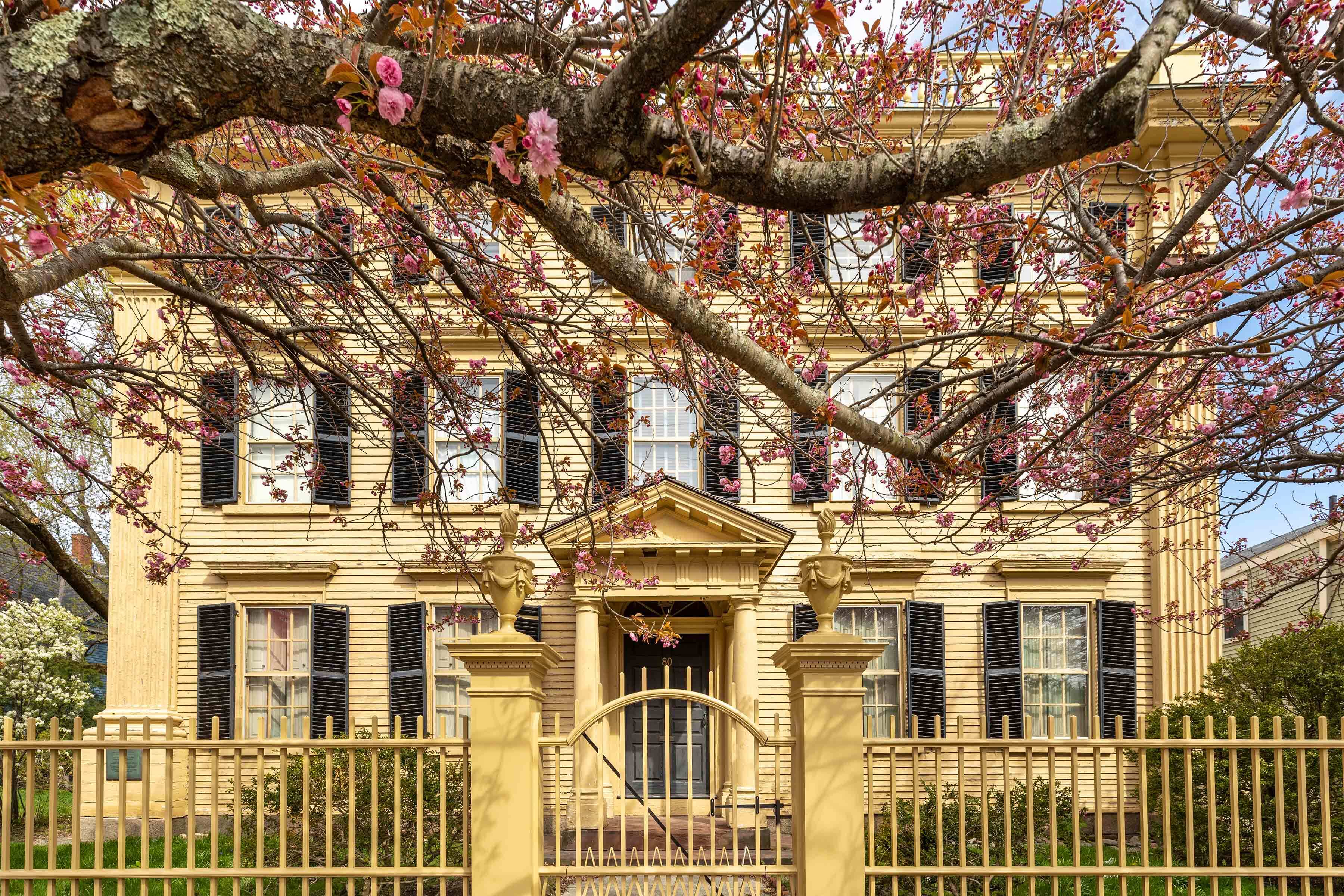
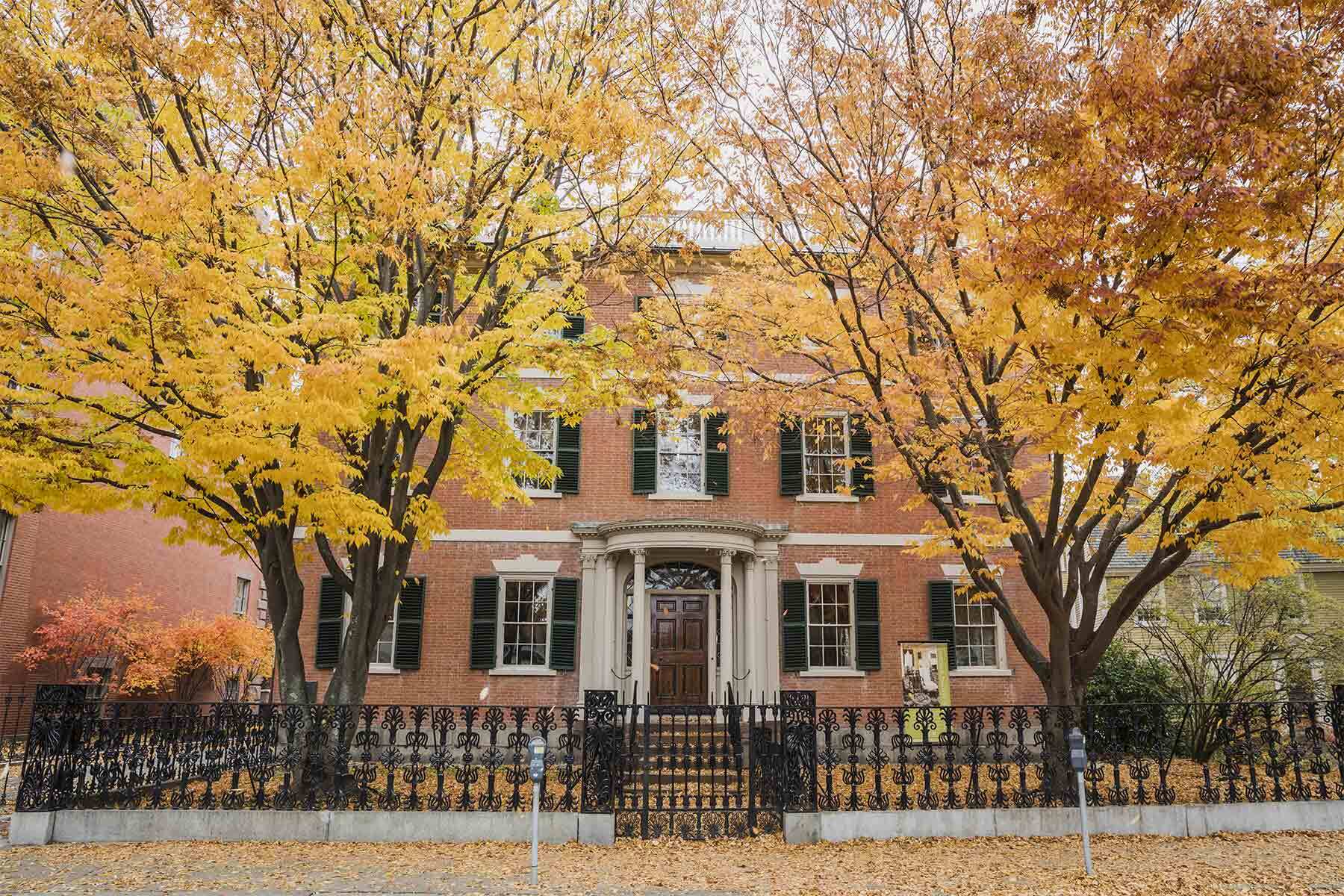
The Peirce-Nichols House, 80 Federal Street, Salem. Photo by Kathy Tarantola/PEM.
The first documented Arbor Day celebration took place in Spain in 1594 in the modern day village of Alamedia de los Remedios. The first “modern” Arbor Day was also held in Spain, in the town of Villanueva de la Sierra in 1805, but they really did it right! They had a three-day celebration of feasting, dancing and planting. No doubt a welcome distraction from the war raging in Europe.
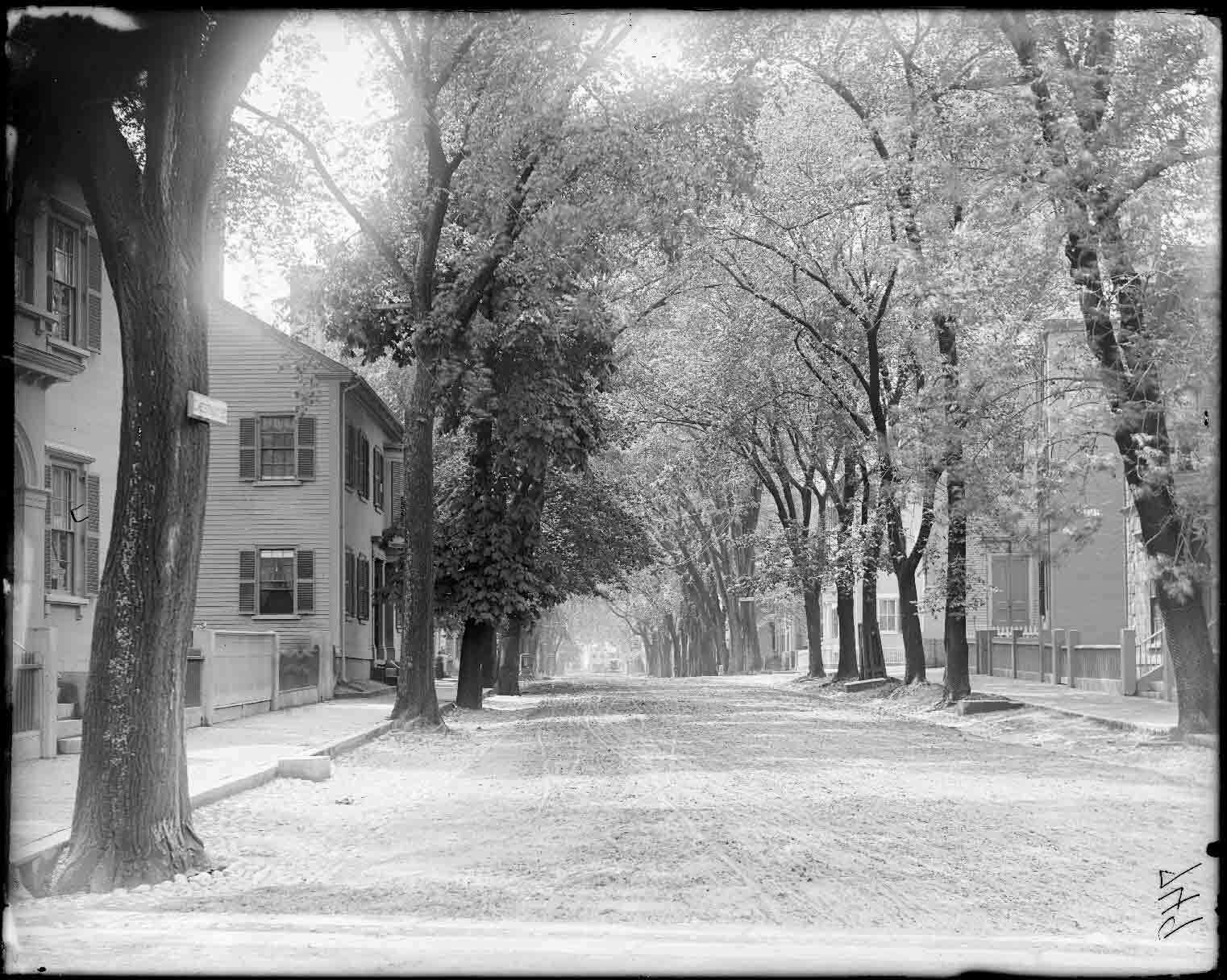
Cousins, Frank, 1851-1925. Chestnut Street from Summer Street, views, Salem. Photographs, Glass negatives. Phillips Library at the Peabody Essex Museum. Photo Vault, Box 24.
The United States would celebrate its first Arbor Day on April 10, 1872 in Nebraska. The holiday was the brainchild of J. Sterling Morton, who first proposed it at a meeting of the Nebraska State Board of Agriculture. That year over one million trees were planted in Nebraska. By 1885, the date of the holiday was changed to April 22, which was J. Sterling Morton’s birthday, and by 1907 it was being celebrated in every state of the union.
On April 15, 1907, at the urging of his Chief of the Forestry Service, President Theodore Roosevelt issued an “Arbor Day Proclamation to the School Children of the United States” concerning the importance of trees and recommending forestry be taught in schools.
As a very young arborist, I had the good fortune to be able to care for the trees on the campus of the Essex Institute in the late 1980s, shortly before the institute merged with the Peabody Museum to become PEM. The first tree I ever worked on was the large pear (still there, but in a reduced form due to decay) in the Federal Gardens off of Brown Street.
I recall being very nervous. I was fairly new to the industry, and this was A PIECE OF HISTORY! I loved our pruning trips to the Asian Garden (removed during a past museum expansion) next to East India Marine Hall, and I always got a kick out of the “Cry Innocent” actors doing their street theater along the pedestrian mall.
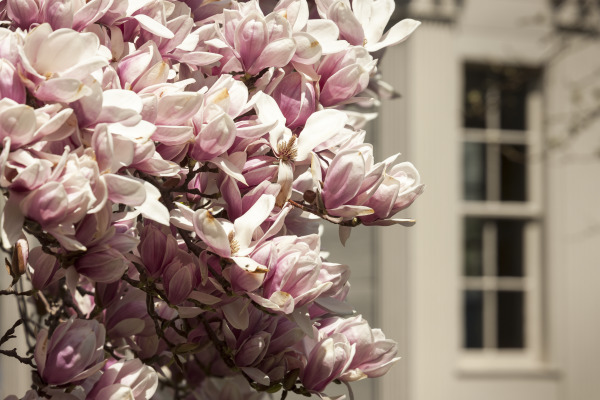
Essex Federal Garden, Spring Foliage, Photo by Walter Silver/PEM.
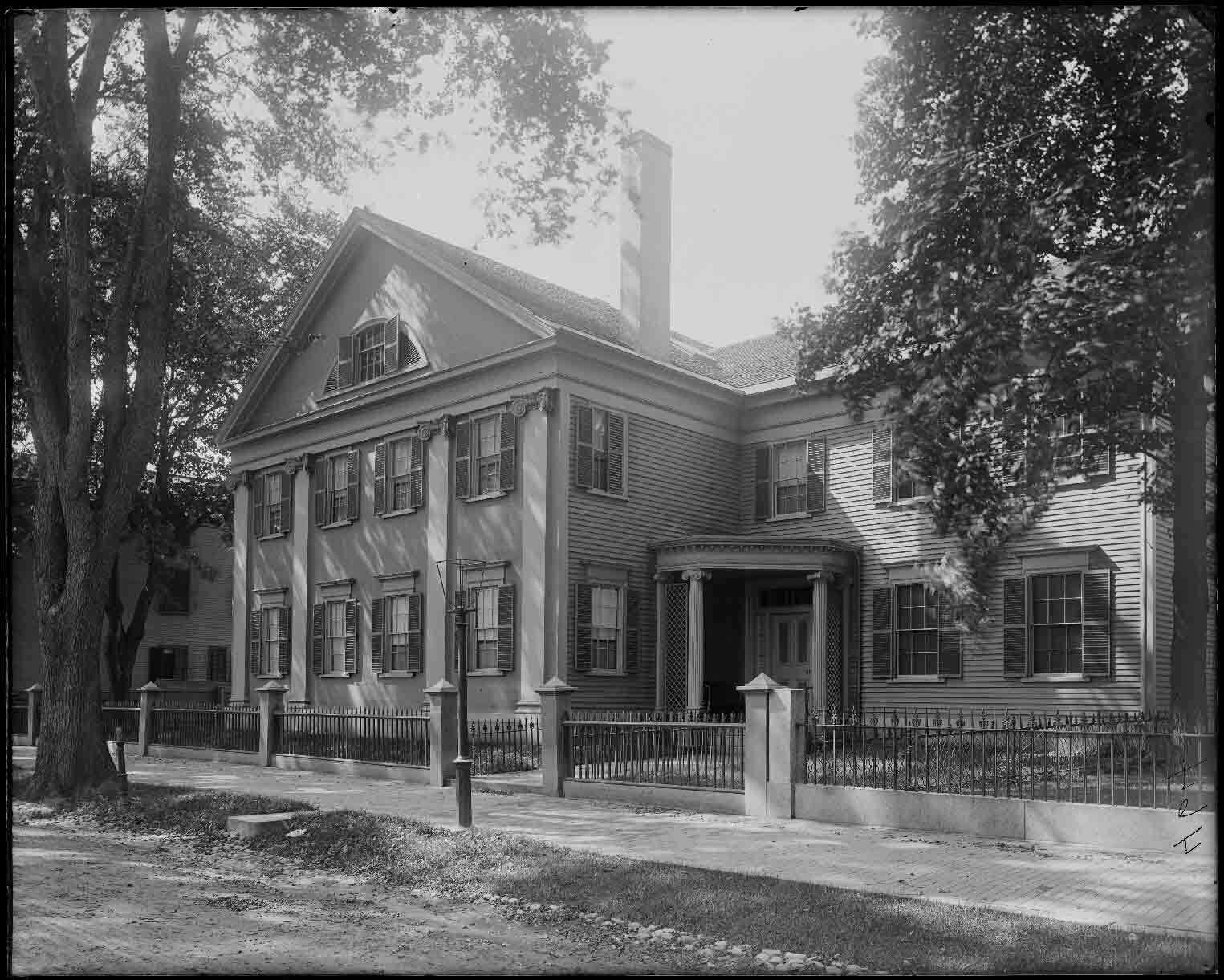
Cousins, Frank, 1851-1925. 14 Chestnut Street, Salem. Photographs, Glass negatives. Phillips Library at the Peabody Essex Museum. Photo Vault, Box 15.
In the early 2000s, when I moved to Salem and started my own small tree care business, I began to realize it wasn’t just the trees of the museum campus that were notable. The whole city teemed with cool, historic trees. It seemed as if every one of my customers had a fascinating story linked to their trees.
After joining PEM full time in 2023, I began to get to know botanist John Robinson through research and oral history. He was a noted botany educator as well as the landscape architect behind PEM’s Ropes Mansion Garden; in 1891, he wrote a series of newspaper articles under the title “Our Trees: A Popular Account of the Trees in the Streets and Gardens of Salem, and the Native Trees of Essex County, Massachusetts.”
The articles were eventually published by the Essex Institute, and became, coupled with my experiences working in the city, the basis for an Arbor Day tour of some of the fascinating historic trees of the McIntire District.
The Arbor Day tour itself will be a walking tour through the McIntire District focusing on some of the more interesting trees and the histories behind them. Trees on the tour include a 50-year-old cherry that was purchased as a sapling from the end-of-the-year discount sale at Ann & Hope, an original elm that survived Dutch Elm Disease and two majestic and venerable oaks that predate the birth of our nation. Thanks to an extensive collection of photographs of the McIntire District from the late 19th and early 20th century, we will have pictures that show what some of the trees looked like 150 years ago. The tour is roughly a half mile in length and an hour in duration, so walking shoes and weather-appropriate clothing are recommended. I hope to see you there.
This event is part of PEM’s Salem 400+ programming.
Blog
Behind the scenes of PEM’s new Craft in America audio tour
4 min read

Blog
Behind the scenes of PEM’s historic walking tours
7 min read
BLOG
Tree trekking around PEM’s campus with our Horticulture and Grounds team
8 min read
Historic Houses
Ropes Mansion and Garden
Built in 1727–1729
0.4 miles from PEM
