CONNECTED | Jul 24, 2026
Murders, witches and shipwrecks: The stories behind PEM's new ad campaign

If you've been traveling around Boston or Salem lately, it’s likely you may have spotted PEM's newest advertising campaign splashed across train platforms, wrapped around buses or popping up in your social media feed.
The campaign celebrates something only PEM can offer: the authentic lore of Salem.
Since 1799, the museum has been preserving and sharing the people, places and creativity that have shaped this infamous port city — from the Salem Witch Trials and the American Revolution to far-flung maritime adventures, jaw-dropping historic houses and curious natural wonders.
Visitors to Salem have plenty to discover, and we think there's no better place to begin than at PEM, the nation's oldest continually operating and collecting museum. Start here to familiarize yourself with the city's rich history before setting out to explore the places and stories that make Salem unlike anywhere else.
Our ads offer a brief glimpse of some of the unexpected and surprising things you’ll encounter at PEM. Behind every punchy headline, however, is an object with an incredible tale waiting to be discovered.
Let's meet a few of the stars of the campaign.
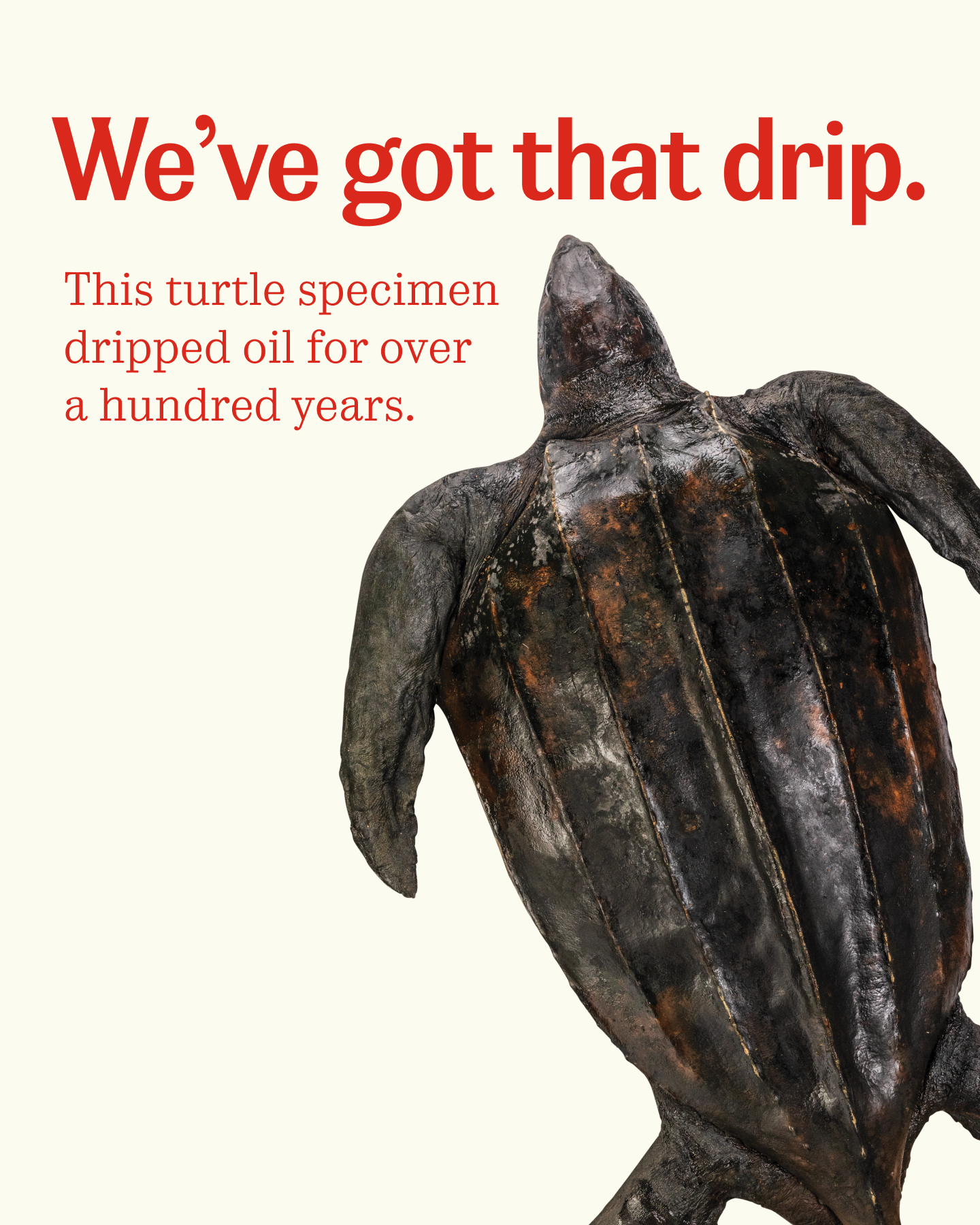
#1 We've Got That Drip
Meet one of the quirkiest celebrities in PEM's collection.
Head to PEM's Salem Stories gallery and you'll encounter an enormous leatherback sea turtle that was collected off the coast of Rockport, Massachusetts, in 1885.
More than six feet long and weighing an astonishing 750 pounds when it was found, the turtle has fascinated visitors for generations. But what really earned it legendary status wasn't just its size: It was the fact that it slowly dripped oil for more than a century.
As strange as it sounds, there's a perfectly good scientific explanation. Leatherback turtles are insulated by an exceptionally thick layer of fatty tissue that allows them to survive in cold ocean waters. Even long after preservation, some of those natural oils can slowly migrate through the skin and connective tissue.
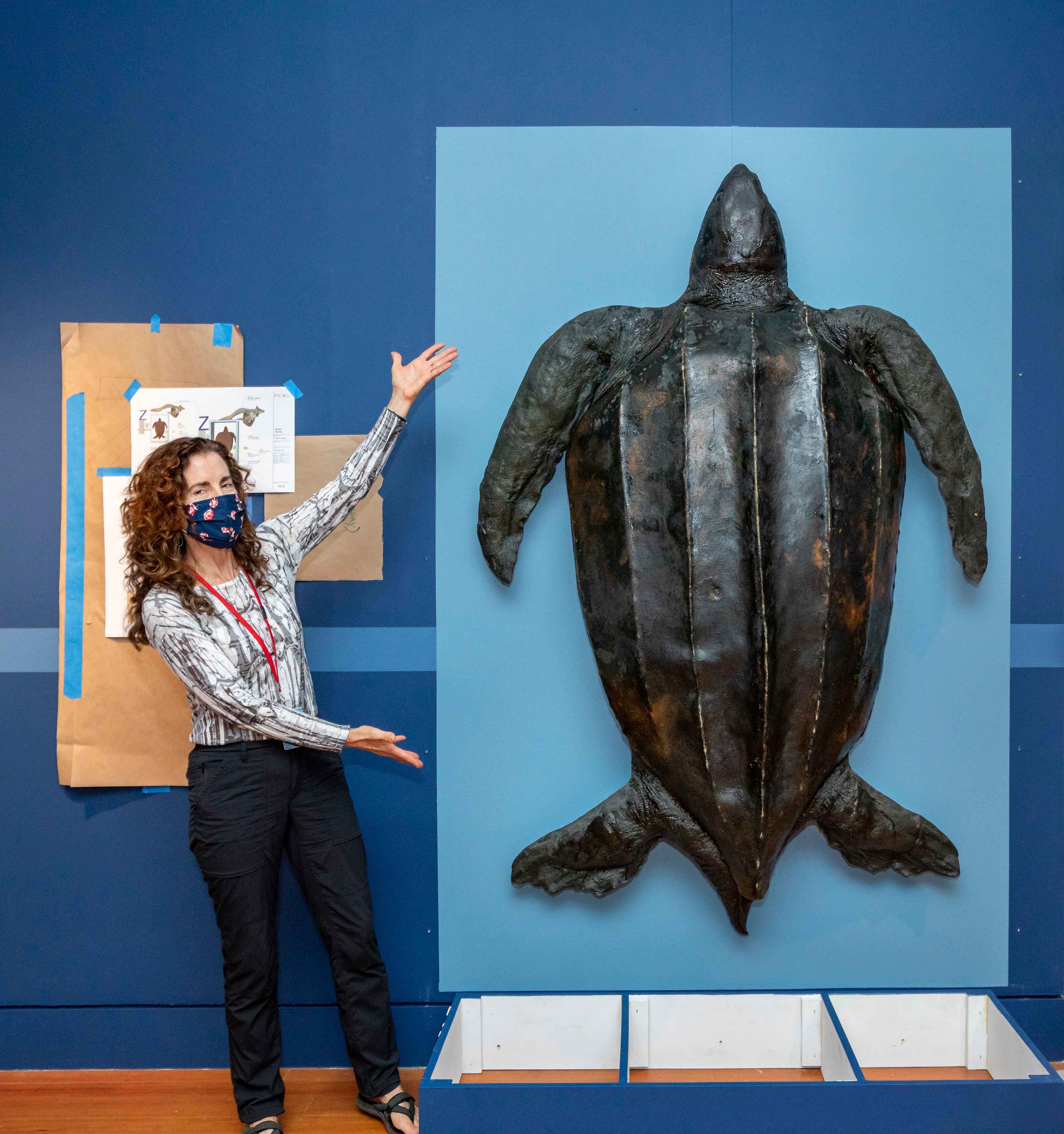
Jane Winchell, Director of PEM's Dotty Brown Art & Nature Center and Curator of Natural History, stands beside our leatherback turtle (Dermochelys coriacea). Photo by Kathy Tarantola/PEM.
For decades, during Salem's hot summers before the museum was climate-controlled, the turtle would begin to "weep" oil whenever temperatures climbed. The phenomenon was so reliable that staff joked they could tell how warm the building was simply by checking whether the turtle was dripping. (Even with climate control, something similar is currently happening to a whale skeleton in the collection of the New Bedford Whaling Museum.)
The turtle’s original display case was specially designed to discreetly collect the oil beneath the specimen. Today, the bottle remains as evidence of a memorable museum phenomenon.
You can find the leatherback turtle — and its bottle of drippings — on the museum's Level Three.
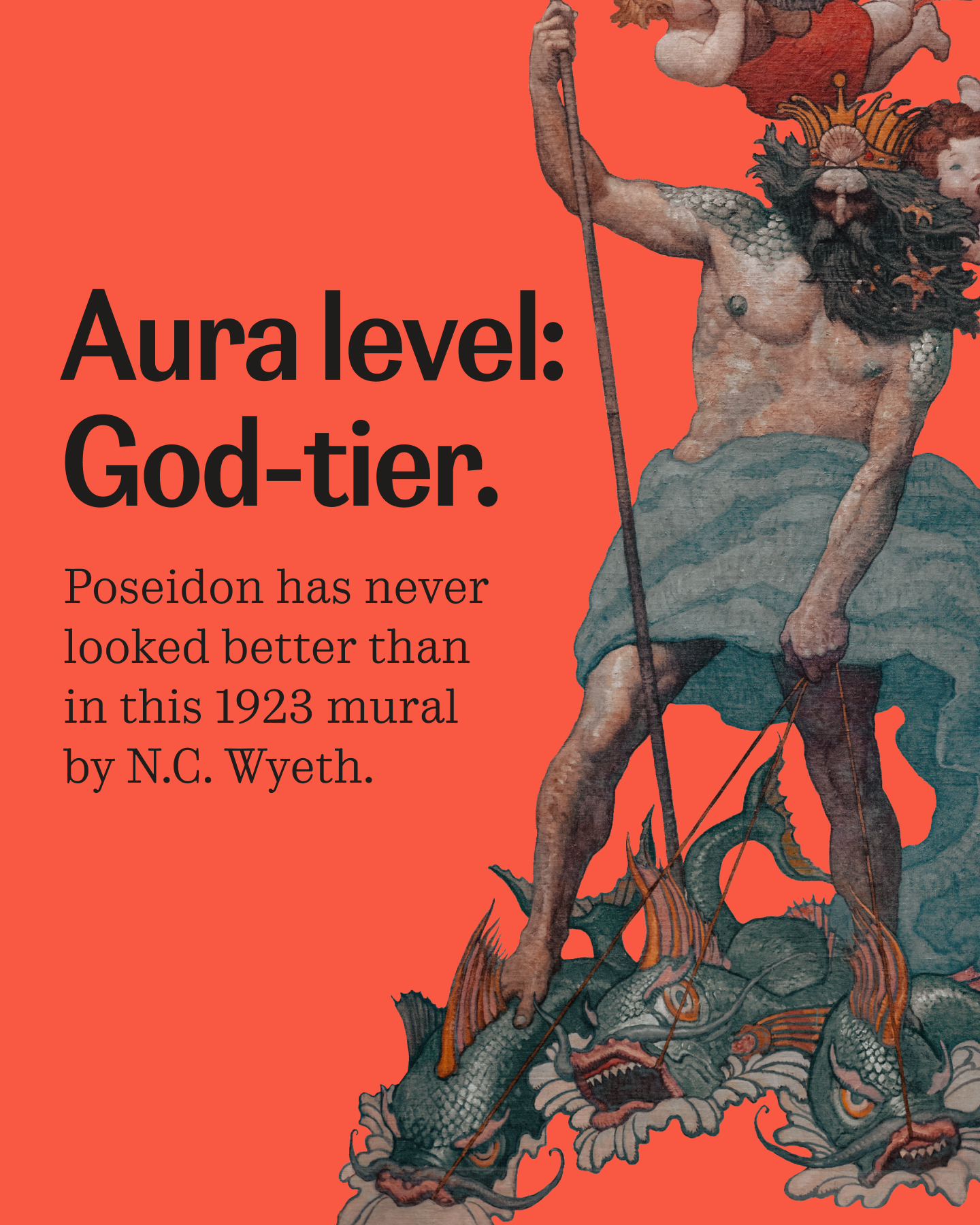
#2 Aura Level: God-tier
First impressions matter. In 1923, Boston's First National Bank commissioned celebrated American artist N.C. Wyeth to create a soaring, three-story mural for the lobby.
When the bank building underwent renovation in the 1980s, rather than let the monumental work disappear, the owners donated to PEM, where it underwent extensive conservation before becoming the dramatic centerpiece of the museum's newest wing when it opened in 2019. Today, the mural, officially called Peace, Commerce, Prosperity, towers above visitors in PEM’s Garden Atrium.
N.C. Wyeth was one of the defining artists of the early 20th century, renowned for his vivid illustrations for such classics as Treasure Island, Robin Hood and The Last of the Mohicans. The Wyeth family became one of America's most celebrated artistic dynasties; Wyeth’s children Henriette, Carolyn and Andrew all became artists, and grandson Jamie Wyeth continues to paint and to steward the family's creative legacy.
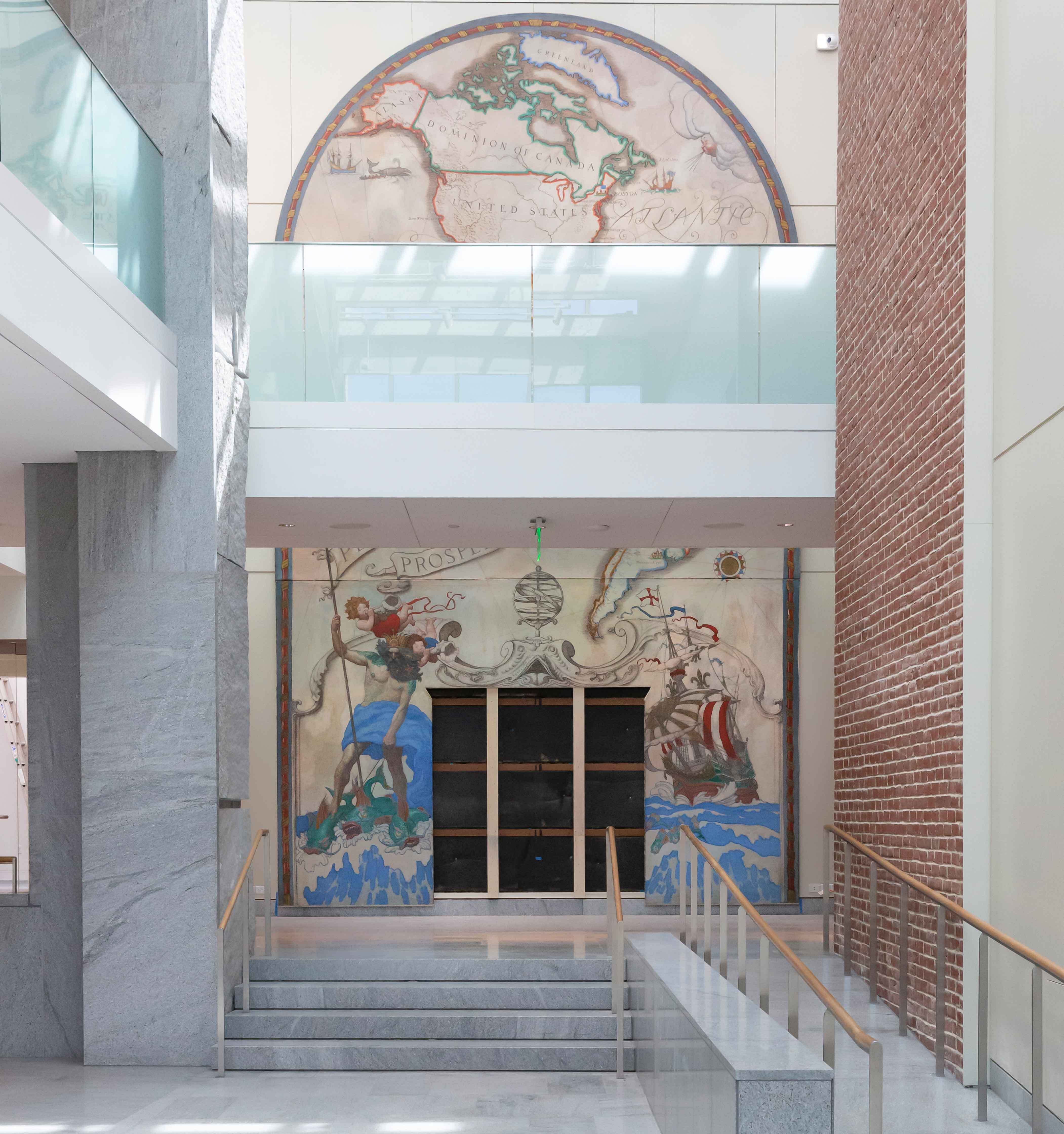
N. C. Wyeth, Peace, Commerce, Prosperity, 1923. Oil on canvas. Gift of the First National Bank of Boston, 1982. M19085. Peabody Essex Museum. Photo by Bob Packert/PEM.
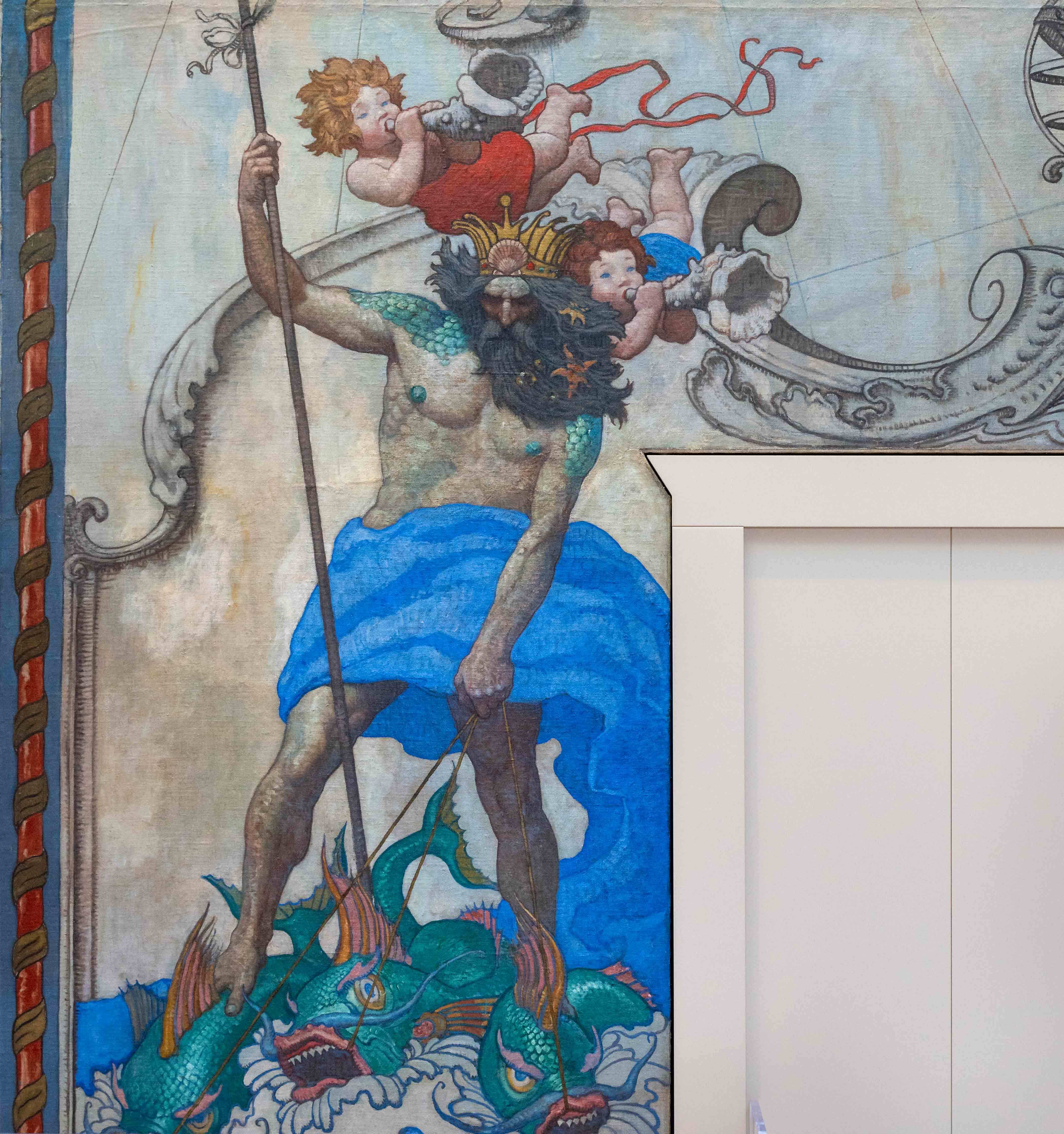
N. C. Wyeth, Peace, Commerce, Prosperity (detail), 1923. Oil on canvas. Gift of the First National Bank of Boston, 1982. M19085. Peabody Essex Museum. Photo by Kathy tarantola/PEM.
But who is that commanding, fishy figure on the left?
Poseidon, the Greek god of the sea, rides across the waves standing atop three enormous fish tethered together like the horses of a charioteer. His trident reaches triumphantly toward the heavens while shimmering turquoise scales spread across his shoulders. His flowing beard dissolves into a living reef filled with starfish and shells. Even after more than a century, the mural crackles with energy, movement and mythic grandeur.
If that's not aura, we don’t know what is.
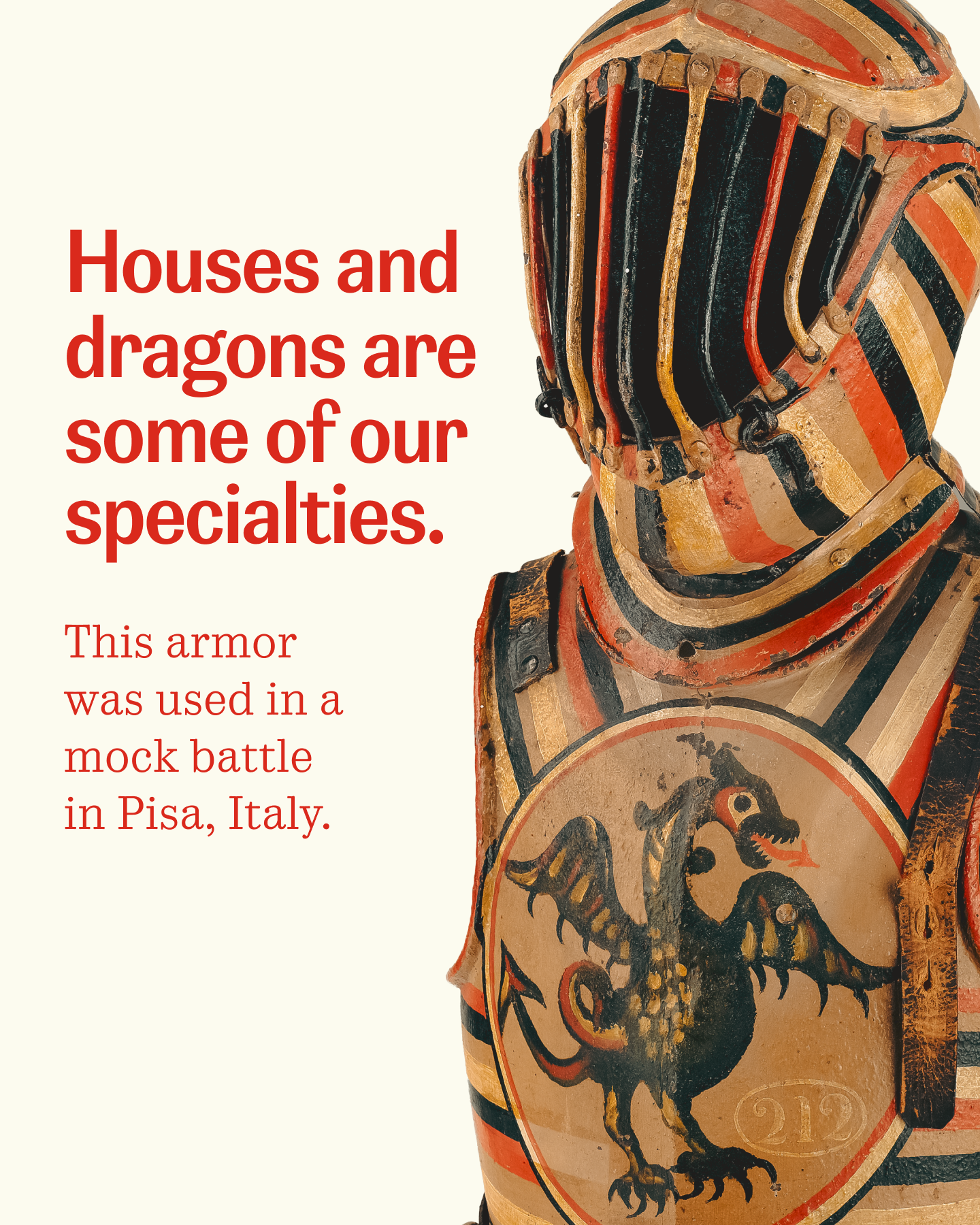
#3 Houses and dragons are some of our specialties
We've been collecting houses — and dragons — long before they were the stuff of must-see TV.
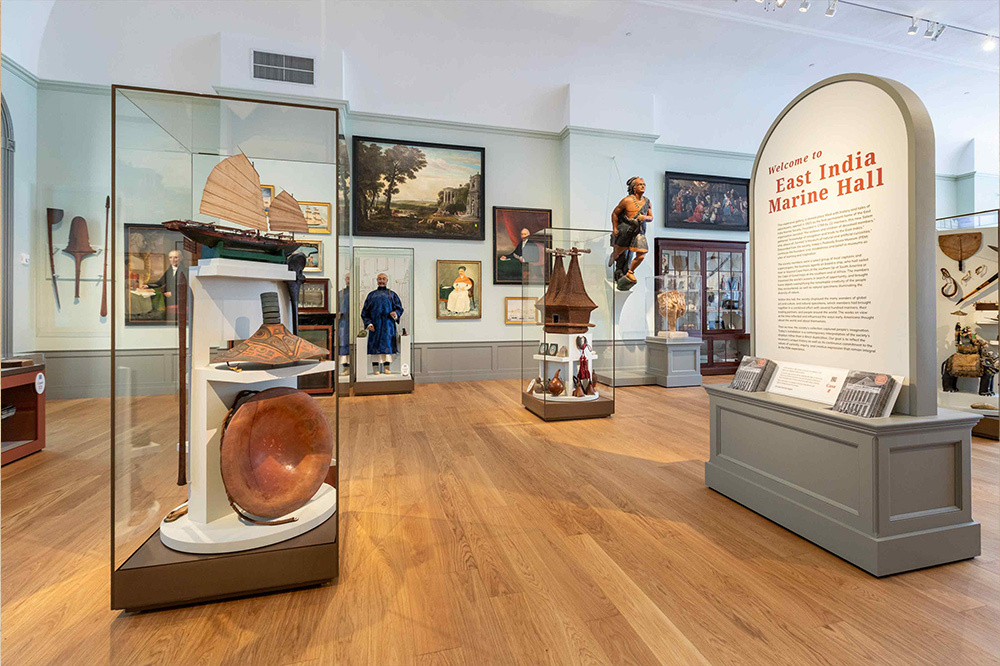
In PEM’s recently reimagined East India Marine Hall, you’ll find a fire-breathing dragon who is coiled with spring-loaded energy, ready to strike. The fearsome creature is painted across a ceremonial cuirass made for the gioco del ponte, or "contest on the bridge," an annual mock battle that was held in Pisa, Italy. During the spectacle, rival teams in elaborate armor competed to push one another across the city's bridge in a colorful contest of strength, strategy and civic pride. (This object previously appeared on our Dragon Quest scavenger hunt for Lunar New Year, along with a dozen other dragon-shaped objects from our collection.)
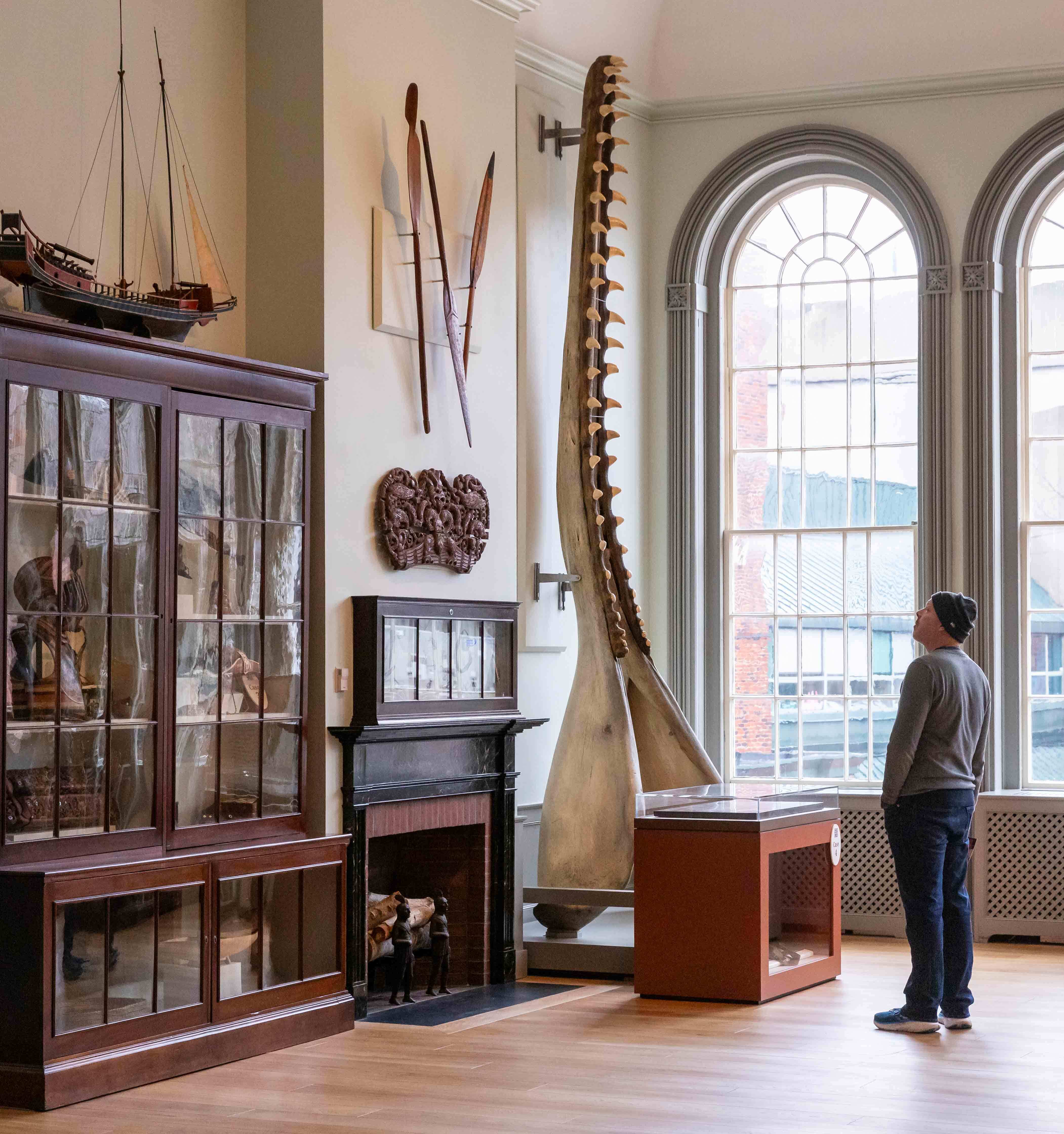
East India Marine Hall guests in the gallery, 2026. Peabody Essex Museum. Photo by Kathy Tarantola/PEM.
The armor found its way to Salem in 1807 as a gift from Captain Samuel Dudley Tucker, a naval officer in the Revolutionary War and member of the East India Marine Society, PEM’s foundational organization. The society was founded by Salem captains who sailed around the globe and returned home with remarkable objects, sharing them with neighbors in what became one of America's earliest museums. It’s likely Tucker encountered this magnificent armor during his travels in Europe and decided it deserved a second life in Salem.
While the East India Marine Society looked outward to the wider world, PEM's other founding organization, the Essex Institute, focused on the wonders closer to home. For generations, its members carefully collected the history, wildlife and architecture of Essex County, helping make this one of the best-preserved and best-documented historic regions in the country.
Today, PEM carries that legacy forward by stewarding more than a dozen historic houses — including several National Historic Landmarks — that give visitors an opportunity to experience Salem's history in a special way: by stepping inside the places where it all happened.
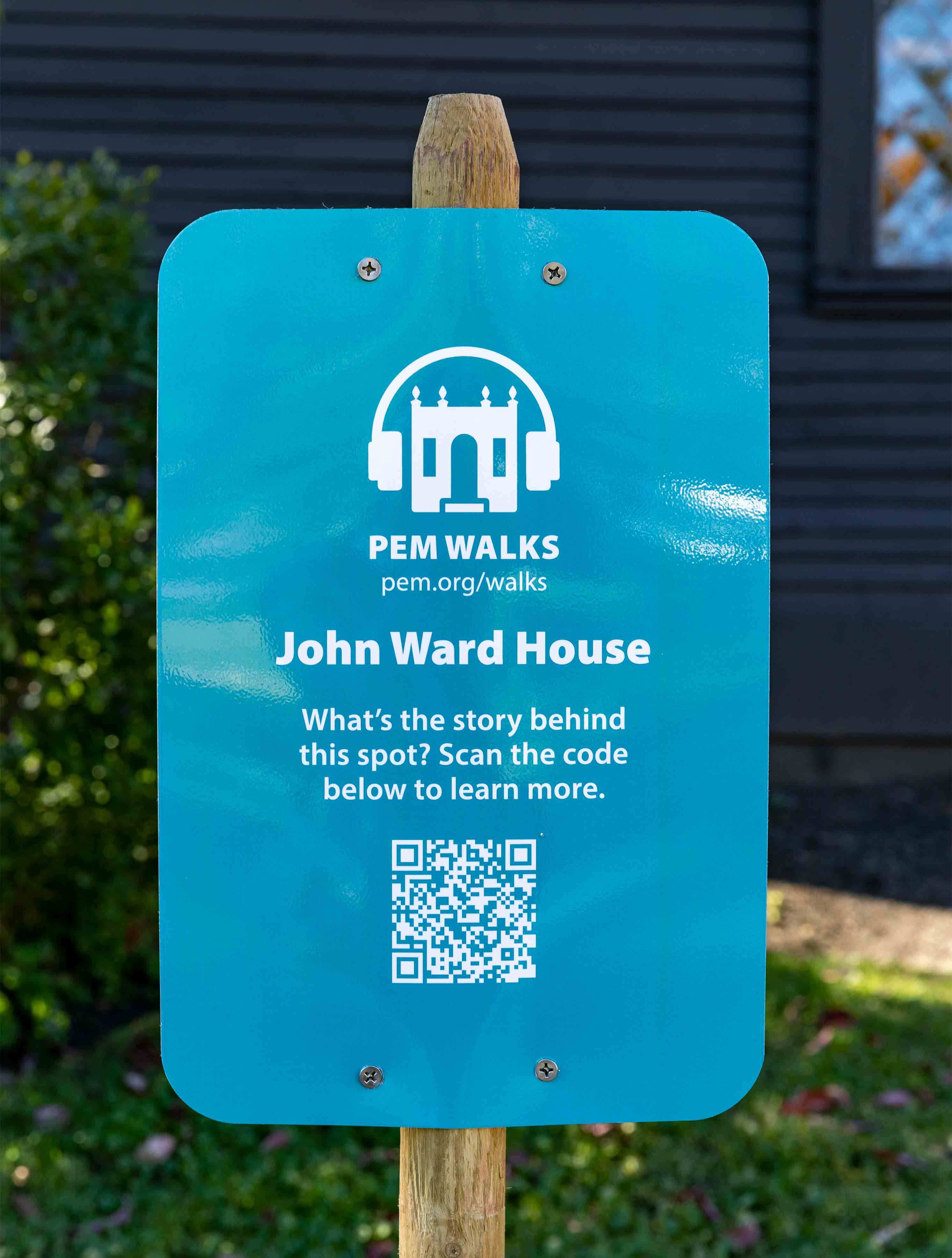
Want to explore? Scan one of the PEM Walks QR codes throughout downtown Salem for a free self-guided audio tour, or join one of our expert-led walking tours for exclusive access inside PEM’s remarkable historic homes like the Gardner-Pingree House. There, you'll uncover the story of Captain Joseph White, whose shocking 1830 murder captivated the nation and became known as the "trial of the century."
But that's another story…and one you'll have to discover for yourself.
Ready to plan your visit? Get started.
© 2021 Peabody Essex Museum. Photography by Diana DiRamio
Keep Exploring
Blog
Talking about typography in new library exhibition Pressing Importance
9 min read
PEMcast
PEMcast 42: Circumnavigating the globe in East India Marine Hall
25 min listen
Blog
Ongoing effort seeks to identify and correct harmful terms in PEM’s library catalog
5 min read

Blog
Behind the scenes of caring for PEM’s Pacific barkcloth collection
5 min read