CONNECTED | Mar 30, 2026
Lynda Roscoe Hartigan and Salem Mayor Dominick Pangallo chat about the importance of arts and culture and Salem 400+

PEM’s Fireside Chat series features conversations between Lynda Roscoe Hartigan, PEM’s Executive Director and CEO, and a rotating group of guests. These conversations offer a peek into both our historic houses and the inner workings of the museum.
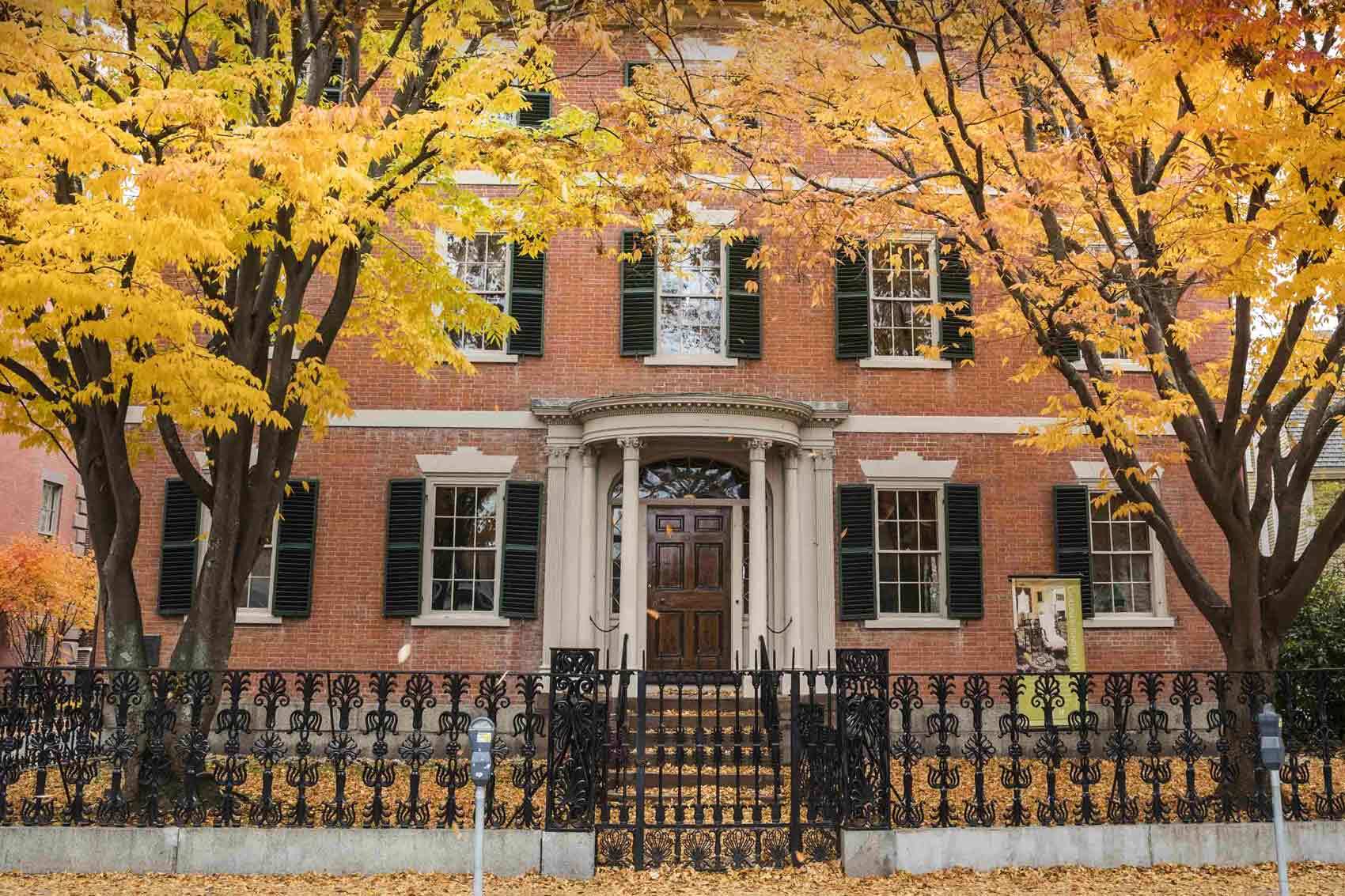
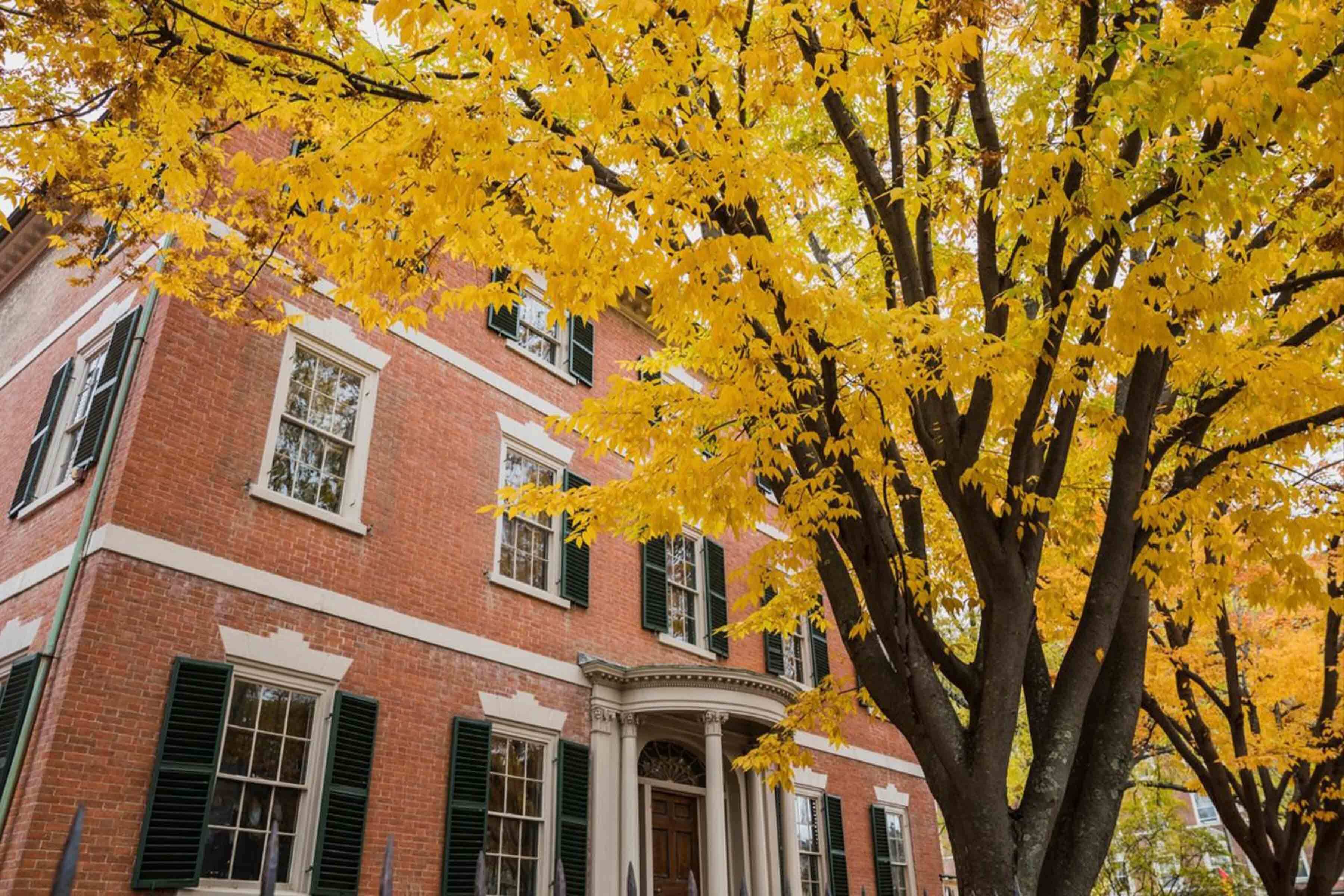
PEM’s Gardner-Pingree House. Photo by Bob Packert/PEM.
PEM's Director Lynda Roscoe Hartigan recently sat down in PEM's Gardner-Pingree House with Salem Mayor Dominick Pangallo. Tune in as the two discuss Pangallo's memories of PEM, the importance of multilingual programming, PEM's economic impact study and upcoming events around Salem 400+.
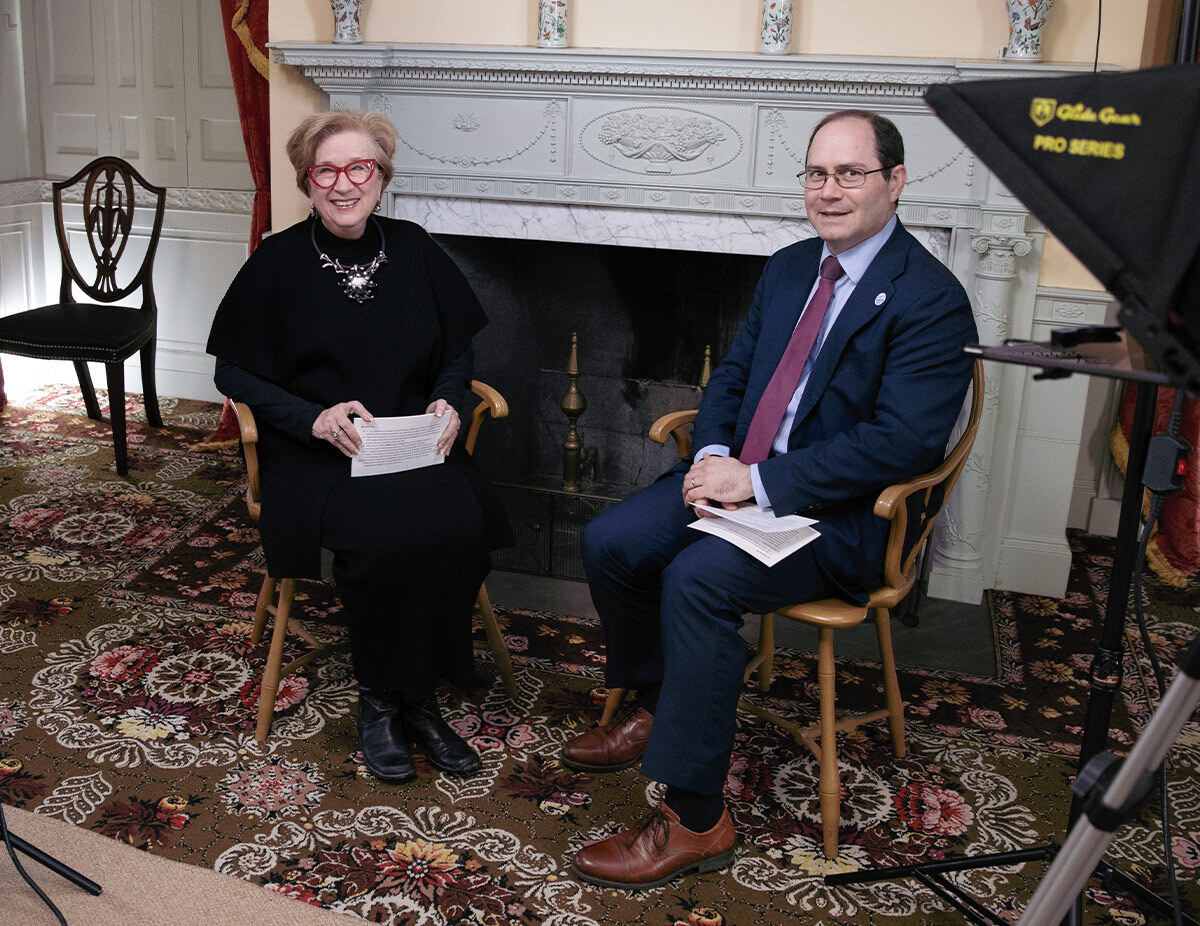
Lynda Roscoe Hartigan and Salem Mayor Dominick Pangallo in PEM’s Gardner-Pingree House. Photo by Marc Patenaude/PEM.
Lynda Roscoe Hartigan: Hi, I'm Linda Roscoe Hartigan, the Rose-Marie and Eijk van Otterloo Executive Director and CEO of the Peabody Essex Museum. Welcome to another episode of Fireside Chats. These chats take place in historic structures and special places across PEM's campus to share updates and reflections about the museum alongside conversations with special guests who help bring PEM's mission to life.
Today, we're in PEM's Gardner-Pingree House, one of Salem's finest and best-preserved Federal designs and now a National Historic Landmark. This elegantly proportioned structure was built for wealthy Salem merchant John Gardner, who found success at sea and also ran a profitable wholesale business on the waterfront. Keen to build a home that showcased his wealth, Gardner hired Salem's acclaimed architect and woodworker Samuel McIntire to design and build this massive townhouse in the heart of downtown Salem in what was an up-and-coming neighborhood adjacent to Salem Common.
In the early 19th century, such houses were among the most opulent houses in the country. A mansion like this was particularly active during the winter ball season. Typically, an evening gathering in these double parlors would involve music, dining and dancing.
Such a lively and elegant space seems so appropriate for our very special guest, Salem Mayor Dominick Pangallo. Dominick, really it's great to have you here, and the museum and I were just so honored that we were able to host your inauguration just a few weeks ago. What does it mean to mark this kind of occasion in a public setting like PEM, and how does that connect to the city's civic life?
Dominick Pangallo: First, thanks, Lynda for the invitation to join you for this discussion today, and again, thank you to PEM for hosting the inauguration. It really was a fantastic event. It wasn't the first time that we've had a city inauguration in PEM’s Main Atrium, but it really is magnificent, and I think it speaks to the power of our community, the institutions that we have here. Inaugurations are about the start of something new.
It wasn't only my inauguration — it was also the inauguration for the city council and for our school committee. So we were all there sharing that public space together and recommitting ourselves to a civic engagement and a belief that public service is really about stewardship, and that speaks to the heart of what PEM is about as well. So having that important civic event not only to start this term in office, but also to start our 400th year as a city, in such a central place in such a central institution that is at the heart of our community. was really meaningful for all of us.
Lynda: Well, I'm so glad to hear it. And I see you're wearing your Salem 400+ button. Obviously 2026 is a huge year in the history of Salem, and you know we've got lots of things that we're busy planning. I'd love to hear more about why you think celebrating Salem 400+ is so important, and what that “plus” means.
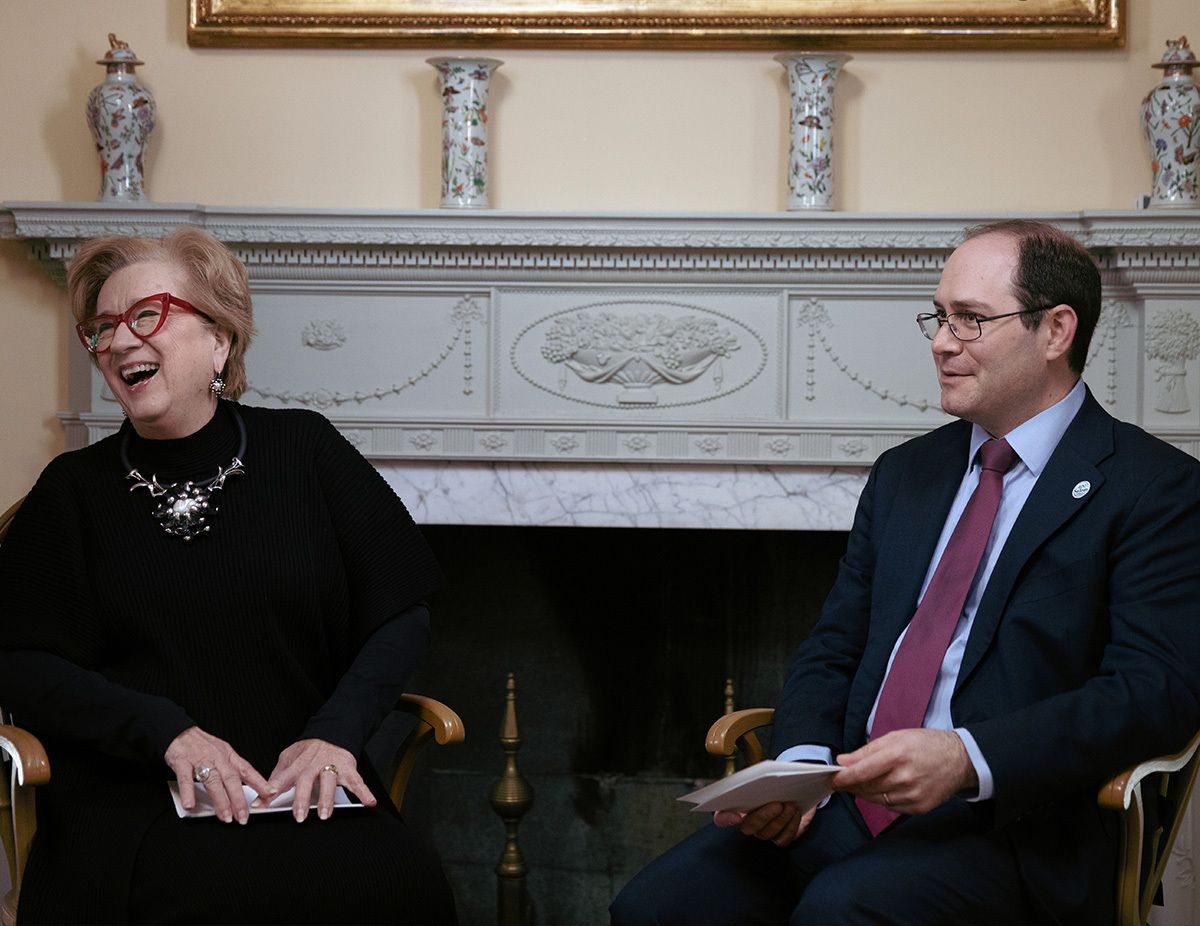
Lynda Roscoe Hartigan and Salem Mayor Dominick Pangallo in PEM’s Gardner-Pingree House. Photo by Marc Patenaude/PEM.
Dominick: You know, there are not many communities in the United States that are marking a 400th anniversary, and we're proud to be celebrating that moment here in Salem. There are lots of special events planned for 2026 to celebrate the year. But it's also a moment for reflection. We put that “plus” on the Salem 400+ because we want to recognize and acknowledge the stories and the history of the Indigenous people who have lived in this space who predate 1626. There's been many many centuries and millennia of history and people creating lives and raising families and making art and making a living here in the place that we now call Salem, and so this is a year for reflection and for celebration.
I’m incredibly grateful that PEM has been such a partner in planning these efforts. Many years have gone into planning, and we’re looking forward to seeing how the museum will bring programming to life throughout 2026. Salem400.org and pem.org/Salem400 are the websites for all of those events.
Lynda: We've had fun planning for it for sure, but we've also felt a really strong responsibility to be a part of the effort. I mean obviously we go back to 1799 as an organization, so you know we've been here for so much of Salem's evolution. The city, over time, has been a crossroads for many different kinds of people coming from different life experiences. We're thinking more about how we make our exhibitions and our programming more multilingual. I'm also curious, of course, about what the city's doing on the multilingual front.
Dominick: Salem is characterized by an incredible diversity of people, coming from all over the world, and our history has been shaped by new arrivals from all parts of the world. And right now we see that characterized in a large Spanish-speaking community, and also Portuguese-speaking. The Salem Public Schools educate students in 26 different languages. A quarter of our households in Salem speak a language other than English at home.
At City Hall, we have a language justice policy that requires information to be provided in multiple languages. We have daytime conversational Spanish classes for city staff that want to grow those skills. We also have an American Sign Language class that we've just started offering for our employees as well. In our schools, we have a dual language elementary school where students at every grade level are learning in English and Spanish simultaneously. Last year we extended that to pre-K, and starting next year we're actually expanding it up to the middle school, as well. It's an essential part of our community's identity and our ability to serve the public well.
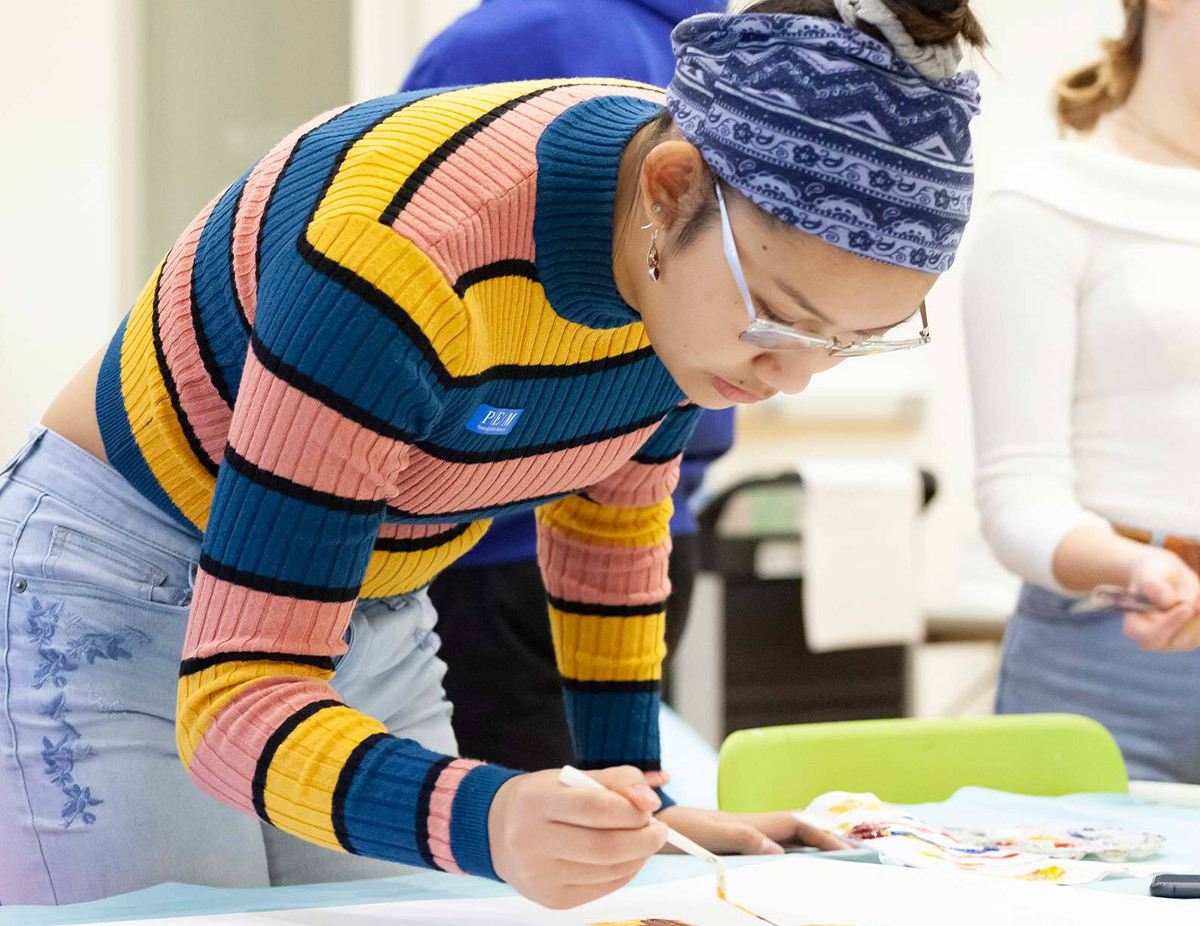
A student enjoys drop-in art making at PEM.
Lynda: I'm glad you brought up sign language, because I think people don't necessarily think of that as a language when we say multilingual. But it is something that we're also trying to expand for our visitors.
In your role as mayor you also steer the school board, which is a huge responsibility. The museum really believes in lifelong learning, so how kids can really get engaged with learning as an important part of their life is meaningful to us. This spring we're going to launch something called Creative Kids which is going to be offering children opportunities during the school breaks and the summer vacation to really engage with art making activities and creative and critical thinking activities. But as mayor, how do you see yourself working with different generations in the city, including the youngest members of our community?
Dominick: I grew up in Salem. I have many fond memories of coming to the Peabody Museum, just like generations of children who grew up in Salem have. It's such a central part of your youth when you grow up in this city. It's shaped a lot of my curiosity about the world, my interest in trying to make it a better place, whether at the local level or however else I can. I hope PEM kindles that same curiosity and creativity in other children as they move through the museum. (I did work at the museum for a brief period of time in the communications office.)
I chair the school committee here in Salem. I'm also a parent of public school students here, and our relationship with PEM as a school district is really important to us because it affords multiple grade levels of students an opportunity to experience art, creativity, and cultures from around the world, right here in their own city. They can see it for themselves and they can be inspired by it and they can see how they are part of this larger global context of art and culture. They can hopefully become artists themselves, or at least be able to understand how these stories have shaped their own lives and how they can share a sense of belonging with those who have come before them.
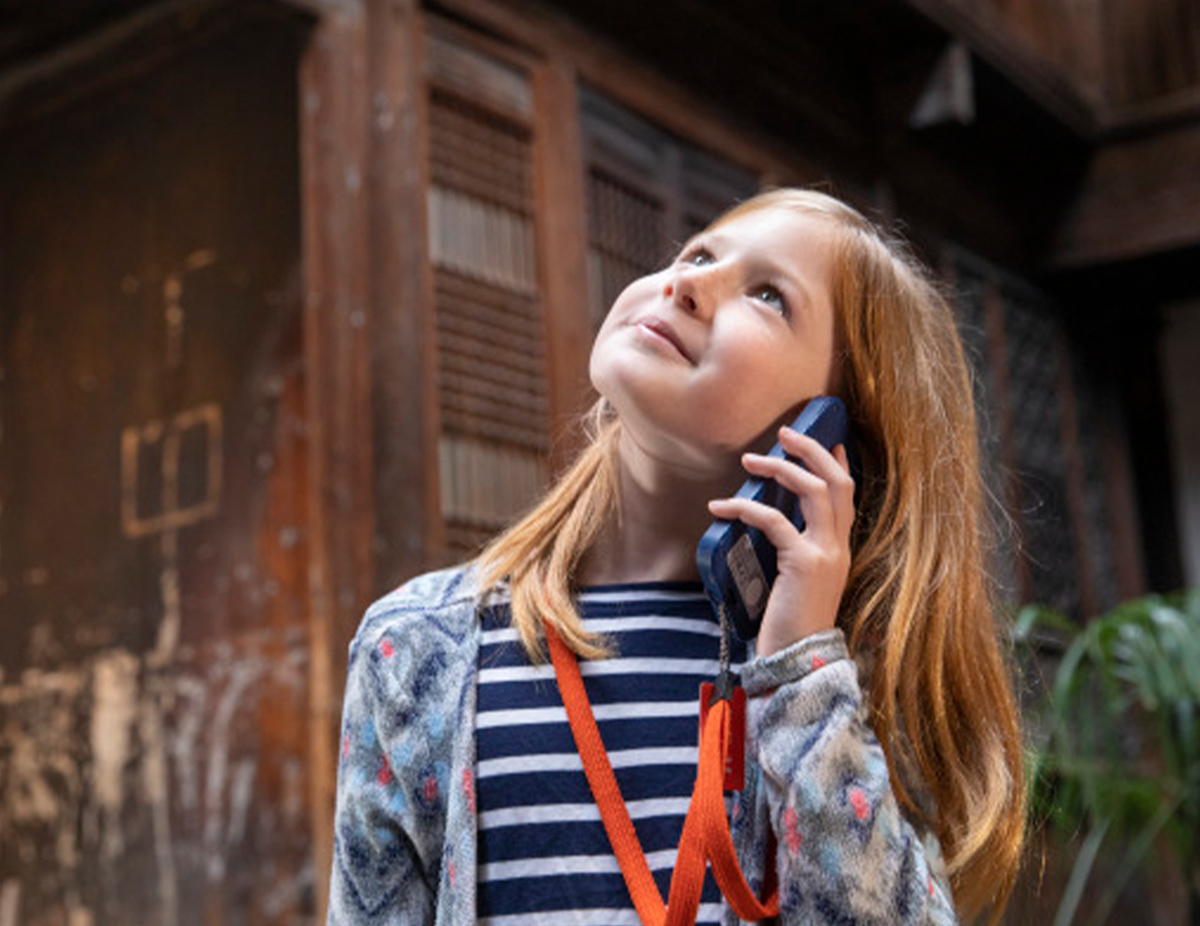
A child in Yin Yu Tang, PEM’s Chinese House. Photo by Bob Packert/PEM.
Lynda: I think sometimes it's really useful to think about creativity as a form of critical thinking. You know it helps you to question and to communicate even if you aren't technically making something. I appreciate your journey with the museum through your own personal life, so thanks for sharing that.
One of the things that PEM has completed over the past year and a half is our first economic impact study. It's important for us as a nonprofit and a cultural institution to really understand the value that we are offering to the community, region and state — as opposed to what they’re doing for us, because sometimes that's how museums tend to think. But we've discovered some really important statistics. Last year more than 12,000 Salem residents came to the museum for free. We offer free admission for Salem residents and people who work in Salem, and we'd like to actually make that more well-known, because I'm not sure it's as widely known as it should be.
We generated a local tax revenue of half a million dollars. Our talented staff numbers 250 people, and a number of them live in Salem so you know this relationship is incredibly important. What would you say cultural institutions can really contribute to what a community has to offer?
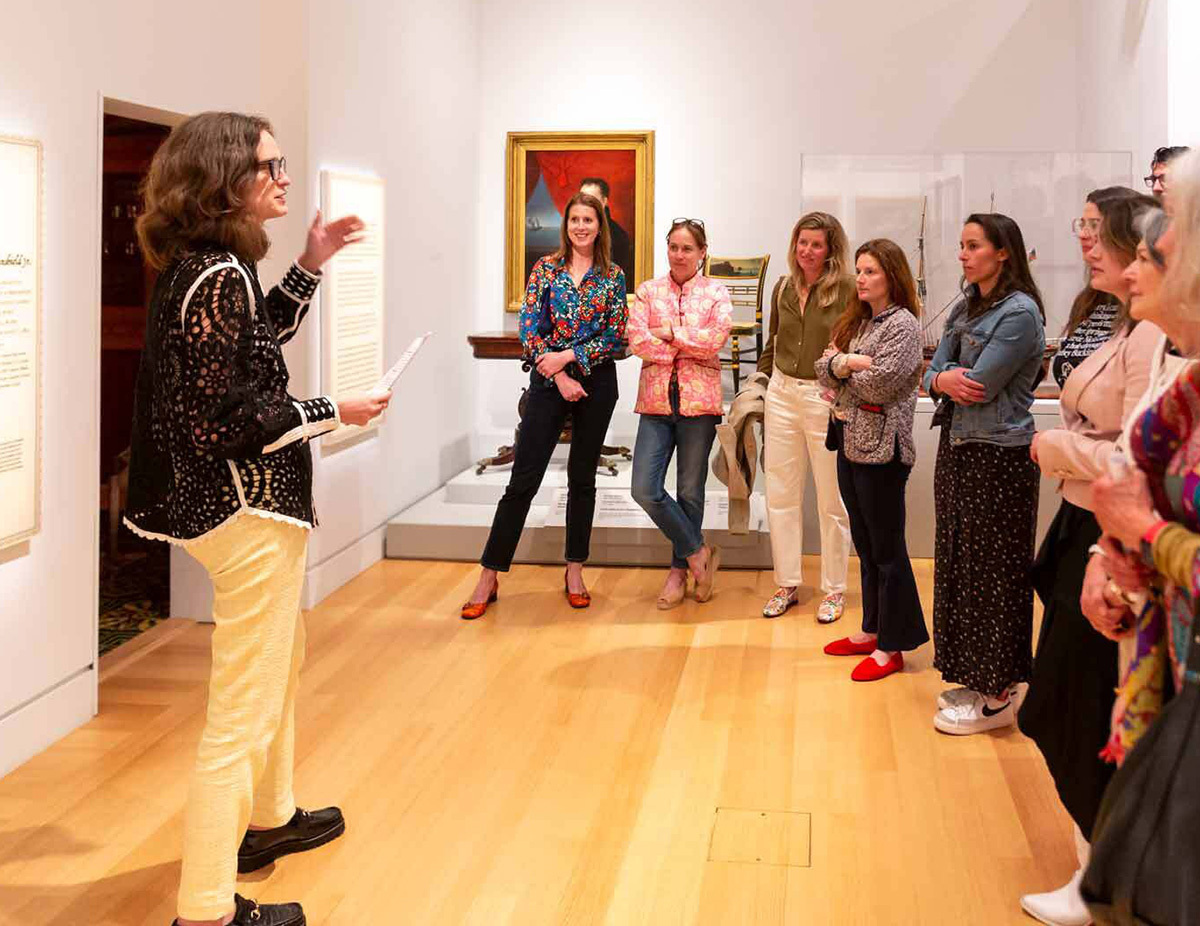
Ruthie Dibble, PEM's Robert N. Shapiro Curator of American Decorative Art, giving a tour. Photo by Kathy Tarantola/PEM.
Dominick: I think there's all those economic aspects, the jobs, the ancillary spending and the indirect spending that kind of flows through the community and supports our local economy. It's certainly reputationally important for Salem. Having PEM really does elevate Salem's reputation, not just around the United States, but around the world. It's a global museum with global recognition and I think that accrues to the city's benefit.
But there's also this intrinsic value of arts and culture. It's very common for us to want to make the rational case for cultural institutions by talking about their economic impact, and I think that's important, but I also hope that people appreciate that places like PEM provide something much deeper and more meaningful on a personal level. When that child walks in and sees a work of art that helps them understand themselves better, or sees their culture reflected, their own histories reflected, they have a sense of belonging in their community that they didn't have before. I think that's really powerful and I think that's what PEM brings to Salem.
Lynda: Thank you for saying that. We really are working hard to make sure that people feel like we are a human-centered museum. We really hope we're able to offer that sense of belonging for our visitors. Human beings are endlessly creative, and usually to a very good end.
So, I think we're at the end of our conversation, but I really want to wish you every success in your next term as the mayor of Salem and wish Salem 400+ as much success as possible.
Dominick: Absolutely. Thanks so much for the opportunity.
Lynda: Before we go, I hope you'll make time to visit Edmonia Lewis: Said in Stone. This is the first major exhibition of the work of acclaimed 19th-century Black and Indigenous sculptor Edmonia Lewis. Come and learn about her mastery of marble and her remarkable, storied life.
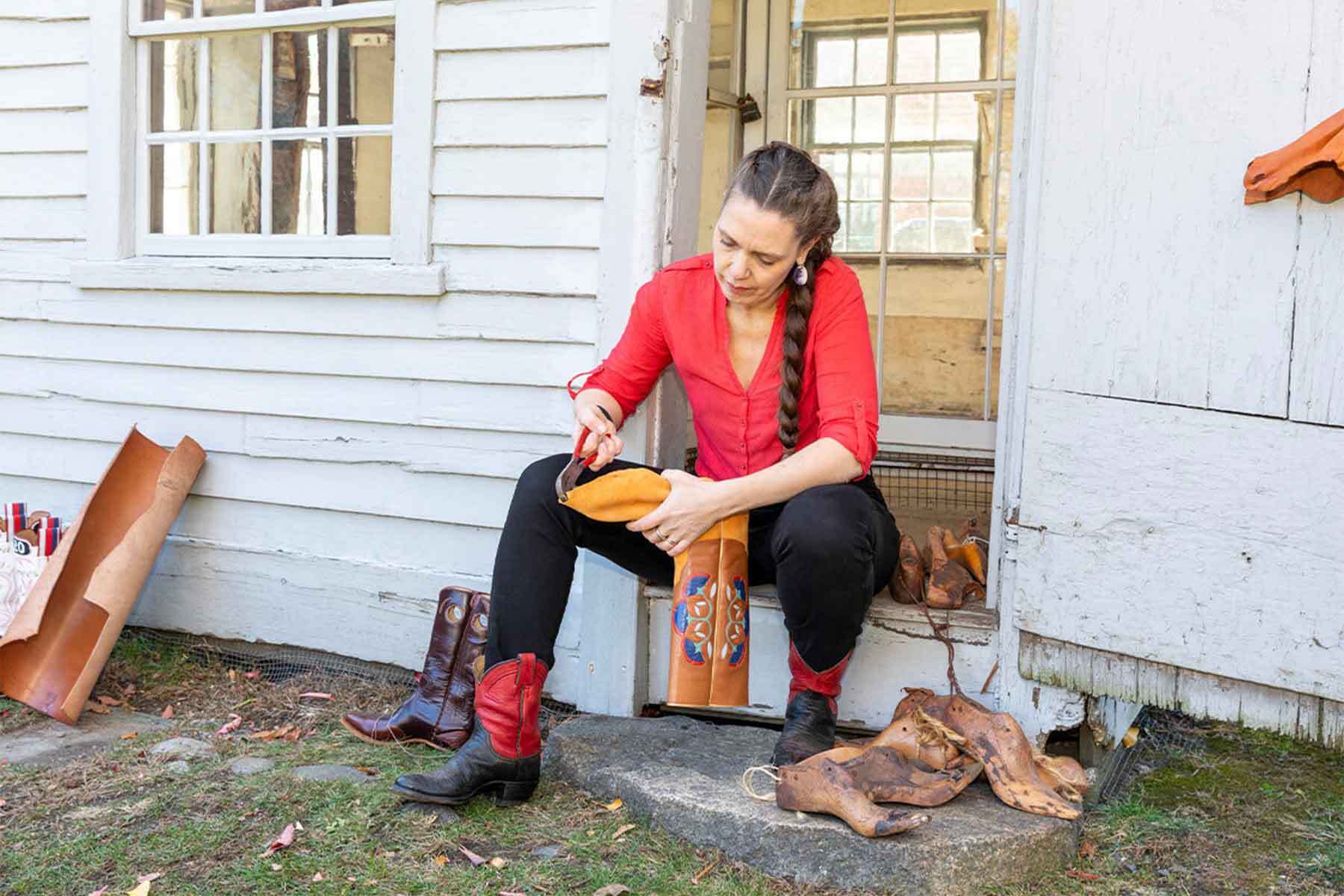
Bootmaker Sarah Madeleine T. Guerin will be in residence in PEM’s Lye-Tapley Shoe Shop this summer for Salem 400+. Photo by Kathy Tarantola/PEM.
The start of spring means it’s time to get our historic houses and gardens spruced up for your visit, including our historic shoe shop, which is part of our Salem 400+ programming. You'll be able to meet our bootmaker in residence and learn more about an incredibly industrious chapter in the history of our community.
Thank you for being here, and see you next time.
Eager to learn more? You can find all of PEM’s Fireside Chat episodes on our Youtube channel.
BLOG
Lynda Roscoe Hartigan and David Snider chat about PEM’s community engagement
9 min read
Artist Q&A: A short history of Salem’s short films
13 min read
PEMcast
PEMcast 35: The Curious Life of Reverend William Bentley
39 Min listen
Historic Houses
Gardner-Pingree House
Built in 1804–06
0.2 miles from PEM