CONNECTED | Mar 25, 2026
Artist Q+A: A short history of Salem’s short films
In conjunction with the annual Salem Film Fest, which began in 2007 and runs March 26-29, PEM will open Beyond the Broom: Salem Short Films, featuring mini-documentaries by local filmmakers. These quirky and heartfelt films honor the lesser-known stories of Salem and offer a behind-the-scenes look at what makes this city so remarkable. They are a selection of a larger archive of Salem Sketches, produced over the course of more than seven years by Perry Hallinan, Joe Cultrera and many other filmmakers for presentation at the Salem Film Fest (SFF). Each film is only about 3.5 minutes long, usually quickly shot and edited over the course of three days. PEM’s exhibition gathers 59 shorts into a feature-length presentation — watch one, watch three, or watch them all — that captures the unique character of Salem, its locals, businesses and natural environment.
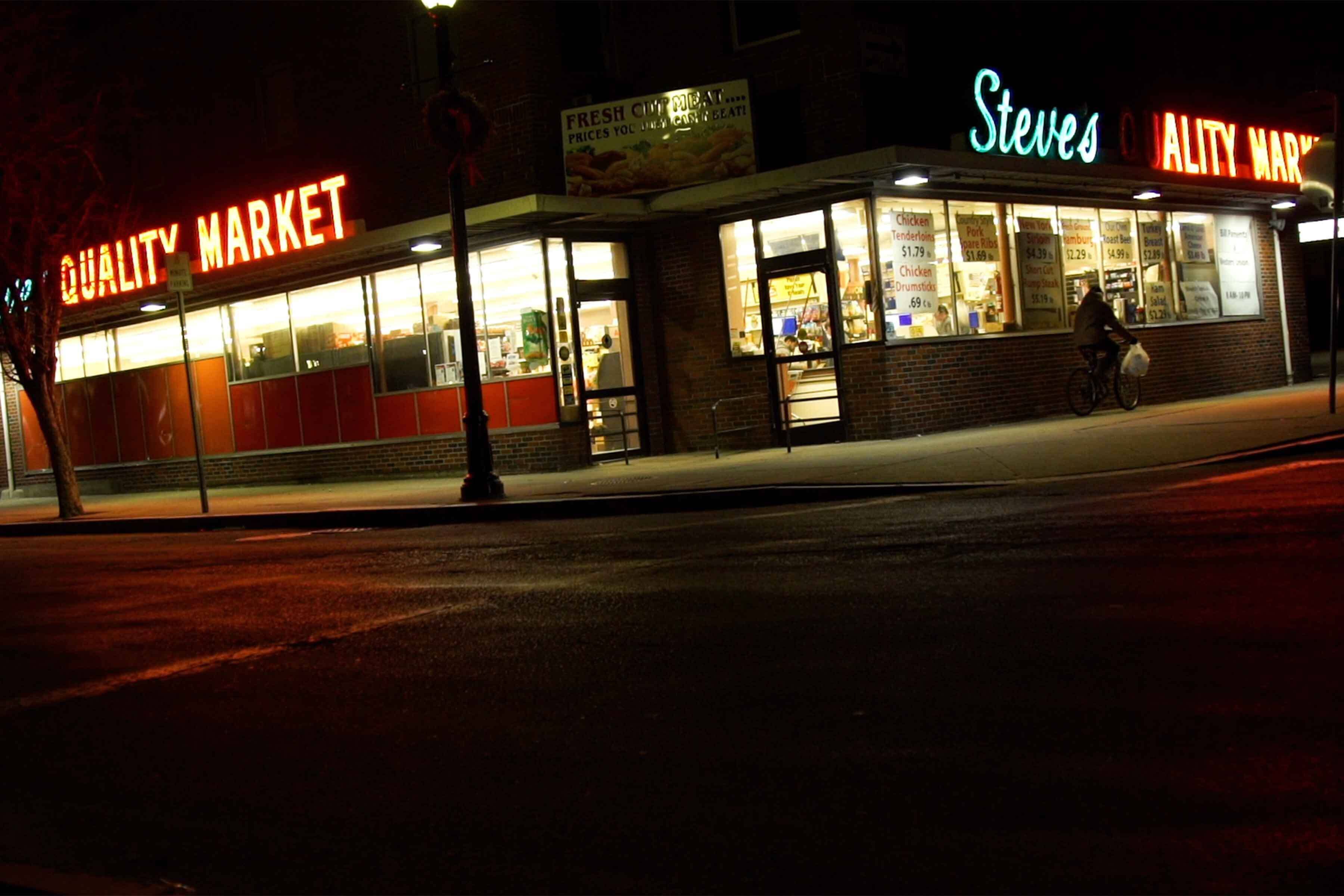
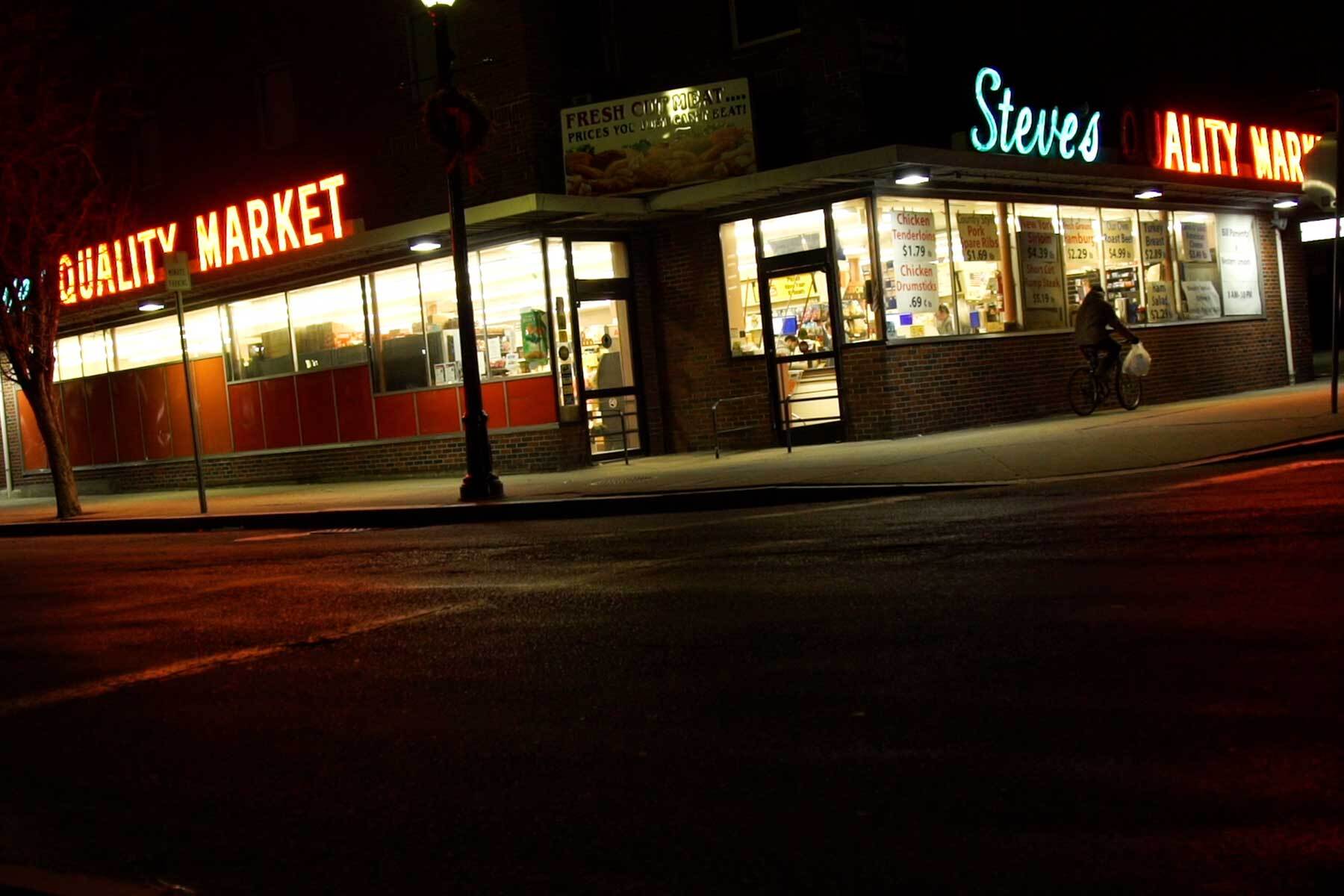
Joe Cultrera, Still from Steve's, 2017. High-definition digital video. Courtesy of the filmmaker.
We caught up with Cultrera and Hallinan to shed light on the history of the Fest and the creation of these hyper-local films.
Q: Take us back. When and how did the idea for the Salem Film Fest shorts originate? And when and how did you realize it was an established part of the festival?
Joe Cultrera: Salem Film Fest is an all-documentary festival that I helped create. Each year we would commission a short promo-bumper video to play before all our feature films – as a setup and for branding purposes. In 2013, the filmmaker who was supposed to create that year’s bumper had to cancel late in the process. With a short window, Perry and I stepped up. If you look at Salem Sketch #2 (“Morning Glory”) and #3 (“Snow Place Like Salem”) you can see that initially we were just creating visual montages from around the city set to music by local bands such as the Dejas and Machine 475. Then we started thinking that, since we were creating these for a documentary festival, why not make them more like mini documentaries about Salem people, places and things? We knew many of our audience members watched multiple films (sometimes up to a dozen). So, we figured we could create a handful of sketches and randomly spread them around the 30 or so feature presentations.
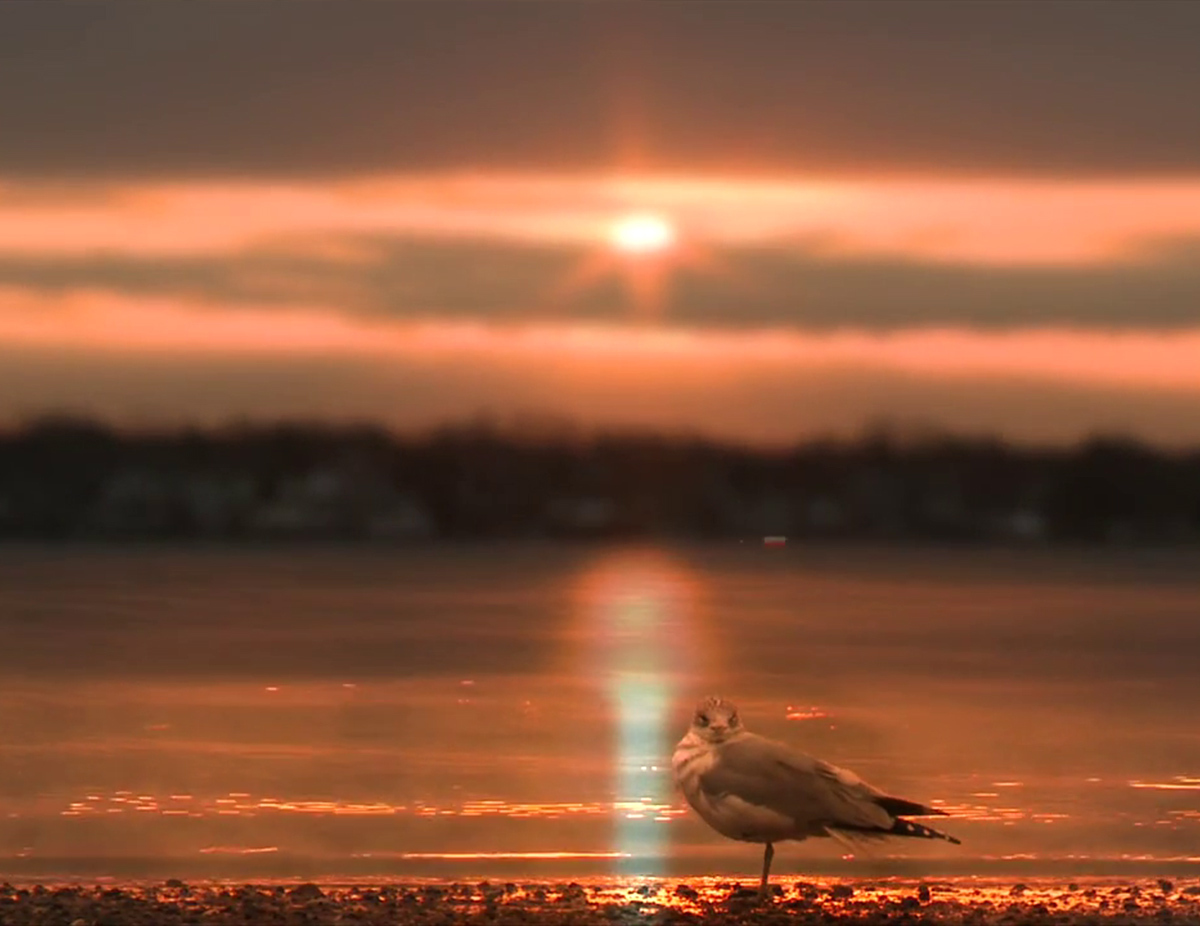
Perry Hallinan, Still from Morning Glory, 2013. High-definition digital video. Courtesy of the filmmaker.
Once we had a series of them, it seemed like we should name the collection. We used the word “sketches” because, unlike working on a film that is sculpted over a long period, we were working quickly and instinctively. We were shooting each one in a few hours and then spending just 3 or 4 days in the edit room. But they allowed us to ground every screening in Salem before the feature film launched our audience somewhere else in the world.
After that first year, the Sketches became an anticipated component of the Fest. We never told people which features were preceded by which Sketch, so trying to see them all became like trying to collect a set of baseball cards. People were going to screenings hoping to catch the Sketch they hadn’t seen yet.
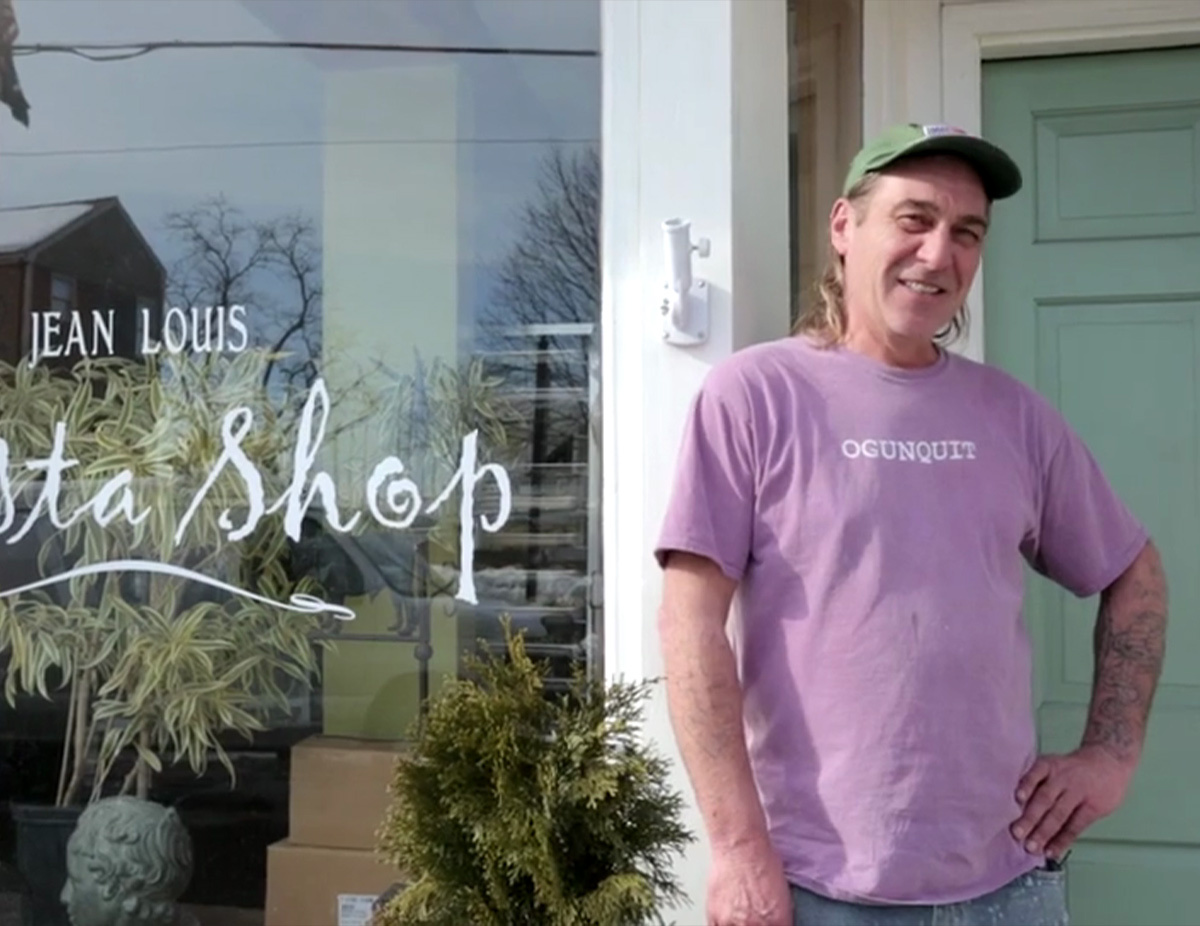
Chip Van Dyke, Still from Pasta Man, 2014. High-definition digital video. Courtesy of the filmmaker.
Q: What are some of your favorite subjects that were included in the films?
JC: There are so many that it’s almost unfair to pick favorites. I guess in retrospect I value the ones about people and places that are no longer here, or that have changed immensely. “Wee Bluets,” “Salem Cobbler,” “Steve’s, “Pasta Man,” “Hi-Fi,” “Essex Cleaners,” to name some of those. But there are many others I really love.
Perry Hallian: When someone asks, I always direct them to Helen. She is featured in Salem Sketch #24, “Popcorn Lady.” She made fresh popcorn and was stationed around the Salem Common. It is a pleasure to just be with her, listen to her stories and hear those kernels pop.
JC: The process of shooting a Sketch was fun for filmmakers. Making them was like going back to creating films the way we did when we were starting out – working on instinct, impulse and without a lot of restrictions. Once you start dealing with clients, production companies and network executives a lot of that gets lost and money starts dictating your content, direction and editing decisions.
Not with the Sketches. These were made entirely on a volunteer basis. For established filmmakers to lend their professional skills for free we had to take the reins off and let them play.
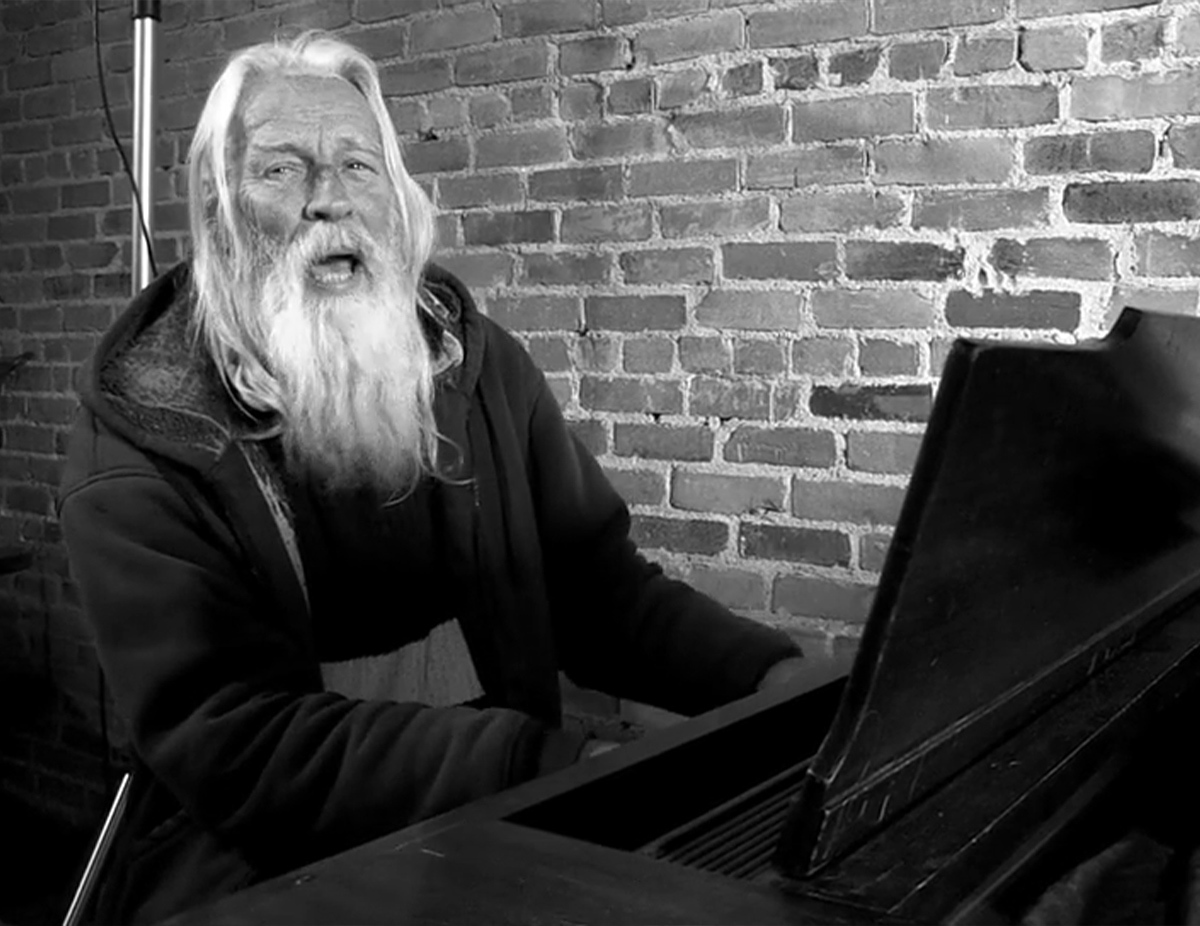
Henry Ferrini, Still from Honky Tonk Man, 2014. High-definition digital video. Courtesy of the filmmaker.
PH: Salem Sketches went from a water bubbler to a fountain the moment other filmmakers started digging around town for stories. I remember watching “Tornado Tube” for the first time and immediately sensing how much fun the filmmakers must have had making it. Later I learned they had been searching for a story at the car salvage yard along the North River. Just as they were about to give up, Craig Burnham — whose workshop sat beside the yard — noticed their equipment and struck up a conversation. After a little back-and-forth he invited them inside. What followed was a spontaneous show-and-tell session, and within a couple of hours they had everything they needed for their film. That chance encounter was a blueprint for the type of energy that would keep generating Sketch after Sketch.
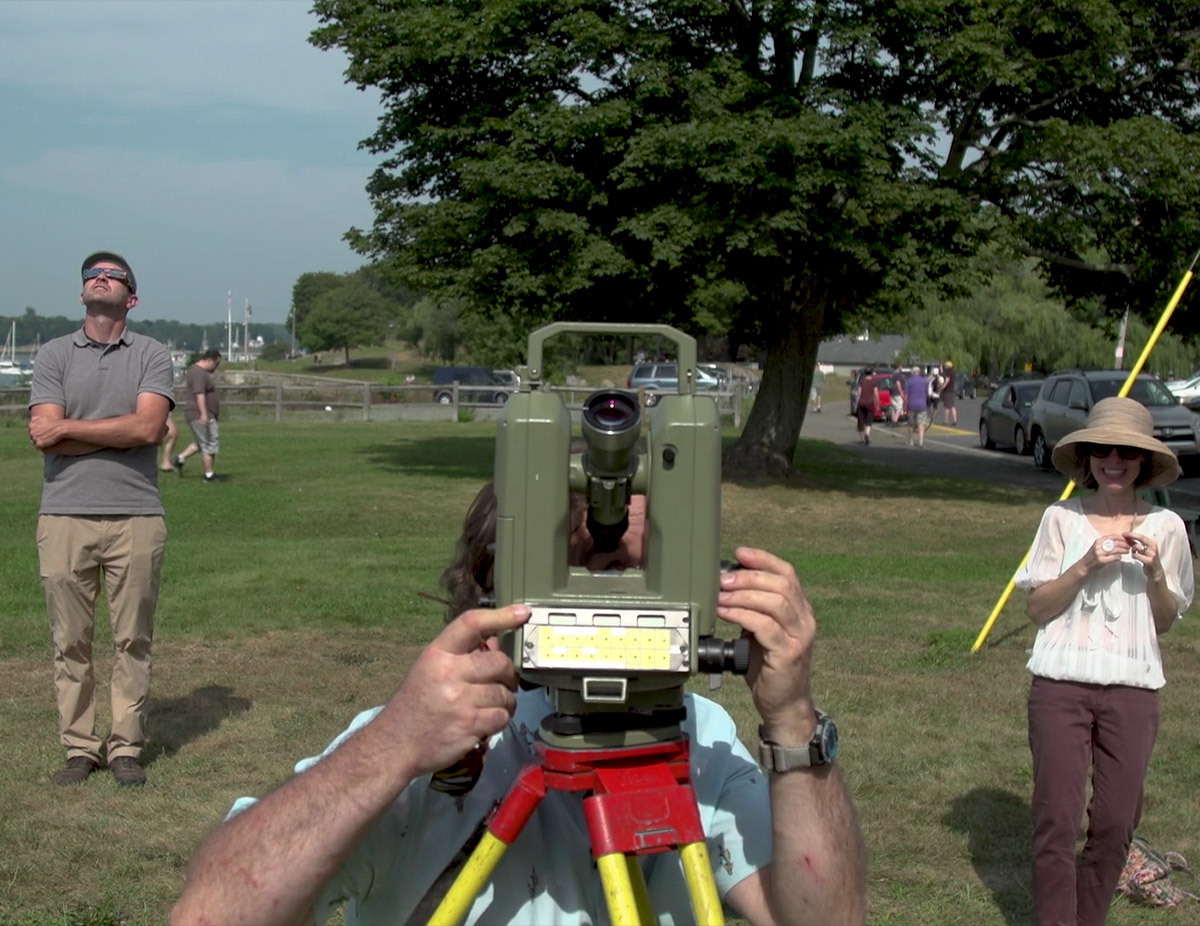
Perry Hallinan, Still from A Celestial Event, 2018. High-definition digital video. Courtesy of the filmmaker.
Many of the filmmakers entered the project through similar coincidences: walking a dog, introduced at a PEM opening, striking up a conversation at a train station. Others were connections from much earlier chapters of life. Shane Corcoran (#67) and I met in art class at Bishop Fenwick High School. Lenny Rotman (#44) hired me as an intern at Northern Light Productions back in 1999 and later became a Film Fest supporter through his partner Shelly Long. When he proposed making a Sketch about the founding of the Salem Film Fest, I wondered if the topic might be too “insider” to be entertaining. Lenny immediately said the opposite — that in ten years people would want to understand how a community event like this actually began.
Andrew Carr (#40, 46) created two sharply edged films examining Salem’s urban redevelopment — first in the 1970s and the second in the 2000s. Joe had discovered his performance work online; they shared a skepticism about the commercialization of the witch trials, which made him a natural fit. Ethan Berry (#29), a film studies professor at Montserrat, brought us footage from a rare tour of the Salem coal plant just before its decommissioning. His students gathered the material, went on winter break, and Ethan walked into our shared office wondering if we could help shape it into a Sketch.
All of this is to say the community wasn’t curated — it accumulated. Each filmmaker opened a door into a different Salem, and together those perspectives formed a portrait of the city far beyond its familiar mythology.
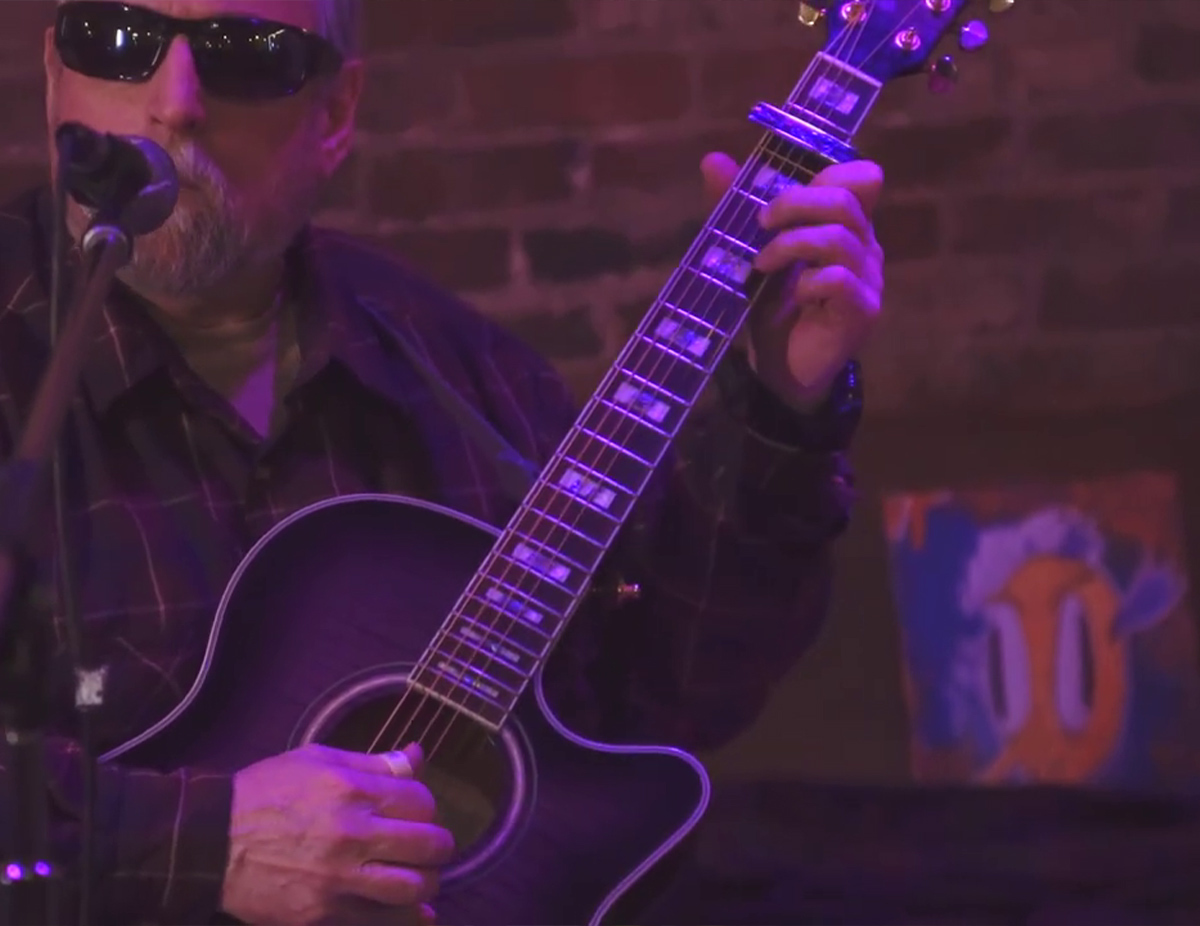
Dom Portalla, Still from The Gulu Gulu Open Mic Shindig, 2017. High-definition digital video. Courtesy of the filmmaker.
Q: How have local musicians played a role in the Sketches?
PH: The Salem Sketch archive doubles as a kind of billboard chart for the local musicians who could be heard around Salem’s venues between 2013 and 2020. Those live shows strengthened the bonds between people and place, and that same energy carried directly into the films. Without the music, the Sketches would just be people talking. With it, they breathe.
One group that generously lent their spirit to multiple Sketches was the joyful gaggle known as Black Dog Brother. They gave audiences permission to be silly and to dance. One afternoon they came into the office to watch a rough cut Joe was editing about Gardner Mattress. In a single take they created “Makin’ the Bed” with Honor Hero on rubber ducky squeaky toy, Lucas Custer on spoons and percussion, Andrew Winson on kazoo, Dan McGinn on guitar and vocals, Dan Kupka on washboard and Brian Donnelly on double sax. It was spontaneous, absurd and catchy.
For an inside glimpse into how a band forms and sustains, there’s Sketch #58, “The VonTraps.” Their Salem-based group delivered a physical, thrashing punk catharsis. One member, Brian, describes the exchange between audience and performer as “the most… incredible 35 minutes.” His band brother Skip, who passed away in 2022, still reverberates through that footage. His guitar and voice carry a love that continues to move people on dance floors and beyond.
Laura Corwin, who also appears as a filmmaker in the series, brought her background in drumming to “Cobbler” (#06), riffing visually off Leo Ciaramitaro’s percussion composition and cutting the images like a dueling drum track. Guy Zaccardi and Kevin Leahy composed a playful and quite emotional two-part piece for “Milkweed for Monarchs” (#56) after responding to images of a monarch butterfly’s life cycle.
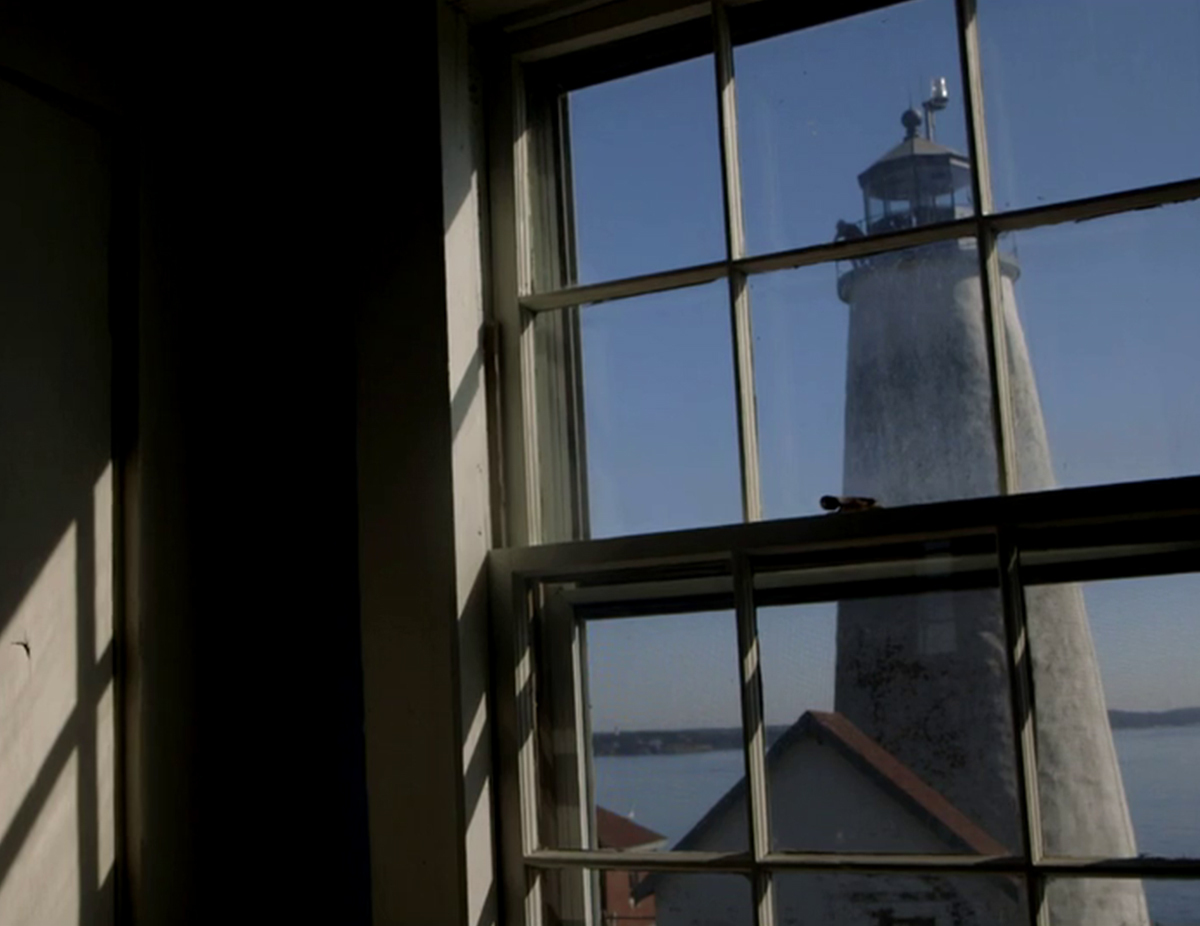
Hugh Walsh, Still from Lighthouse, 2015. High-definition digital video. Courtesy of the filmmaker.
Not every Sketch relied on a traditional score. In “Lighthouse” (#22), New York sound designer David Wilson expanded location recordings into a pulsing sonic landscape of birds, water and the mechanics of a 200-year-old lighthouse on Bakers Island. Patrick McCormack — who has spent over 35 years conducting land and marine surveys across Massachusetts — created experimental soundscapes for the wastewater treatment plant featured in “Collective Flow” (#16) and the fishes, seaweed and starfish in “Summer Under Water” (#23).
Many of these musicians have day jobs in other trades. Some continue to work professionally in music. All of them strengthened the cultural fabric of this city. Their generosity gave the Sketches momentum, humor, sorrow, lift and in many cases, their pulse.
Q: When making the films, Joe you would sometimes use archival footage from your own local shoots going back decades. How did it feel to repurpose that and see it viewed by new audiences?
JC: Those “retro Sketches” were sourced from raw footage that Henry Ferrini and I shot for our documentaries “Leather Soul” (1991) and “Witch City” (1996). Sometimes we spent hours filming a scene that only amounted to a few seconds in the final films. The Sketches allow you to dig into the details of footage rather than just using it as supporting footage for a bigger film idea. I thought it would be fun to look at some of that old footage we shot and see if there were some scenes that could stand on their own, or be combined in a different way than we had envisioned back then. Some of it had become more valuable simply because of the passing years. I edited a couple of these vintage Sketches, but it was actually more fun for me to hand the footage to Perry and Laura Corwin and see how they reinterpreted it.
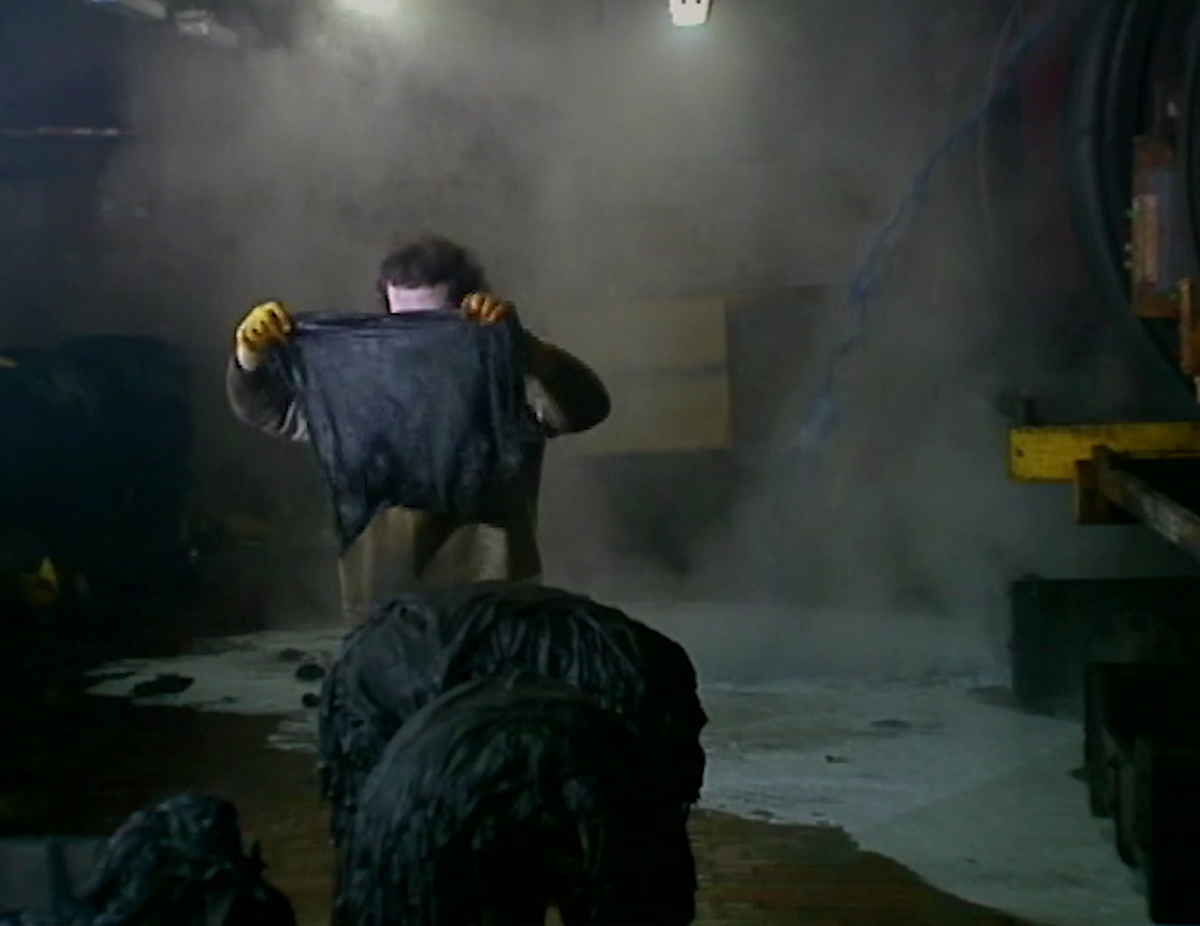
Joe Cultrera and Perry Hallinan, camerawork by Henry Ferrini, Still from Flynntan, 2019. Courtesy of the filmmakers.
PH: I was a kid when those films were shot. In fact, I was kicked off the set of “Leather Soul” for being too fidgety while they interviewed my grandfather. Now I’m grateful those films exist. They document the people and places I grew up around — stories I barely paid attention to at the time. Back then I was more interested in drawing fantasy worlds and wandering shopping malls than listening to adults talk about real life.
Looking through the boxes of unedited videotapes felt like time travel. I could sit beside the pool sharks in the side room at Metro Bowl, heavy with cologne and cigar smoke. I could step outside behind the building and watch three of my middle school classmates playing along the train tracks. Across the street was the D&R convenience store where I used to buy cartons of cigarettes for my mom.
These weren’t dramatic moments. They were ordinary fragments of life — the kind you don’t recognize as memory until they’re already gone.
Out of those fragments came Salem Sketch #64, “Merry Go Round Peabody Square.” Dan Kupka composed a soundtrack that perfectly captured that circular feeling of the 1990s downtown — familiar faces revolving through spaces that were slowly disappearing. Maybe the specifics might resonate most with people who lived here, but assembling the footage revealed something larger: a story about a city in transition, where Peabody’s downtown slowly slips away while two malls, a few miles away, promise something new. There’s a shadow side to the price of admission for the Merry Go Round — one I gladly paid. Watching it now feels less like nostalgia and more like witnessing a trade-off, one that I only understood decades later.
Q: Joe, you’re from Salem, and Perry you’re from Peabody. How did it feel seeing your home turf in this new light through mini docs made by the community?
JC: The collective community of subjects is what makes them special. The sum of all the Sketches is more important than any individual one. But I think it’s more about turning on an old light than shining a new one. Salem has changed drastically from the town I grew up in. First with the evaporation of the old downtown businesses that were lost to the nearby malls; then with the creation of the witchcraft economy and finally with the pandemic, which was when we stopped making the Sketches. That old Salem felt less self-aware and more in touch with all its odd parts and people. Those were the details we were looking to capture or reveal.
The Sketches are certainly not a complete picture of a place, but they do manage to preserve some of its less spotlighted pieces. And they’ve become more valuable over time. I can say that about all my films. I’m not a historian, but my instinct is to save things I value and fear losing. As the city evolves, it’s important to remember what it once was, and not just the people and things that make the news and the history books. The Sketches are about regular folks and the things they do — the bits of the city caught between the cement cracks. In some small way I hope the exhibit allows new Salemites to get a truer sense of the city they are inheriting, because I believe there are a lot of misconceptions about this place and its people.
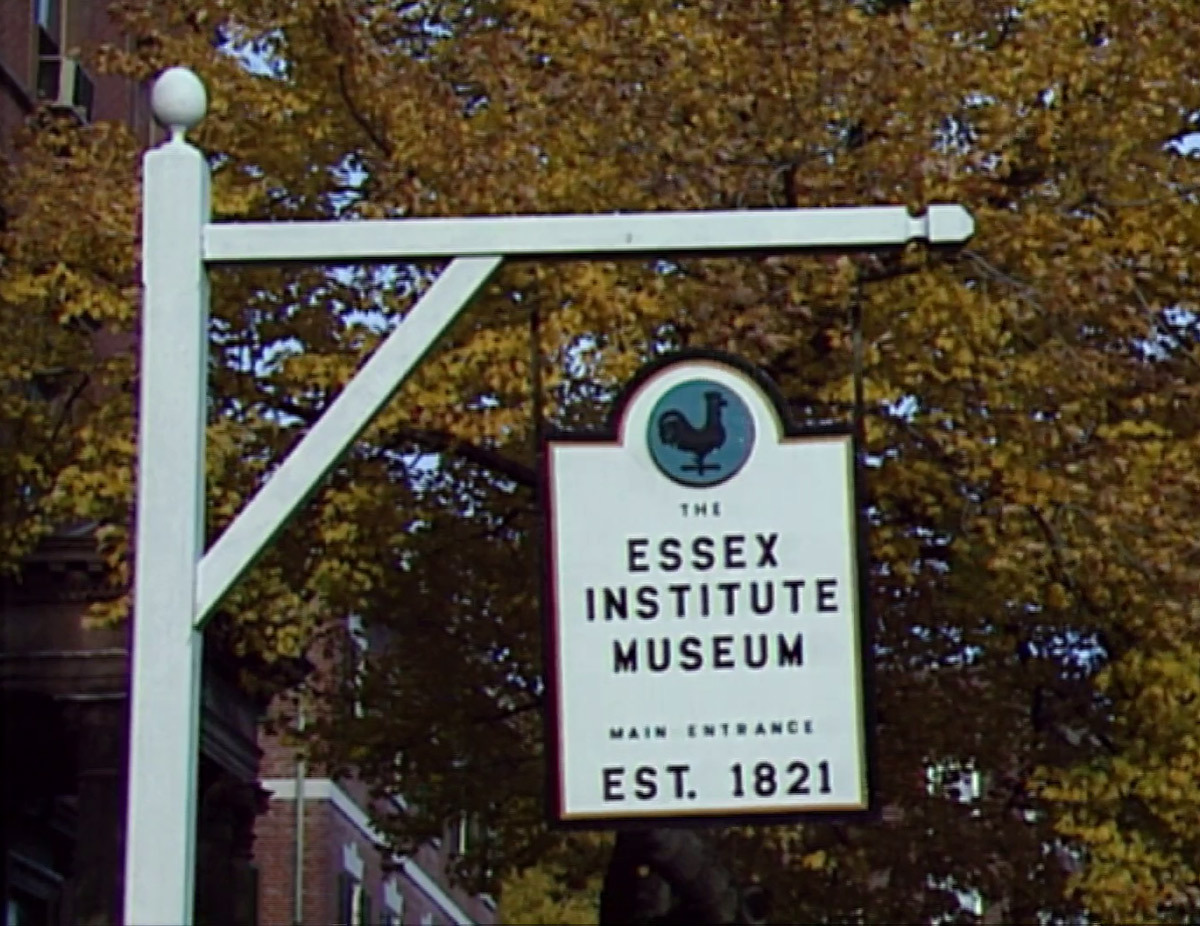
Joe Cultrera, camerawork by Henry Ferrini, Still from The Old Days, 2015. Courtesy of the filmmakers.
Q: What is it like for you both to see this time capsule of Salem in the form of an exhibition at PEM?
PH: I’ll let you know after the exhibition opens — I’m sure there will be plenty of feelings to sort through. As we’ve made a new Salem Sketch, #71, “Where Goes the Neighborhood?” over the past year, PEM has been incredibly supportive, thoughtful and encouraging throughout the entire process. Everyone we worked with seemed genuinely interested in possibilities and open to ideas. We proposed several concepts. PEM listened patiently — even to the far-flung ones — but encouraged us to find a story accessible to anyone, young or old. They kept guiding us back to the Point neighborhood, and I’m very glad they did.
The Point is home to large Dominican, Puerto Rican and Haitian communities, one of the last neighborhoods in Salem with a strong immigrant identity. While filming #71, we learned that around the time of the Industrial Revolution only about a third of Salem spoke English — the city was filled with French, Polish and Italian voices. The present suddenly felt connected to the past. Finding the story began with lunch with Daiana Rosario from PEM, who grew up in the Point. She introduced us to Yoleny Ynoa, a connector of people and ideas in the Dominican community, who in turn led us to Tropicana Market and El Típico. From there the film grew and wove together contemporary stories with memories from the Franco-American families who lived there when the Naumkeag mills were up and running.
It’s worth saying this exhibition only exists because of Salem’s 400th anniversary. Without Salem 400+, we probably wouldn’t be here talking about it. But that anniversary also reveals something larger: Salem has always been a city of immigrants. Different languages, different generations, constantly reshaping the same streets. “Where Goes the Neighborhood?” is a birthday gift to Salem and truly was a collaborative effort with many in the community. PEM helped hold all of those voices together.
Q: Can you talk about the process of getting beyond the “witch kitsch” for a portrait of Salem?
JC: There is the real Salem and the fantasy version. Tourists come here looking for a spooky witch-on-a-broom funhouse experience. The Sketches take you “beyond the broom” and into the lives of some of the people that make up that rest of the city beyond downtown. The subjects of the Sketches aren’t famous, don’t seek attention or the spotlight. They are mostly working-class people whose collective experience contributes to the soul and the character of this place.
One of my motivations in helping make Salem Film Fest an international documentary event was to show how residents could move beyond the city’s witchy obsession and focus on global realities. We wanted to honor great films from around the world and create local conversations about world issues. The Sketches became a way for us to connect the local with the universal, reminding our audience that you can find interesting stories in your day-to-day life, even in the lives of some unassuming people you might have met but never had a chance to know.
The city that exists beyond that broom is the Salem I grew up in. It is not much different than the Peabody that Perry grew up in. Those places and those people are what we both were interested in capturing and celebrating.
Q: What do you hope museum visitors come away with in terms of their thoughts about Salem or community filmmaking?
PH: I hope people will come away with the notion that many surprising connections can be discovered by talking with people outside of one’s network, that so much can get done through teamwork, and how essential a playful approach to life is for the heart.
This exhibition is part of the 2026 celebration of Salem 400+, which commemorates the quadricentennial of the city’s settlement while honoring the preexisting Indigenous community. The initiative aims to engage the Salem community and ensure a vibrant and sustainable city for generations to come. Look for upcoming programming related to the Beyond the Broom exhibition and follow along on social media using #BeyondtheBroom. To learn more about Salem's Point neighborhood, follow the work of Punto Urban Art Museum.
Press Release
PEM announces exhibitions and programming to celebrate Salem 400+ in 2026

Blog
Sketches of Salem
5 min read
Exhibition
Beyond the Broom: Salem Short Films
On view through August 2027
BLOG
How PEM plans to celebrate Salem 400+
12 MIN READ
