CONNECTED | Nov 16, 2026
Looking back at PEM's staff art show, Revealing the Unseen
Museums are full of hidden stories. Some are tucked away in collection storage, waiting to be rediscovered; others are carried quietly by the people who work here every day. As PEM staff members, we know our colleagues through their professional roles, but we don’t always know who they are outside of work — or what they might create when the workday ends.
That contemplation inspired Revealing the Unseen: The Creativity Within Us All, an exhibition celebrating artists among the PEM staff and museum guides that was on view at the Hawkes Collection Center in Rowley this past summer. The unexpectedly successful show helped us to get to know one another on a much deeper level, beyond our day-to-day. With the Thanksgiving holiday approaching, I feel fortunate to collaborate with such dedicated colleagues in a space that continuously nurtures and values creative expression.
As a member of PEM’s Climate + Environment Ideators group, I have always been drawn to projects that bring people together while encouraging more sustainable ways of thinking. The Ideators are a volunteer, cross-departmental staff group that initiates projects that support PEM’s environmental goals and help us become a more climate-forward institution. The concept for a staff art show grew out of conversations about hosting an “art swap” after a staff Freecycle event. Around the same time, we realized just how many PEM staff members are practicing artists themselves.
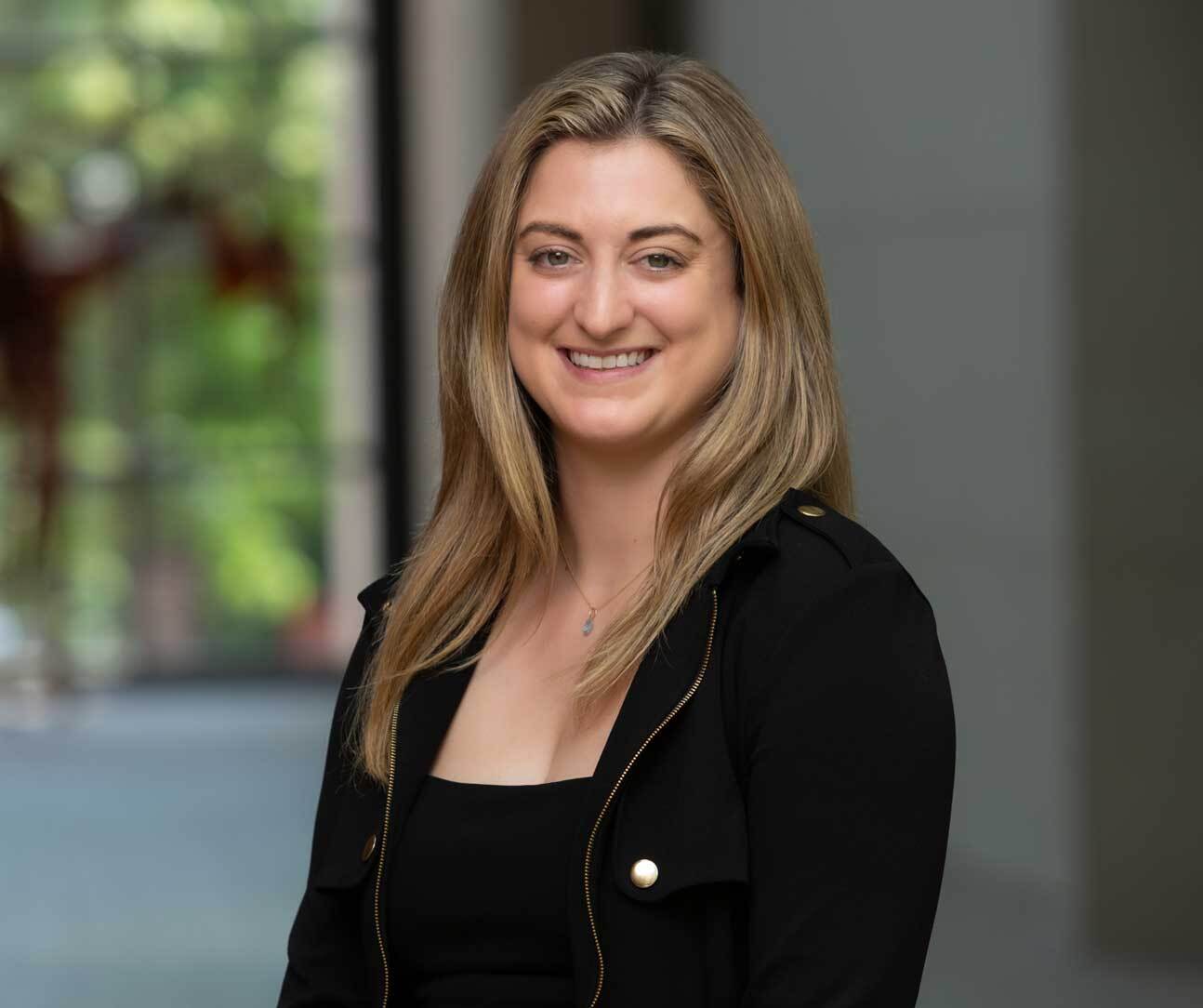
I have always maintained my own studio practice as an oil painter, and before joining PEM, I worked at a gallery in Portsmouth, New Hampshire, where I helped curate and install monthly exhibitions featuring local artists. Assembling a staff art show team gave me the opportunity to combine that experience with our group’s focus on sustainability and community building. We reached out to colleagues to gauge interest, and the response was incredible — more than 40 people! Our idea to host a staff art show quickly became a reality.
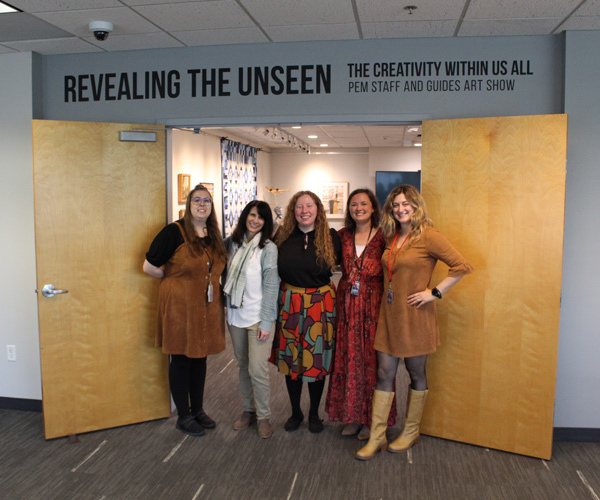
The exhibition team: Former staff member Julie Diewald; Angela Segalla, Acting Director of Collection Services; Renata Leighton, Exhibition Project Manager ; Lela Clawson-Miller, Art and Nature Center Manager; and Elisabeth Auffant, Office Manager for Curatorial Operations.
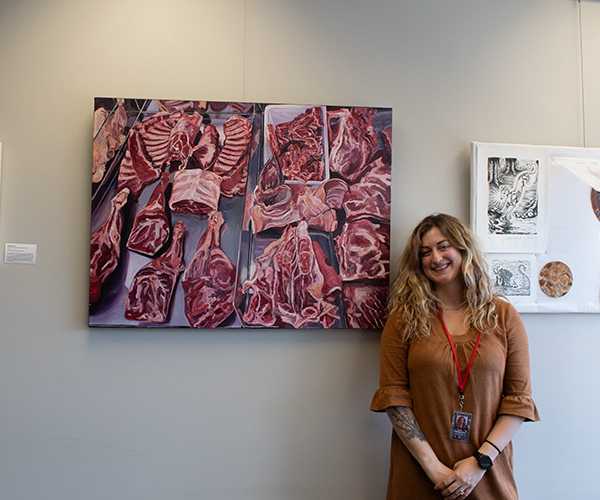
Elisabeth Auffant and her oil painting A Butcher Shop in Portugal.
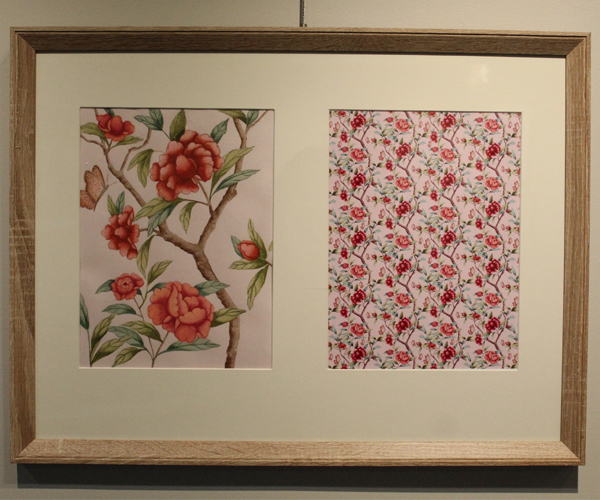
Angela Segalla, Peonies.
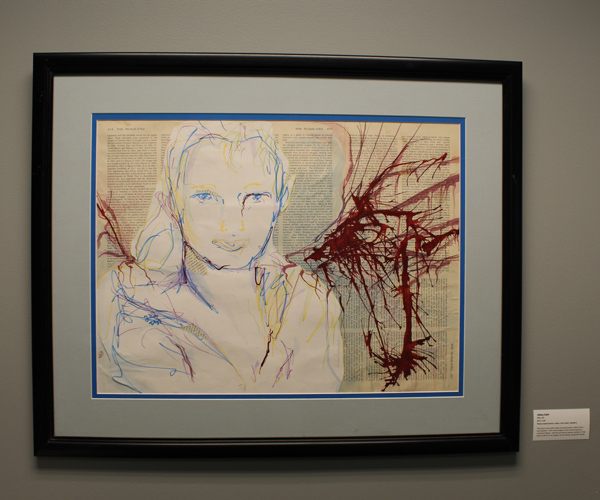
Jillian Zieff, Collection Specialist, War #1.
We decided to install the exhibition at the collection center partly to create a stronger bridge between colleagues who work on our Salem campus and in Rowley. Angela Segalla, PEM’s Acting Director of Collection Services, became a key advocate and collaborator throughout the process, helping us transform the Collection Center’s office spaces into an exhibition venue. By opening up available wall space and providing museum casework for sculptural pieces, Angela helped create a space where staff artwork could truly shine, bringing warmth, color and life to previously bare office walls.
When we sent out the call for artwork, we invited staff to vote on several possible exhibition themes. The winning idea was clear: revealing the creativity that exists within all of us. That theme ultimately became the exhibition’s title: Revealing the Unseen: The Creativity Within Us All.
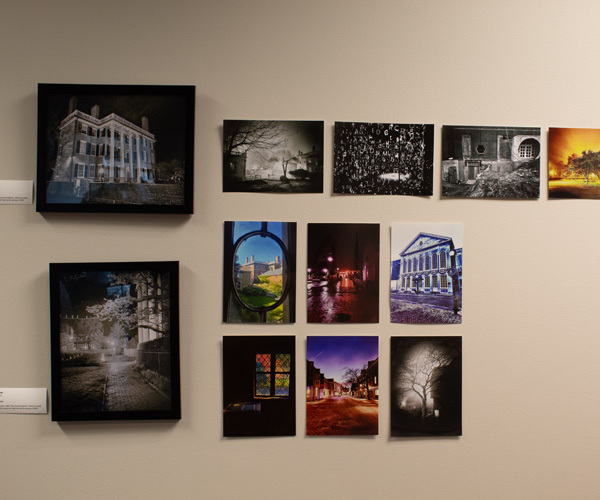
Jon Spina, Security Supervisor, photography, part of a series called Nocturnal Isolation, which focused on the PEM campus at night during the spring of 2020.
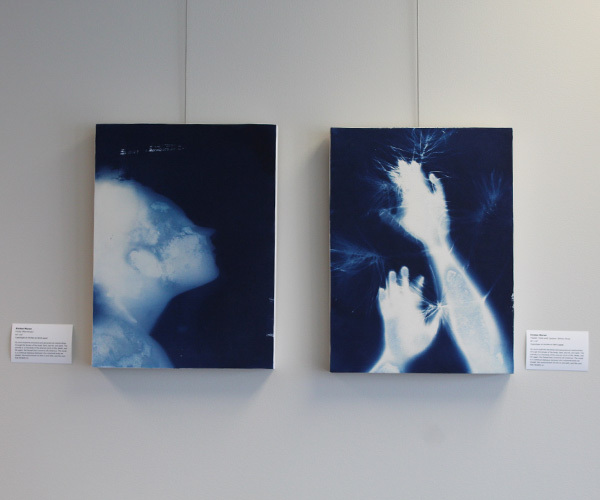
Kirsten Moran, Internship and Fellowship Program Manager, Holly (Merrimac) (left) and Healer (Tara and Eastern White Pine) (right)
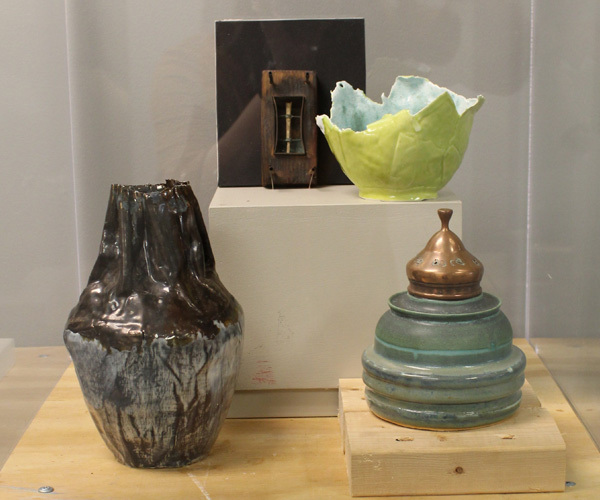
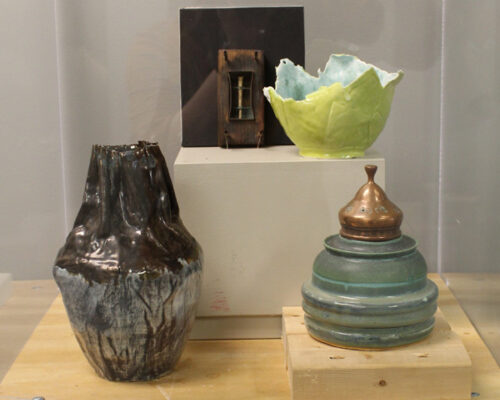
Matthew DelGrosso, Associate Preperator, various works.
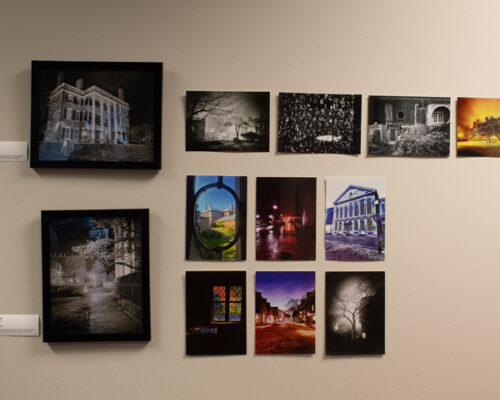
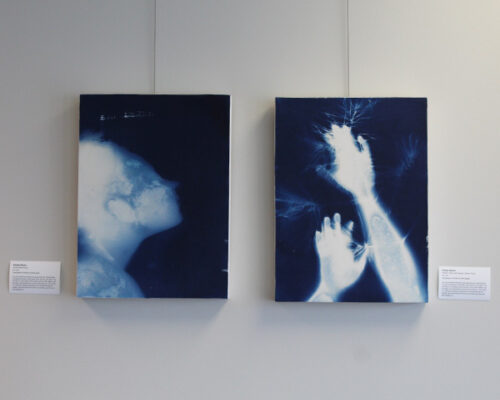
Many of us spend our days surrounded by artworks at PEM, yet we might not know what our colleagues imagine outside of their museum roles. A collection specialist may also be a painter. A gardener may build miniature worlds. A colleague you pass in the hallway may have spent years developing a unique artistic practice.
What emerged was not just only art exhibition, but also a portrait of our staff community. I had the opportunity to sit down with some of the artists and dove a little deeper into their stories.
One of the most surprising entries in the exhibition was Ropes Greenhouse Mouse House, an intricate diorama by artist Eliza Stroh depicting members of PEM’s Gardens and Grounds crew as tiny, costumed mice. Although Eliza is not employed by the museum, her artwork was entered into the exhibition by Robin Pydynkowski, PEM’s former Manager of Horticulture and Grounds, who is also represented in the diorama as one of the dressed-up mice.
Eliza’s artistic practice began after taking a taxidermy class in 2021. With a background in genetics and a career as a genetic counselor for a stem cell company, she has long been fascinated by individuality.
“I am and always have been interested in odd things, different things, things that make us unique and bind us together,” she explained.
After learning how to create taxidermy mice, Eliza began imagining the tiny figures as characters inhabiting miniature worlds. Over the past several years, she has created scenes inspired by television series such as Dallas and The Golden Girls, films by John Waters and even the documentary Grey Gardens.
For Ropes Greenhouse Mouse House, the inspiration came from a friend and Ropes Mansion neighbor, Carrie Cabot, who knows PEM’s gardening team well and commissioned Eliza to create a work celebrating them. Eliza met with gardeners, gathered reference photographs and then spent approximately 30 hours meticulously constructing the greenhouse scene.
“The mice are my medium,” she says. “Taking the mice and putting the magic touches on to make them resemble people is my favorite part.”
The charming miniature elements in her work come from a vibrant community of artists and makers who create tiny objects by hand. For Eliza, sourcing those details is part of the joy of the process.
“There is a whole world out there of miniatures, and of people who make them,” she says. “Half the fun of creating these dioramas is sourcing the minis!”
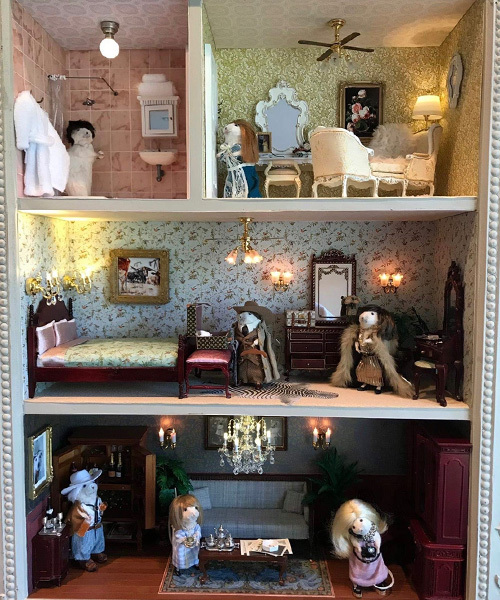
Eliza Stroh, Ropes Greenhouse Mouse House.
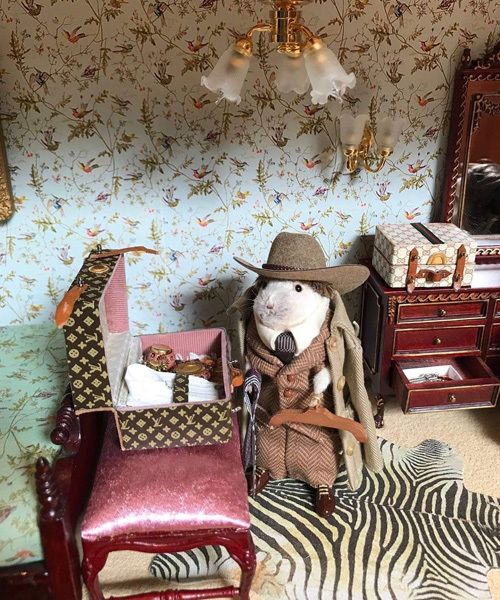
Eliza Stroh, Ropes Greenhouse Mouse House.
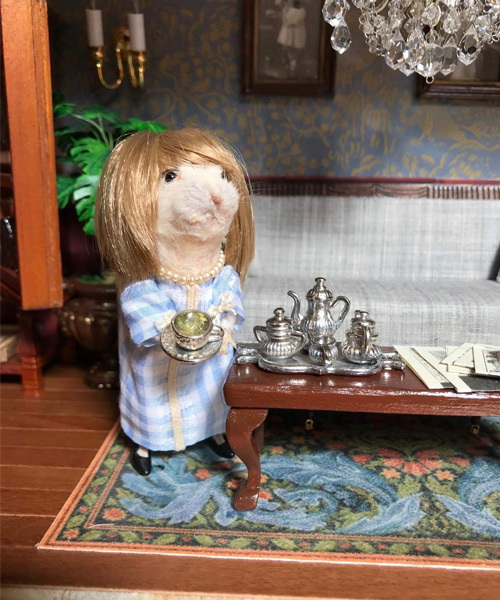
Eliza Stroh, Ropes Greenhouse Mouse House.
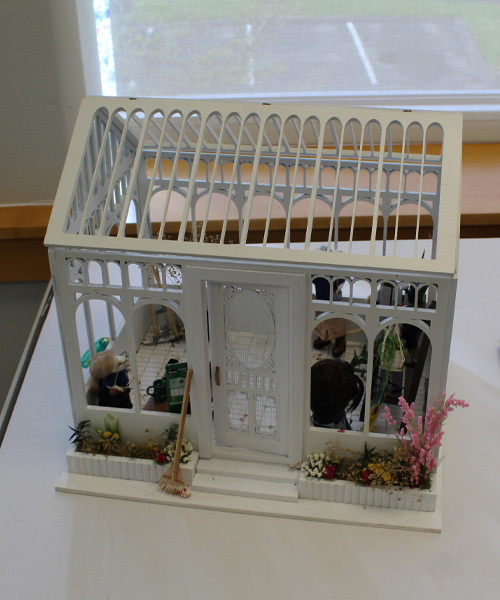
Eliza Stroh, Ropes Greenhouse Mouse House.
For Sanna Gu, a Collection Specialist at PEM, the exhibition offered an opportunity to connect her personal artistic practice with her professional work caring for museum collections.
Sanna has been an artist for as long as she can remember, though pursuing art was not always encouraged while she was growing up. She initially earned a bachelor’s degree in Russian literature with plans to attend law school. After graduating, however, she realized her true passion lay elsewhere and returned to school to study illustration at the School of Visual Arts in New York City.
Her original goal was to become an animator; fine art felt like an unrealistic dream, while illustration seemed like a more practical profession. Looking back, Sanna believes she would have thrived in a traditional atelier-style oil painting program. Instead, she taught herself.
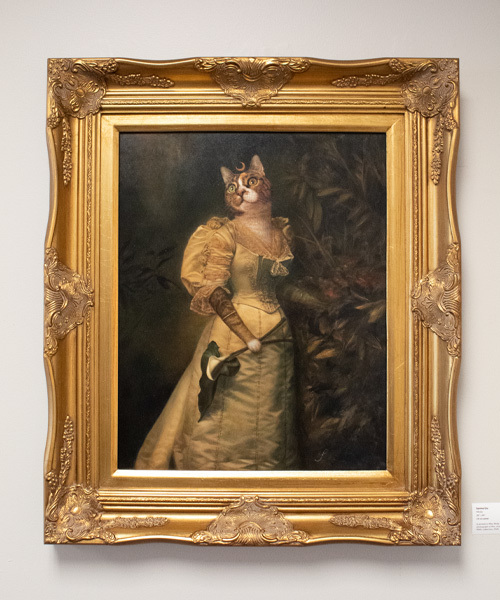
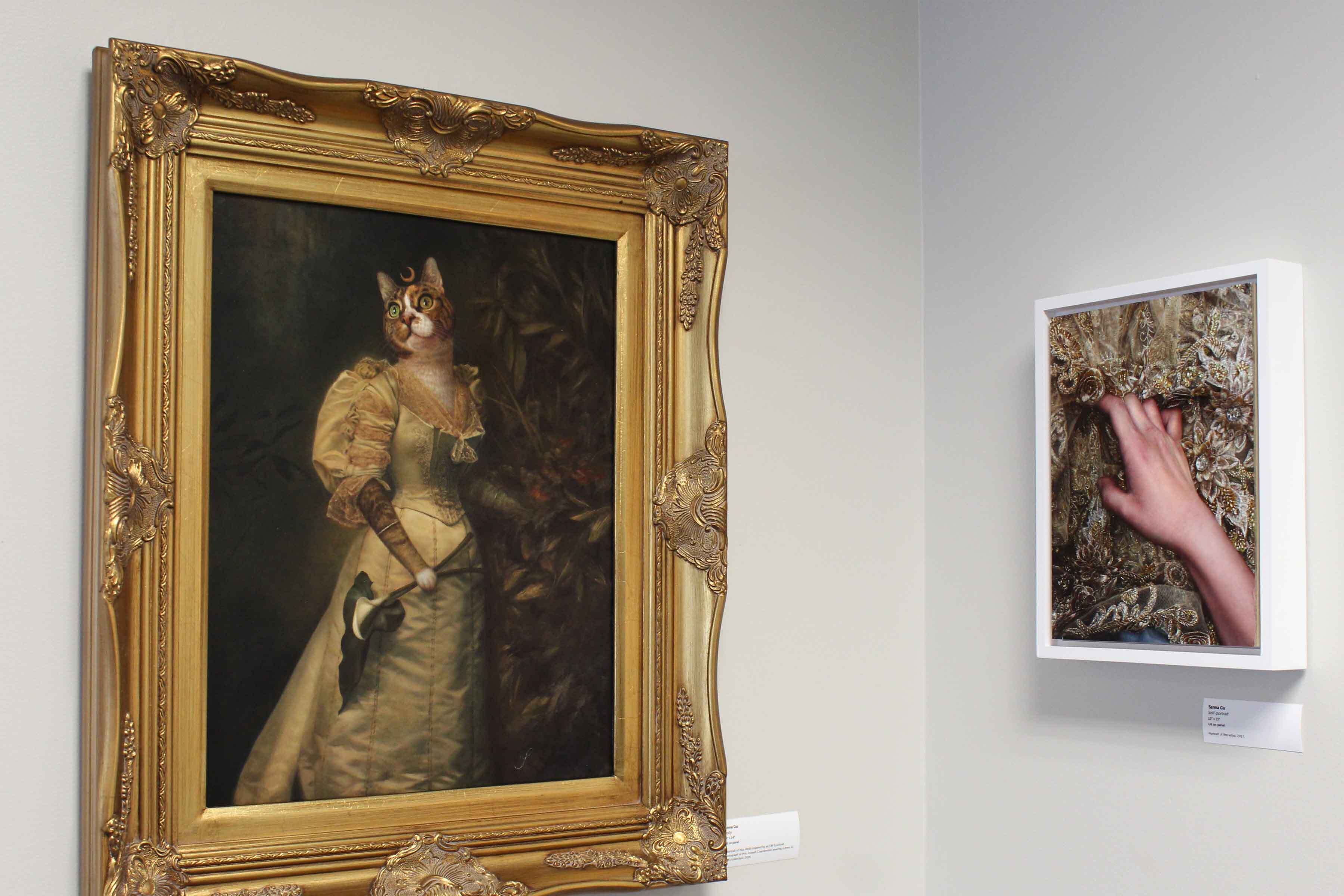
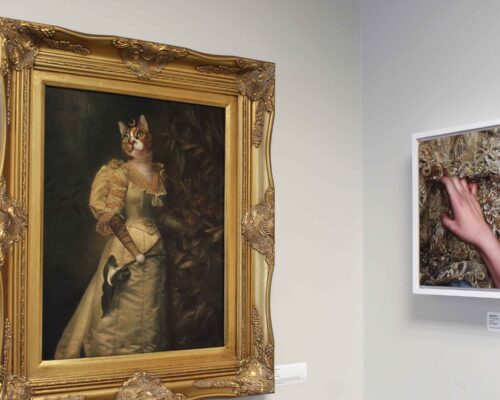
Sanna Gu’s painting of her cat in 19th-century couture.
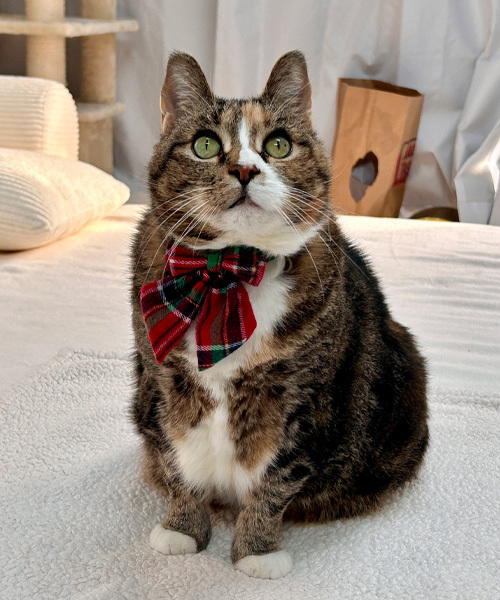
Molly, the muse.
“I’ve always been an artist,” she says. “But I have no formal training. I learned oil painting from YouTube videos.”
One of her remarkably detailed works features her beloved cat Molly wearing a gown from PEM’s collection. The historic gown was worn by Salem native Mary Crowninshield Endicott Chamberlain when she attended Queen Victoria’s Drawing Room at Buckingham Palace in 1893. Looking closely at Sanna’s painting in person, the rendering of the fabric is so convincing that it becomes easy to overlook the cat.
“I knew I wanted to feature Molly in a painting,” Sanna explained. “But I also wanted to find a way to connect her to what I do at the museum.”
Sanna began her career at PEM in the Visitor Engagement department before joining the Gleam Team, a group of staff volunteers who regularly inspect and clean gallery spaces and museum objects. She later transitioned into her current role as a Collection Specialist, supporting the ongoing relocation and documentation of the museum’s collections in the Hawkes Collection Center in Rowley.
Beyond oil painting, Sanna continues to challenge herself by exploring watercolor and other creative pursuits. She also sees making art by hand as an important counterbalance to an increasingly digital world. The rise of AI-generated imagery has only strengthened her commitment to creating with her own hands and continuing to learn new techniques.
“There is something meaningful about putting in the effort to make something you’re passionate about,” she says. “Things that are worth doing are worth the time and effort it takes to create them.”
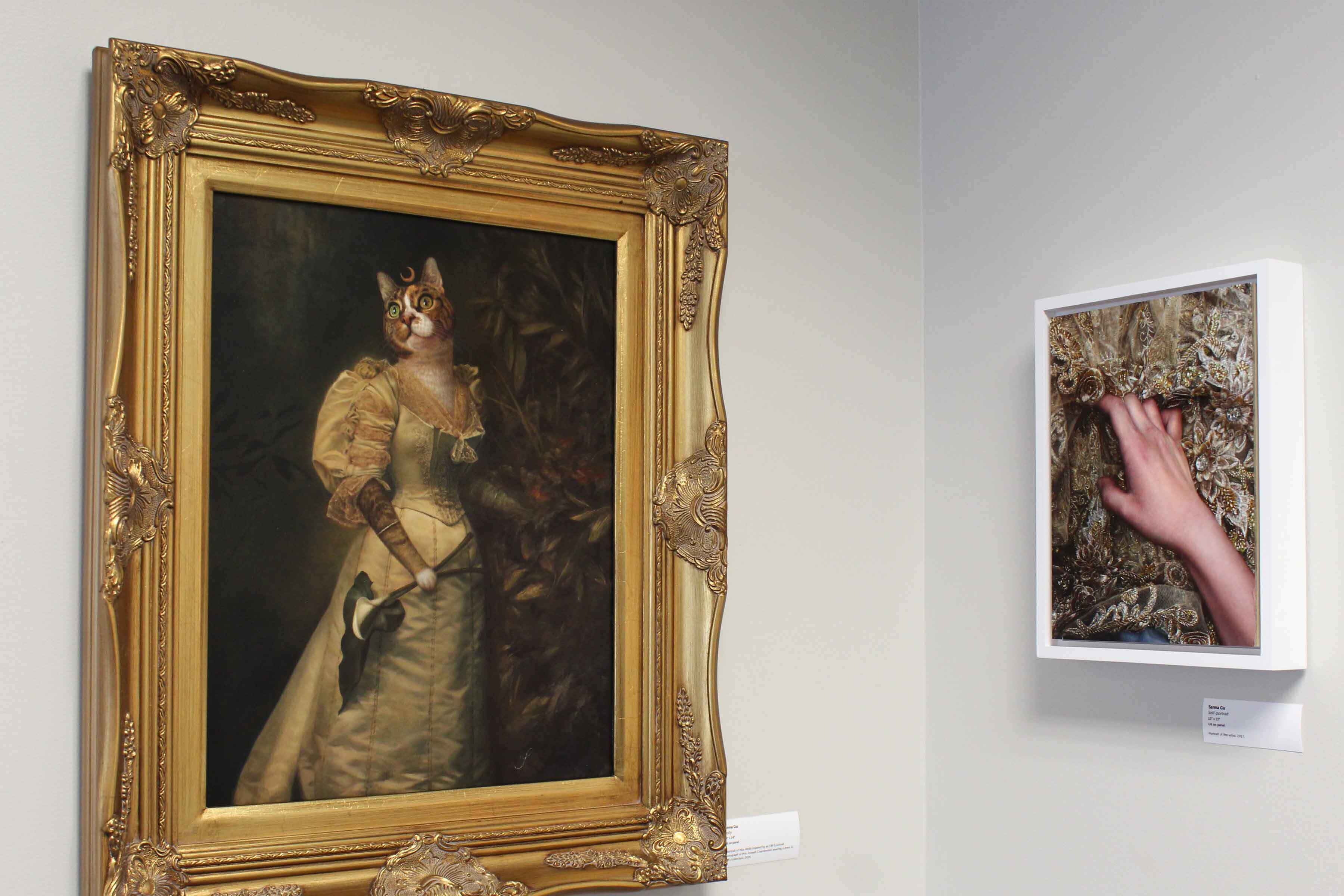
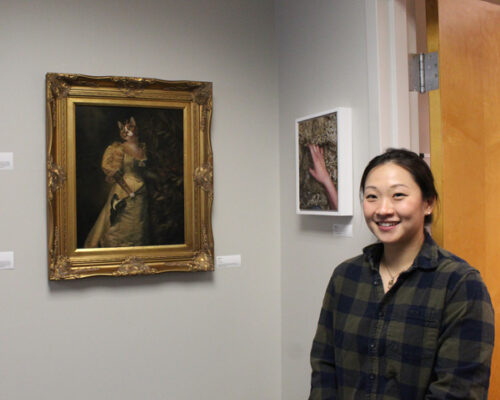
Sanna Gu with some of her artworks.
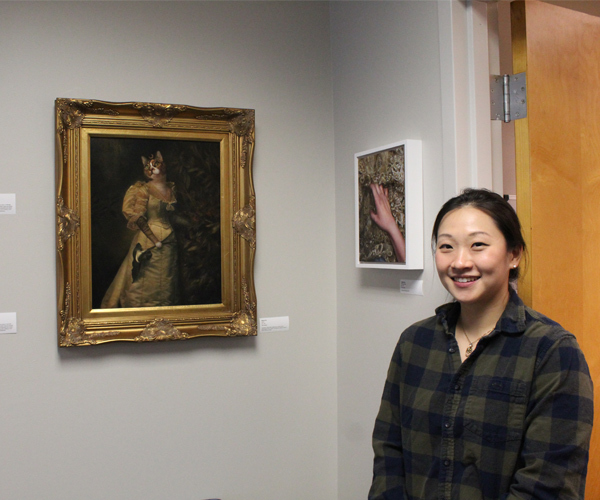
Sanna Gu with some of her artworks.
“There is something meaningful about putting in the effort to make something you’re passionate about,” she says. “Things that are worth doing are worth the time and effort it takes to create them.”
For longtime PEM mailroom employee Brian Thomas, creativity begins with curiosity. A self-taught artist, Brian has spent decades exploring drawing, sculpture, found objects and assemblage.
His artistic journey began with childhood curiosity and family influence. Growing up, art programs in his schools were limited and often among the first to be cut from the curriculum. Instead, Brian learned by making. He spent hours drawing, encouraged by his older sister, who attended the Massachusetts College of Art and Design, and building model boats with his brother in a small workshop in the basement of their family home. Through high school, he continued pursuing art independently, finding inspiration outdoors and through books.
“I pick up and read whatever might interest me,” he says. “I do a lot of reading — art history, general history, Kerouac and the Beat Generation. Yesterday I found a book about Peggy Guggenheim and her collection. It all feeds into my work.”
In the 1990s, Brian became interested in found art, or objet trouvé, an artistic practice in which everyday objects are transformed into works of art. Inspired by artists such as Pablo Picasso and Marcel Duchamp, as well as movements like Dadaism and Surrealism, he began creating sculptures from discarded materials.
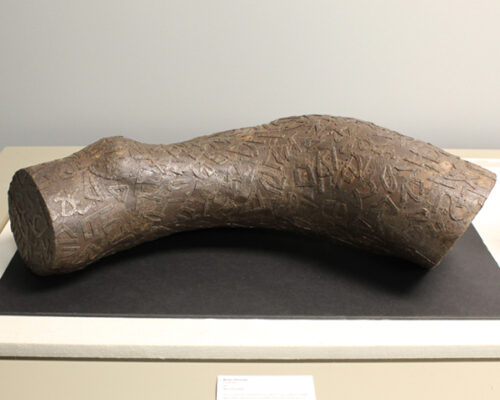
The sculptures Brian contributed to Revealing the Unseen, called Limb #2, Wonder Stone and Tablet, are part of a larger series made from found wood and reclaimed metal. The first piece in this series began with an unexpected discovery while camping in Maine: a large burl of wood left behind after a nearby logging operation.
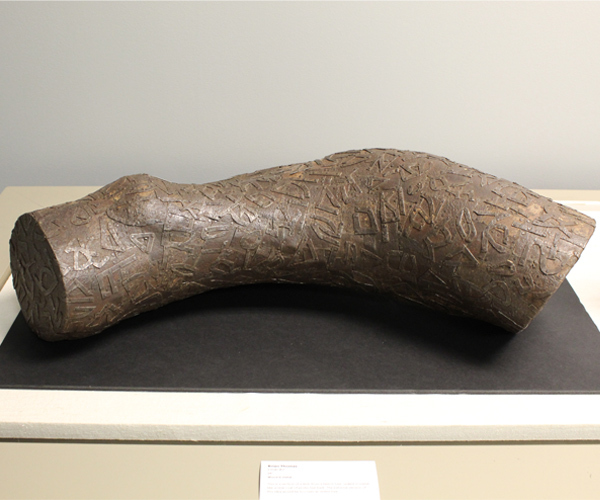
Brian Thomas, Limb #2, wood and metal.
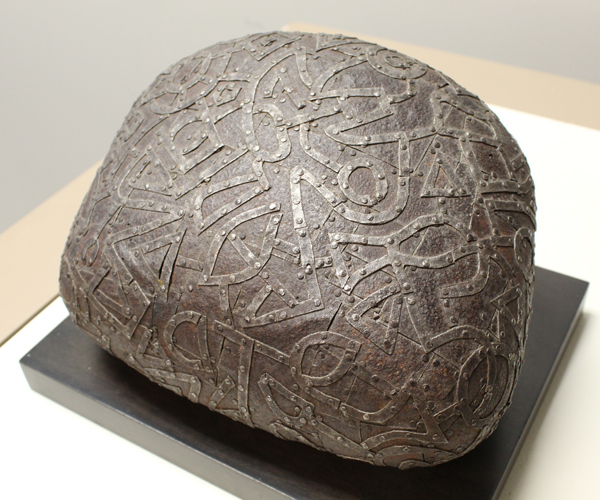
Brian Thomas, Wonder Stone, Wood and Metal.
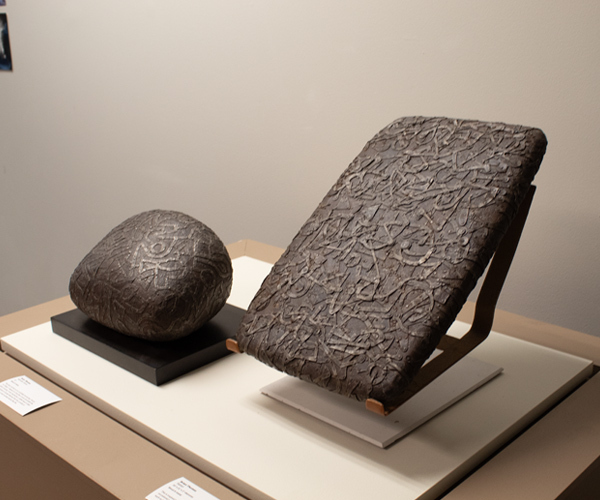
Brian Thomas, Wonder Stone and Wonder Tablet, wood and metal.
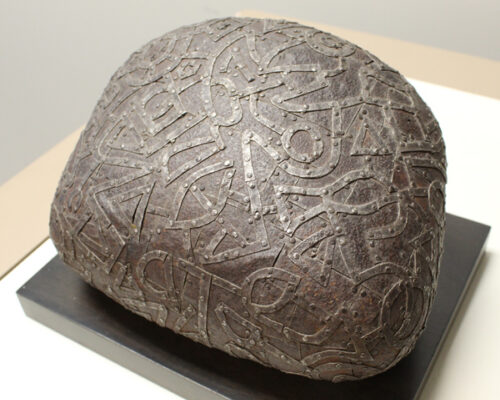
Brian covered the burl with pieces of metal he had collected over time, cutting and arranging them almost like a mosaic. Many of his works also incorporate writing and symbols, reflecting his longstanding fascination with language and the history of written communication.
“My approach was to make something that looked like it already existed,” he explains. “I had a friend see one of those pieces [Tablet] in my apartment and ask me, ‘Where did you get that?’”
For Brian, found objects carry stories. He is constantly collecting materials wherever he goes, often discovering them during his daily commute.
“You never know what you’re going to find,” he says. “I even found some pieces today.”
When I asked him to show me, Brian reached into his pocket and pulled out three tiny metal caps from miniature liquor bottles. Most people would have overlooked them as litter, but Brian saw raw material and creative potential. After removing the plastic inserts, burning away the paint, and flattening the metal, the pieces will eventually become part of one of his sculptures.
Working at PEM since 1982 has also shaped Brian’s artistic perspective. Over the years, the museum’s collections and exhibitions have influenced the way he thinks about materials and objects. Brian credits PEM’s 2007 exhibition Joseph Cornell: Navigating the Imagination as a lasting source of inspiration. Cornell’s ability to combine ordinary objects into mysterious, evocative works resonated deeply with him.
“I loved that people could spend years trying to explain what his work meant,” Brian says.
Participating in Revealing the Unseen offered Brian another source of inspiration: the vibrant creative community that exists within PEM.
“It was inspiring to realize how many people here are artists,” he says. “Having a day job makes it easy to forget you have this other thing you need to do. My mantra has always been, ‘try to create, even a little bit, every day.’”
Museums are often thought of as places that preserve the creativity of the past. Revealing the Unseen reminded me that they are also places where creativity continues to thrive every day. Behind every carefully packed object, every beautifully manicured garden, every visitor interaction and every exhibition might be someone who is also making something of their own. Getting to know my colleagues as artists has changed the way I see them, and I hope this exhibition encourages others to look a little more closely as well. Sometimes the most remarkable discoveries aren’t found in the museum’s galleries or collections — they’re found in the people working alongside you.
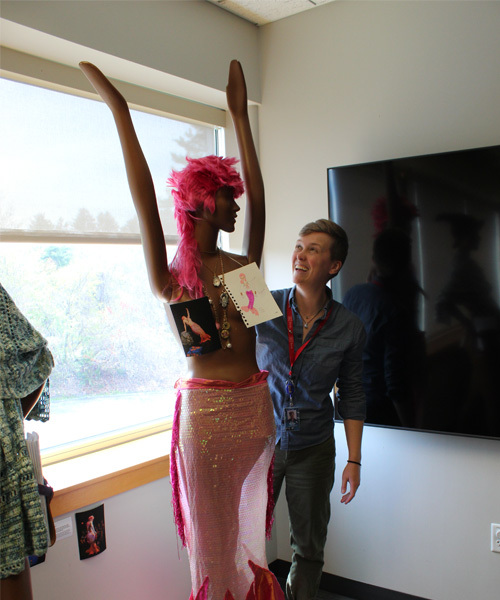
Meg Boeni, Editor for External Communications, with their entry, an ensemble created for one of their drag king performances.
To learn more about PEM’s Climate + Environment initiative and future staff art shows, check back at pem.org or email freecycle@pem.org.
Keep exploring
Blog
What two PEM internships taught me about paperwork, preservation and why every detail matters
9 min read
Blog
Looking back, and looking forward, with Lynda Roscoe Hartigan
15 min read

Blog
PEM’s Holiday Food Drive Supports The Salem Pantry
3 min read

BLOG
A PEM internship fuels a lifelong love of environmental advocacy
7 min read
