CONNECTED | May 13, 2026
Looking back, and looking forward, with Lynda Roscoe Hartigan
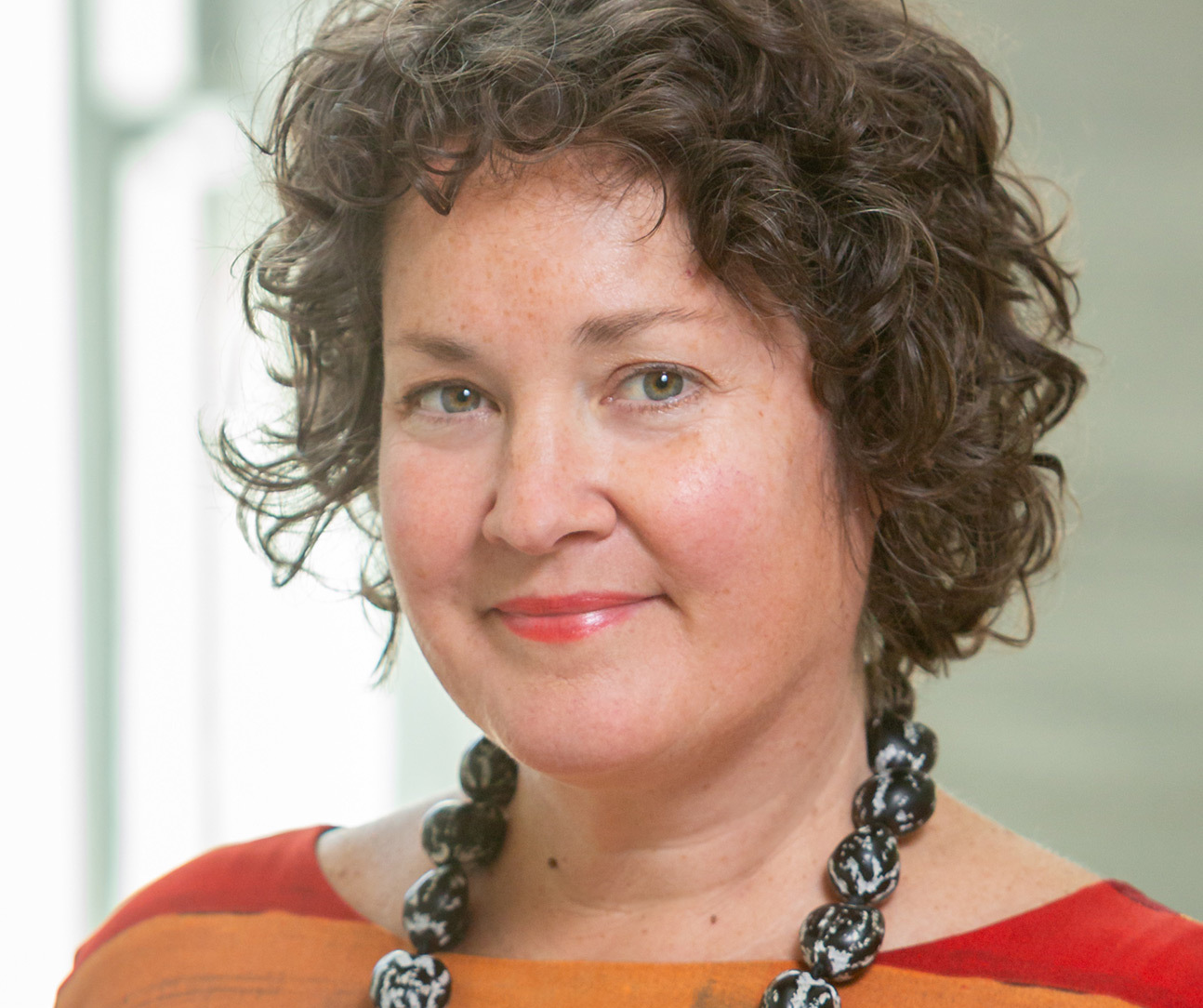
Lynda Roscoe Hartigan has been the Rose-Marie and Eijk van Otterloo Executive Director and CEO of the Peabody Essex Museum since 2021. During this time, one of her main goals has been to make PEM a more magnetic destination, a place people feel drawn to and compelled to stay connected with. After being connected to PEM in multiple leadership roles — Chief Curator, Deputy Director and, most recently, the museum’s first woman Executive Director and CEO — for more than 20 years, Lynda recently announced her departure to serve as the Margaret and Terry Stent Director of the Smithsonian American Art Museum.
During her tenure at PEM, Lynda has focused on balancing the museum as a globally engaged and community-centered organization. She has often championed creativity as a way of addressing a range of issues, from climate change to the loneliness epidemic. She has said that creativity is a nurturing force in our lives that offers hope and belief in what human beings can accomplish, individually and collectively. With her departure, Lynda leaves the museum in a strong position, with a five-year strategic plan to guide meaningful, thought-provoking experiences that connect people across time, place and culture.
As our fearless leader, Lynda has always been open to probing questions from our staff. So before she sets sail from PEM for our nation’s capital on June 30, Lynda sat down with us to answer just a few more questions.
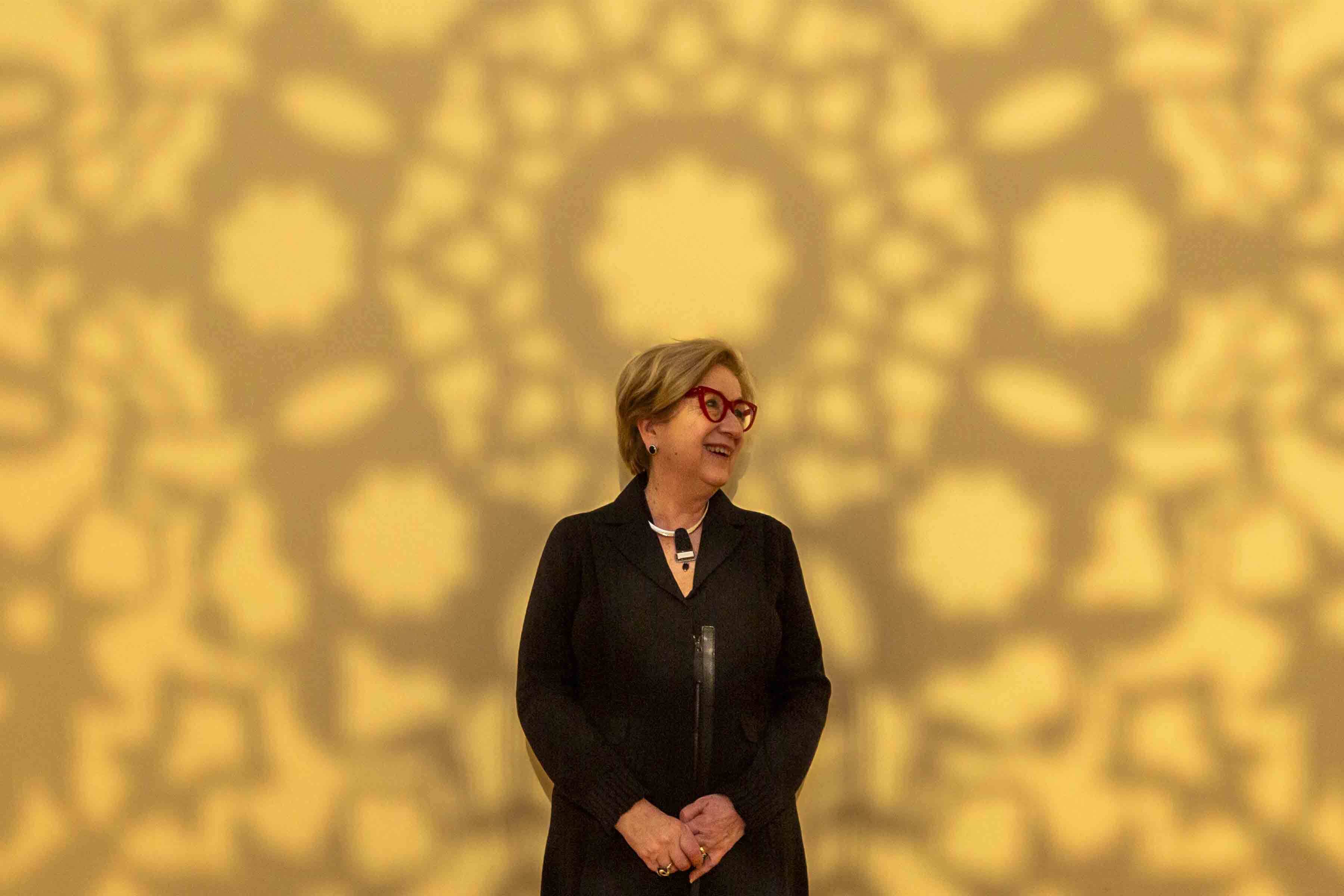
TOP IMAGE: Lynda Roscoe Hartigan enjoying a moment in Anila Quayyum Agha’s All the Flowers Are For Me. Photo by Kathy Tarantola/PEM.
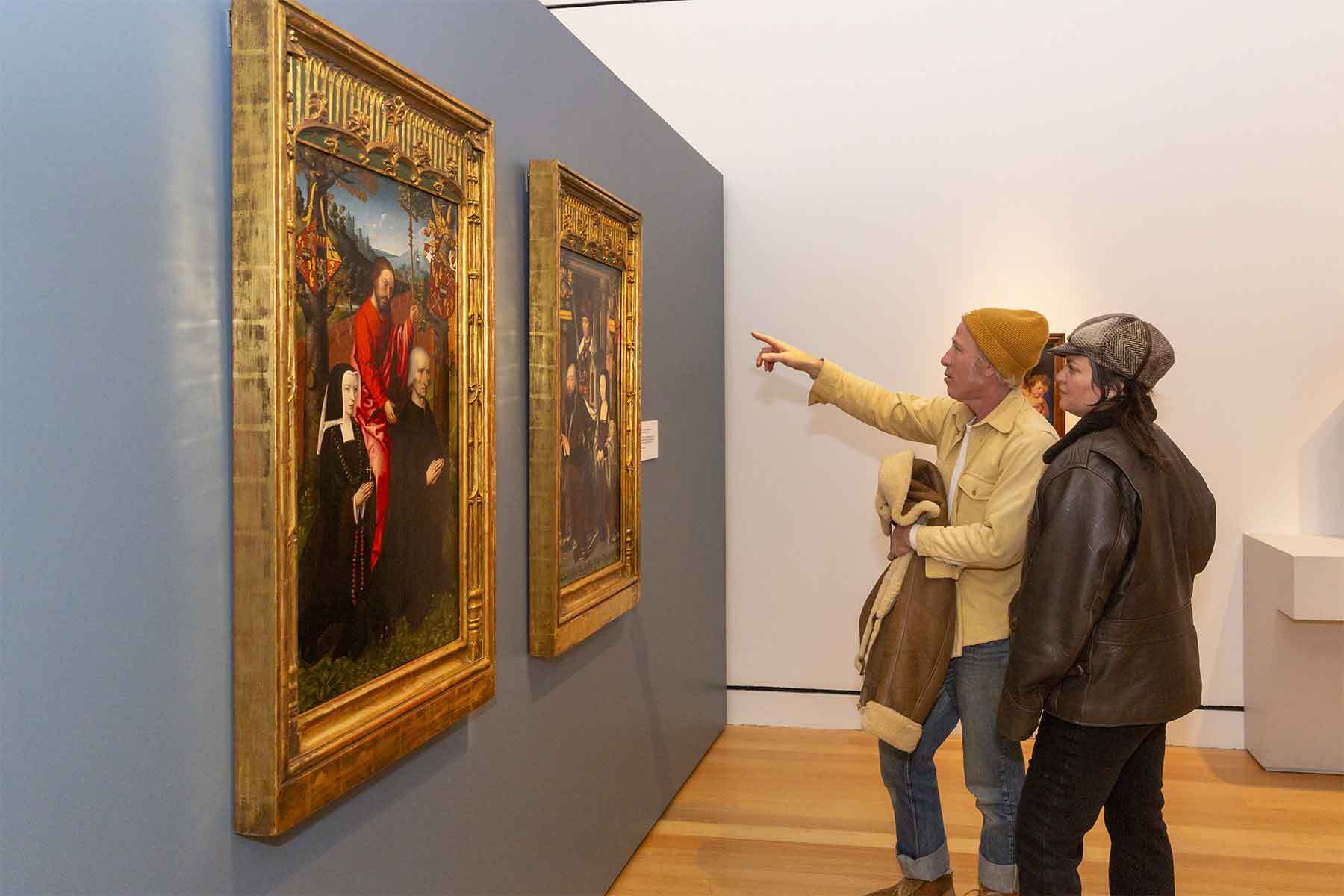
Visitors in the exhibition Saints, Sinners, Lovers, and Fools: 300 Years of Flemish Masterworks in 2025. Photo by Kathy Tarantola/PEM.
Q: Why the focus on a human-centered museum? What is it about people feeling seen and heard here at the museum that you think is important?
A: This goes way back for me, in terms of why I think museums can be important in people's lives. What we're celebrating has all been created by human beings, and museums provide ways for us to learn, be inspired and make connections. PEM lays some groundwork for understanding what we share — and sometimes, why differences are meaningful.
This is a place that was founded for the benefit of a community. So that notion of serving and connecting the people around us is just part of our DNA, and it’s why people can feel a sense of belonging and welcome here. It's about celebrating humanness and how creativity supports that. It’s about just wanting people to walk in the door and feel seen and heard. Why is that? Well, I think there's something almost intangibly undefinable that this museum exudes. Many people say that PEM is so friendly and some of that may be the architecture, but I think it’s also the opportunity for people to understand that art can be a meaningful part of their lives. We are committed to offering friendly, meaningful, intelligent, authentic, emotionally and more sensorially oriented experiences. All of this helps reduce barriers that people put up when they think that art might not be for them.
Q: Museums have had to adapt and evolve in recent years to be relevant. How has PEM accomplished that under your leadership?
A: I think the fact that we are actually living and breathing a really good and ambitious strategic plan that’s focusing on how a museum can be human-centered and how art and culture are part of that sense of shared humanity is part of that relevance.
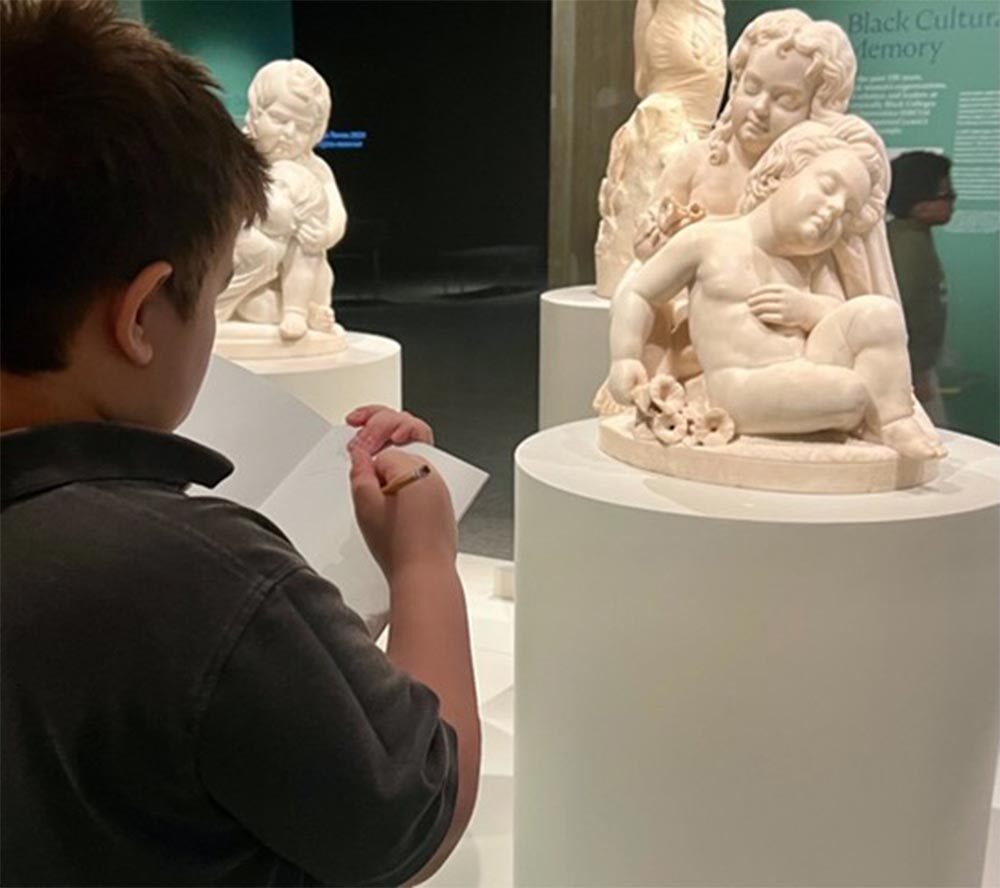
A student from Tracy Elementary School in Lynn explores Edmonia Lewis: Said in Stone as part of PEM’s Learning and Community Engagement effort to get as many local school children as possible into the exhibition. Photo by Martine Malengret-Bardosh/PEM.
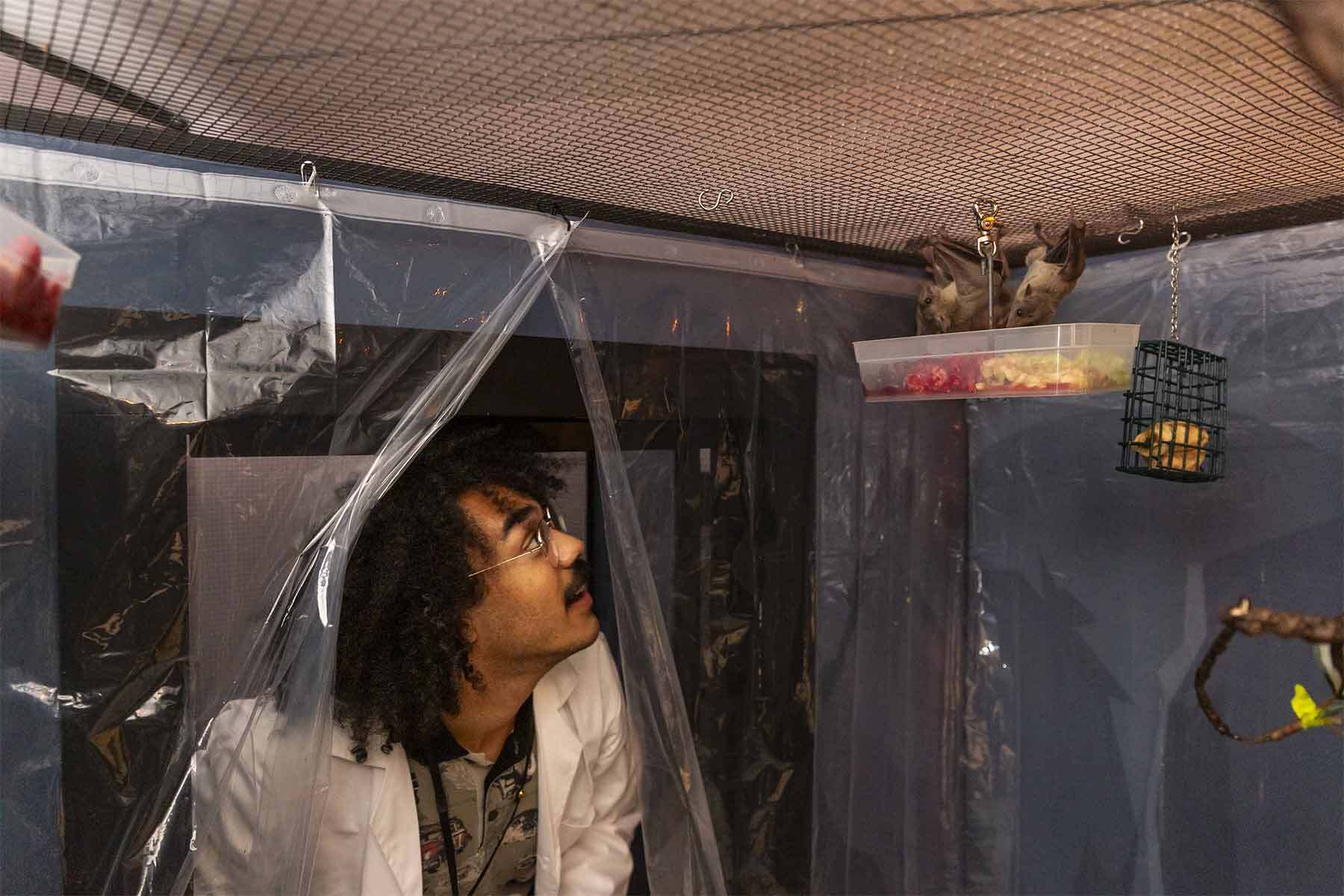
Nathan Peddie, Learning and Community Engagement Coordinator, helps wake and feed the colony of Egyptian fruit bats that lived in PEM’s Art & Nature Center in 2023. Photo by Kathy Tarantola/PEM.
Also, we have an incredible staff. Really talented, committed, human in terms of how they care about their work and about each other and our audiences. And so, working over these years to make sure that our staff feels supported is one of the ways in which the organization has been able to advance. Because first and foremost, it needs to be relevant for the staff.
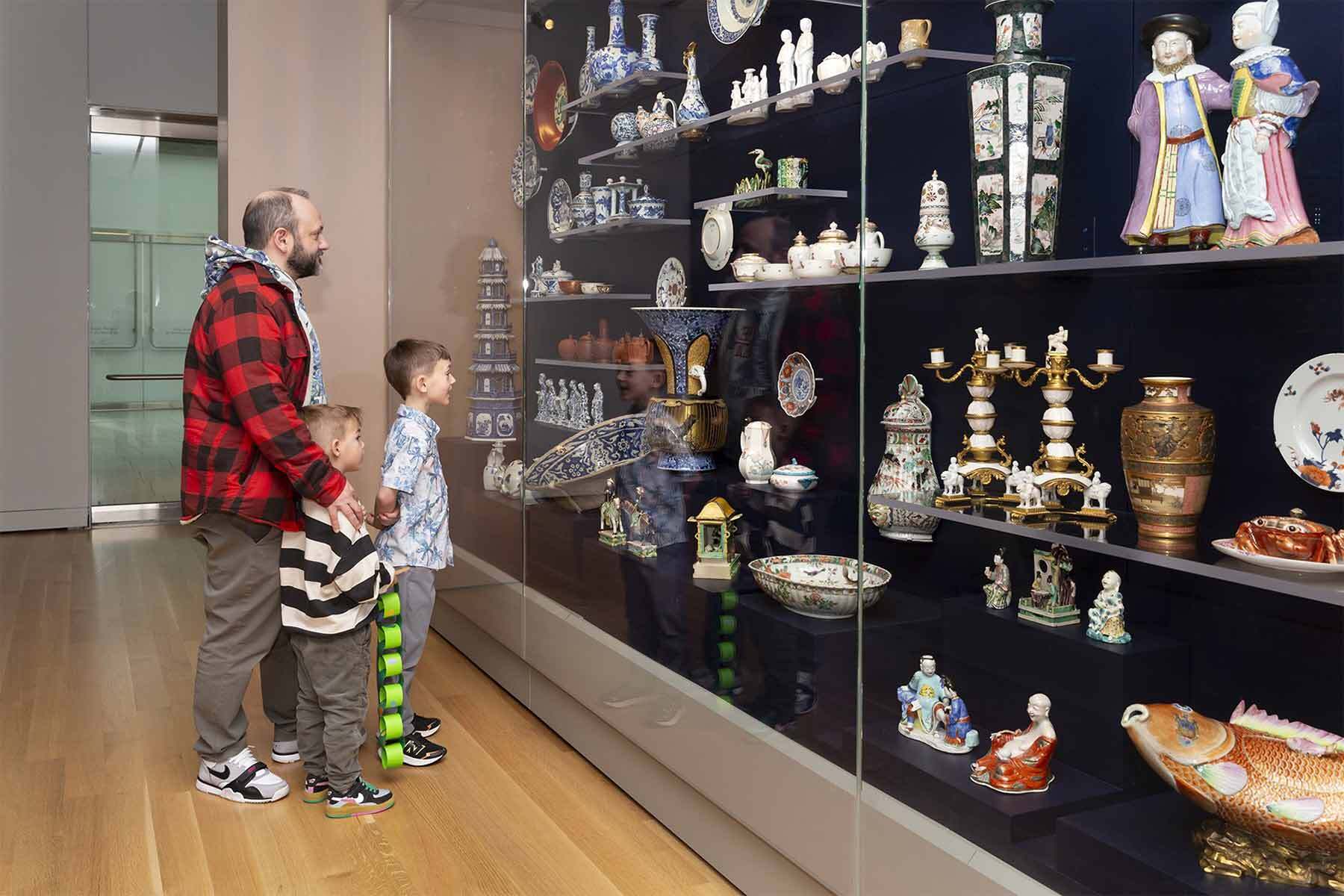
Visitors in the Asian Export Art gallery in 2025. Photo by Kathy Tarantola/PEM.
Q: What would you say is your proudest accomplishment as director?
A: The fact that we have been very impact-oriented and have understood how that can work through a well-organized, thoughtful and aspirational strategic plan has been one of the things that I'm really proud of. When I started as director here in August of 2021, the museum was in need of healing. Many museums were in that circumstance. We had some very specific reasons, in addition to the pandemic, because there had been a series of leadership transitions. I am grateful and gratified that I have been able to lead the museum through an important transitional phase to get us to where we are now, thriving.
That all goes back to paying attention to people. Our staff, our board, our audiences, our supporters. There are all kinds of projects and initiatives but, overarchingly, having moved the museum to the point where it can continue to be great for people is what I'm really proud of.
Q: What has surprised you most about the last five years at PEM?
A: If “surprised” can translate into being “pleased,” I think one of the things would definitely be the resilience and the determination of the staff. I wasn't surprised by it. But you do wonder when you go through hardships and challenging times, how long does that last? Can it continue?
Here's a silly example of surprise. I give Kurt (Steinburg, PEM’s Chief Operating Officer and Director of Collection Services) all the credit for this. During last fall’s busy tourist season, we tried our mac and cheese pop-up shop. Who knew that our partners Gourmet Catering could produce mac and cheese, including the lobster, which I loved, that would be affordable and appealing to so many people coming to Salem. It was a great success and that's an example of that intrinsically entrepreneurial part of PEM.
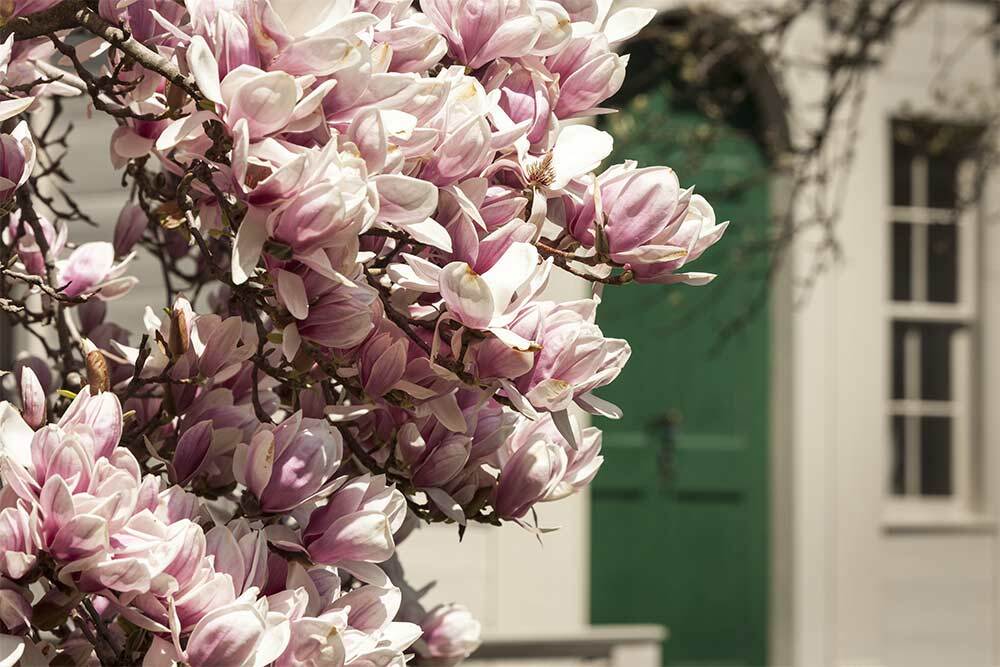
Essex Federal Garden, Spring Foliage, Photo by Walter Silver/PEM.
Q: Where do you want to see PEM go in the next five years?
A: In the next five years, I truly hope that the museum and the staff and the board have successfully completed the strategic plan, and have moved on to asking, “what do the next five years look like?” You have to always keep planning. Just because you've reached the end of something doesn't mean that you shouldn't already be looking forward to the next thing.
We've come a long way in terms of what I call my “knitting phase” at PEM: being a museum, with a collection center, a newly accredited arboretum and all of the historic houses considered from a comprehensive campus assessment perspective. We are a multifaceted entity and operation, so I think over the next five years, having clarity about what that means, how to sustain it, how to grow it, is something that I would look forward to following and seeing.
Q: What are some goals that you'd like to specifically see completed in the strategic plan?
A: One of the things that we haven't gotten to yet is the idea that I have had for a research and innovation center at PEM. We are a place where there is meaningful research being done, and we can also support others’ research. We have been very innovative. How do you share that? How do you then also feed yourself so that you can continue to be innovative? How is it that the museum could formalize, in the best possible way, being a research and innovation center for the benefit of the staff's intellectual and experiential growth, and how is it that you, as a museum, promote that for others? How much greater can our internship program be? How much greater can the Native American Fellowship program be? How many more scholars and thought leaders can we support through the staff resources, the collection, the library and the archives? So, if that could be one of the outcomes of the strategic plan, it would be great.
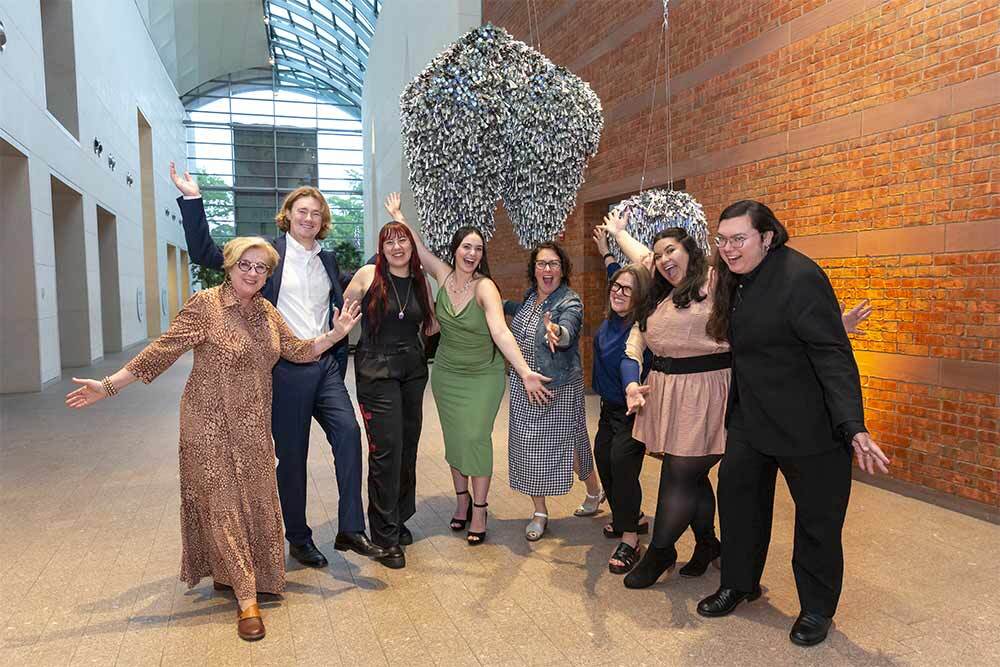
Lynda Roscoe Hartigan with the 2024 Native American Fellows participating in a GenPEM event. L-R: Lynda Roscoe Hartigan; B. Everette (Citizen Potowatomi); Alice Crazy Bull (Sicangu Lakota); current Native American Fellowship Program Director Sage Loyema Innerarity (Ione Band of Miwok Indians); Stuart W. and Elizabeth F. Pratt Curator of Native American and Oceanic Art and Culture and then Director, Native American Fellowship Program Karen Kramer; artist Marie Watt (Seneca Nation); Makelika Faivaai (Confederated Tribes of the Colville Reservation); and former Native American Fellowship Program Manager Frank Redner (Pezihutazizi Oyate [Upper Sioux]). Photo by Kathy Tarantola/PEM.
One of my proudest accomplishments would be the massive installation project that we took on as part of opening the new wing in 2019. Having such fresh, distinctive interpretation for the maritime collections, the Asian export collection, the fashion and design collection, South Asian art and our new American and Native American installation, reinforced and pushed forward, accelerated our reputation among American museums.
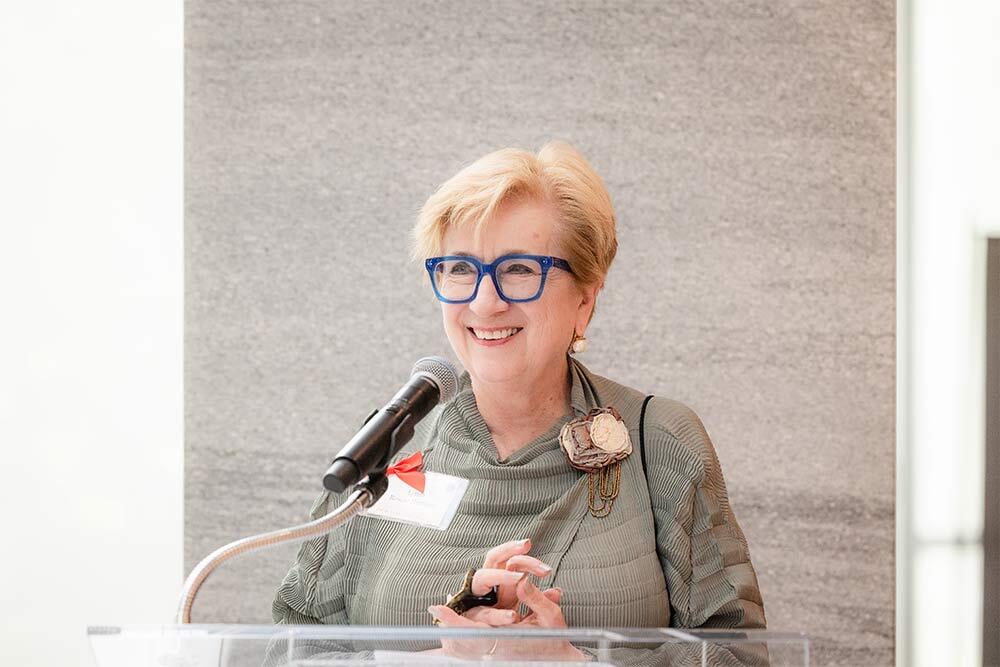
Lynda Roscoe Hartigan giving remarks at the exhibition opening celebration of the Yu Kil-Chun Gallery of Korean Art in 2025. Photo by David Tucker/PEM.
By the time it's done, we will have clarified our collecting philosophy. We will have established what are the criteria and the nature of the “PEM experience” that enables us to grow our exhibitions and programs and have an impact on our audiences — and reach new audiences.
Q: What are the top three exhibitions or projects that you’ve worked on at PEM?
A: The first major exhibition that I originated at PEM was Joseph Cornell: Navigating the Imagination in 2007—2008, which traveled nationally. And I've spent a great part of my career dedicated to understanding that artist and offering that understanding to audiences. It put the museum much more forward in the modern and contemporary art world and enabled us to partner with major museums. So, yes, I'm definitely proud of that.
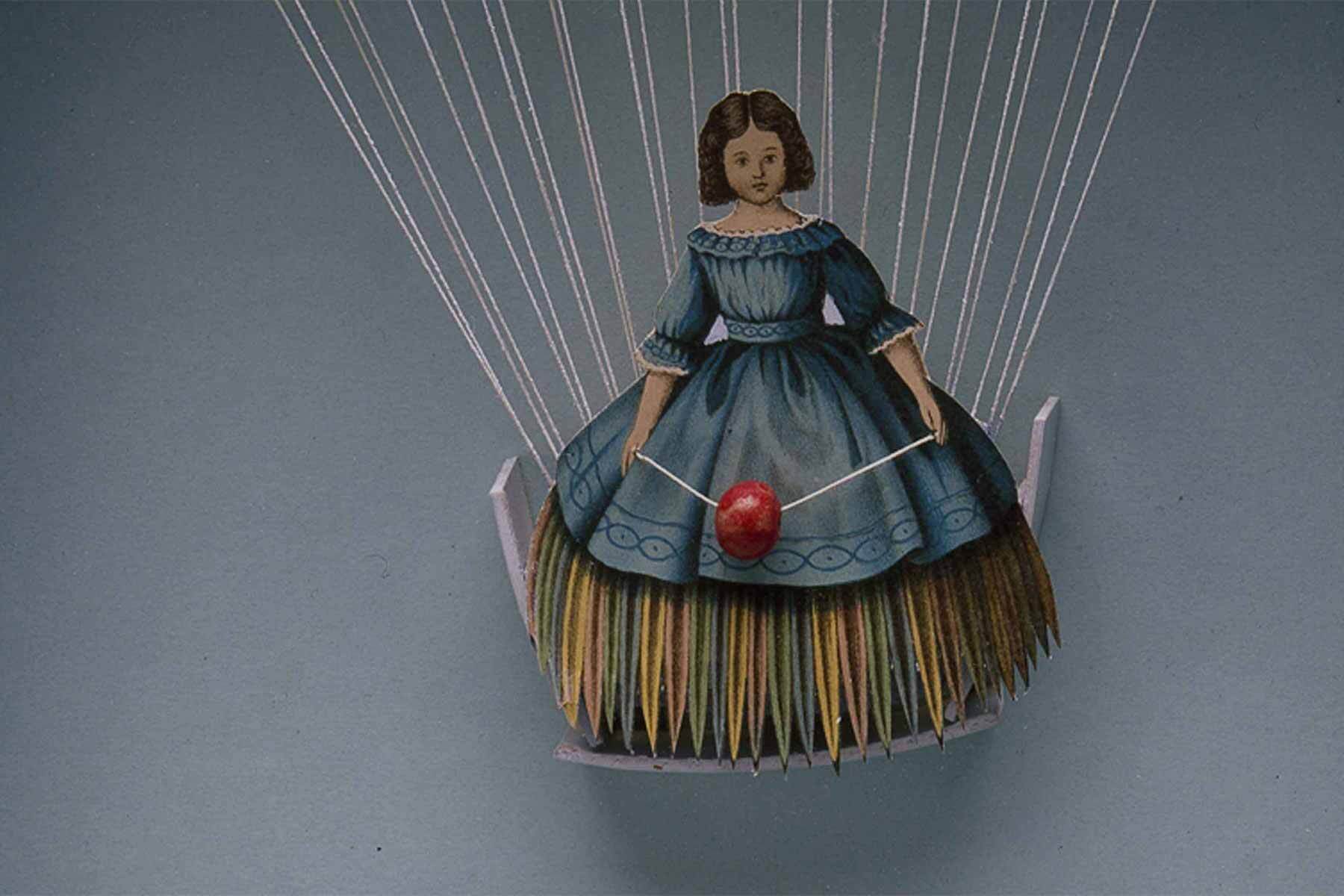
From the 2007 exhibition at PEM Joseph Cornell: Navigating the Imagination.
And then, while I was not put on this earth to be a fashion curator, it's because of a series of exhibitions that I brought to the museum, like the Iris Apfel collection and the shoes and the hats exhibitions, that really set PEM up as a player on the global fashion stage in new ways and made it possible for us to then hire a great fashion and textiles curator in Petra Slinkard. It's something that I believe in, in part because I love fashion, but, moreover, it’s important to have people understand that fashion is a way in which human beings create.
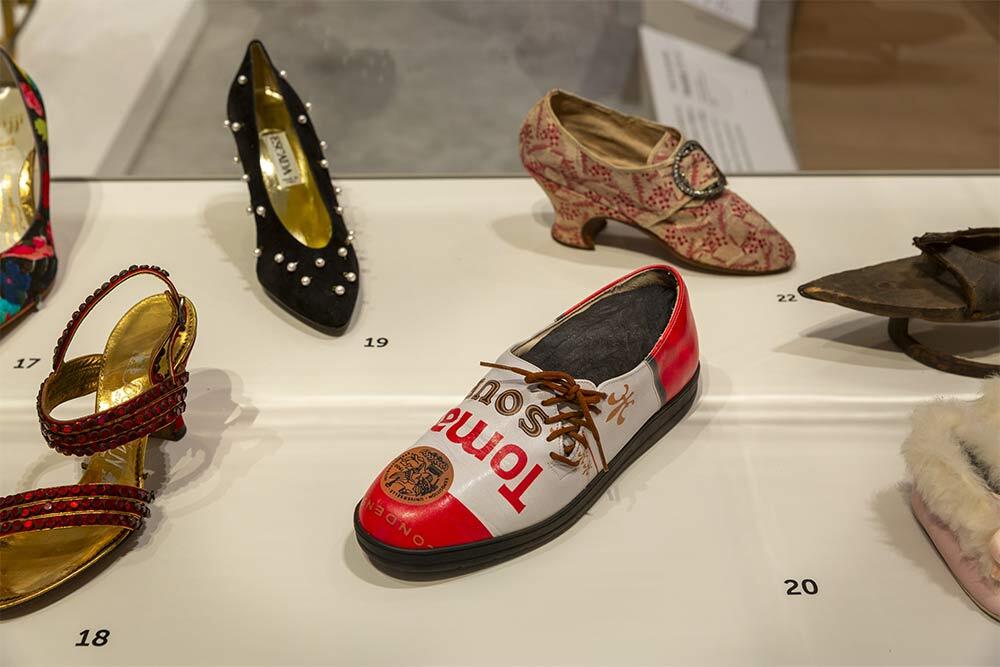
A gift to the museum left behind by Lynda Hartigan, a pair of tomato soup can shoes made in 1999 that reflect the iconic work by Andy Warhol. Photo by Kathy Tarantola/PEM.
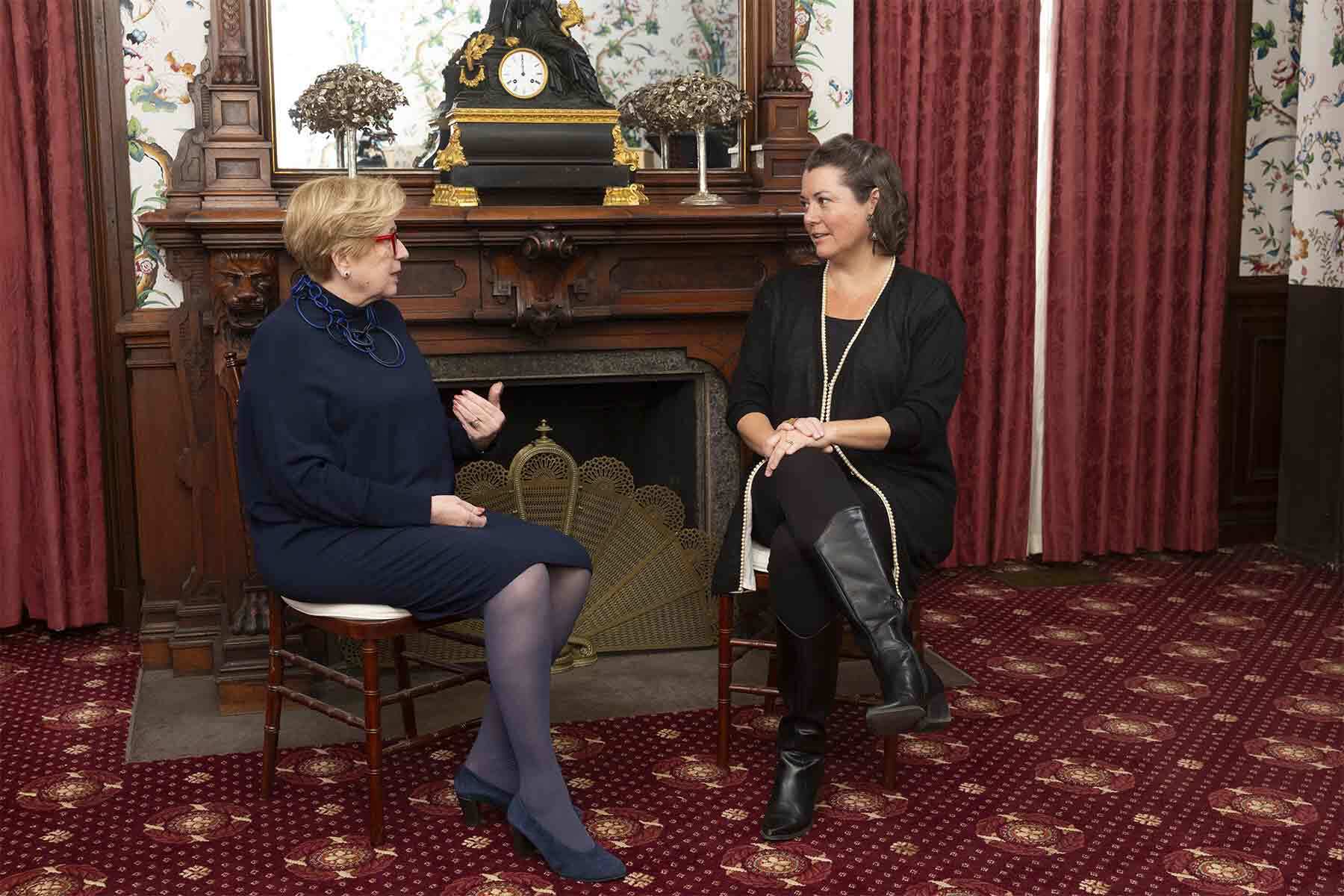
Filming a Fireside Chat conversation in the Andrew-Safford House with Lynda Roscoe Hartigan and Petra Slinkard, PEM’s Mary Lou Hawkes Chief Curator and The Nancy B. Putnam Curator of Fashion and Textiles. Photo by Kathy Tarantola/PEM.
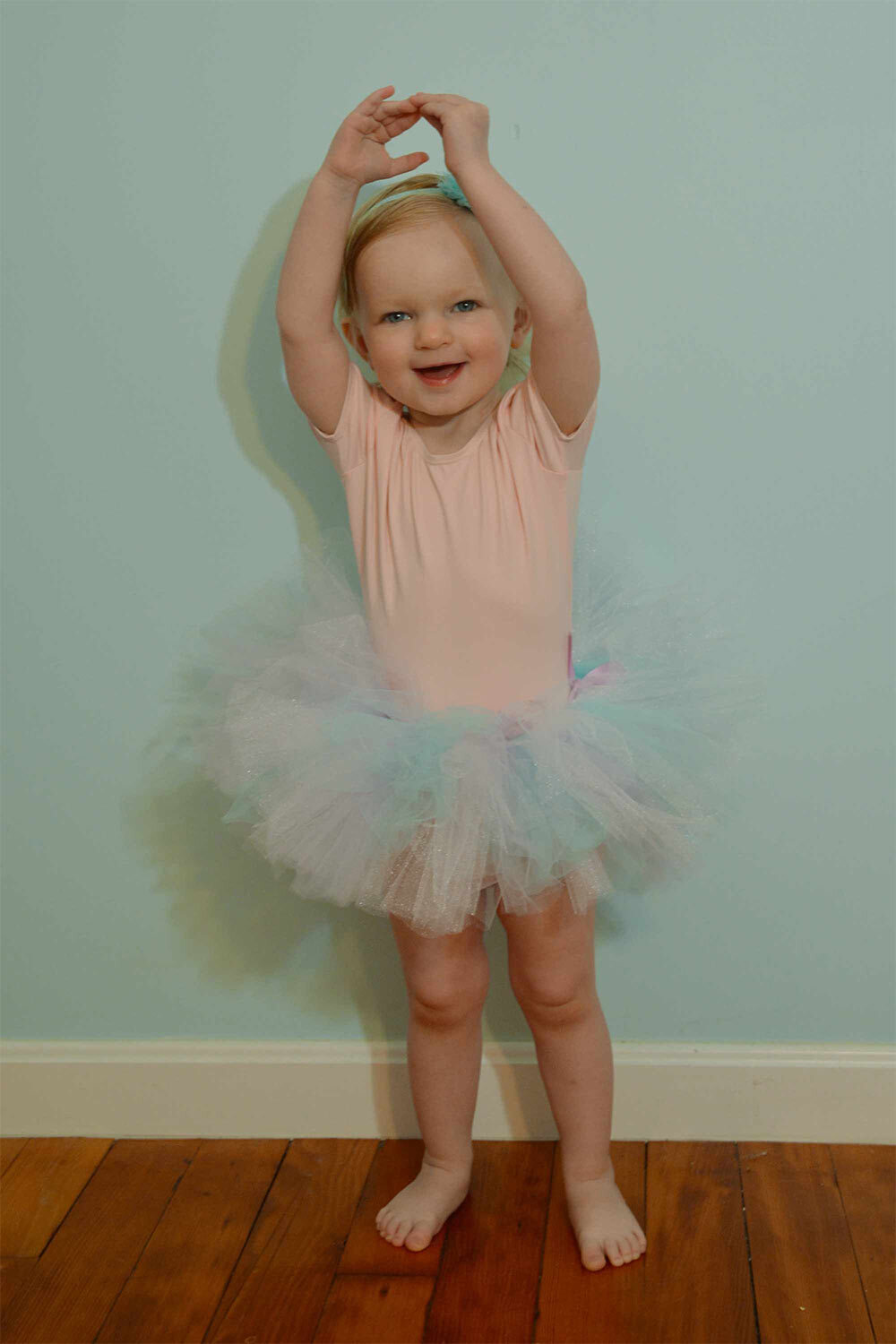
Courtesy photo of Callie after working with the dancers at PEM.
Q: Let’s look back on some of your favorite memories at PEM. How about in 2016 when we had a toddler working on her motor skills with professional dancers in our Rodin exhibition?
A: Rodin: Transforming Sculpture gave us the opportunity to experiment with the multisensory in a very different way and to have sort of energy and activity in an exhibition space where you're typically supposed to be quiet, careful, all those kinds of things. So when we learned how one young girl felt empowered in a museum space, it reinforced all of those studies that indicate that the younger you have the opportunity to have experiences in museums, the more likely that that's going to become a more meaningful and regular part of your life's journey. That was an incredibly touching and humbling moment to think that trying something that hadn't been tried before (having ballet dancers in the exhibition gallery) could have a real impact.
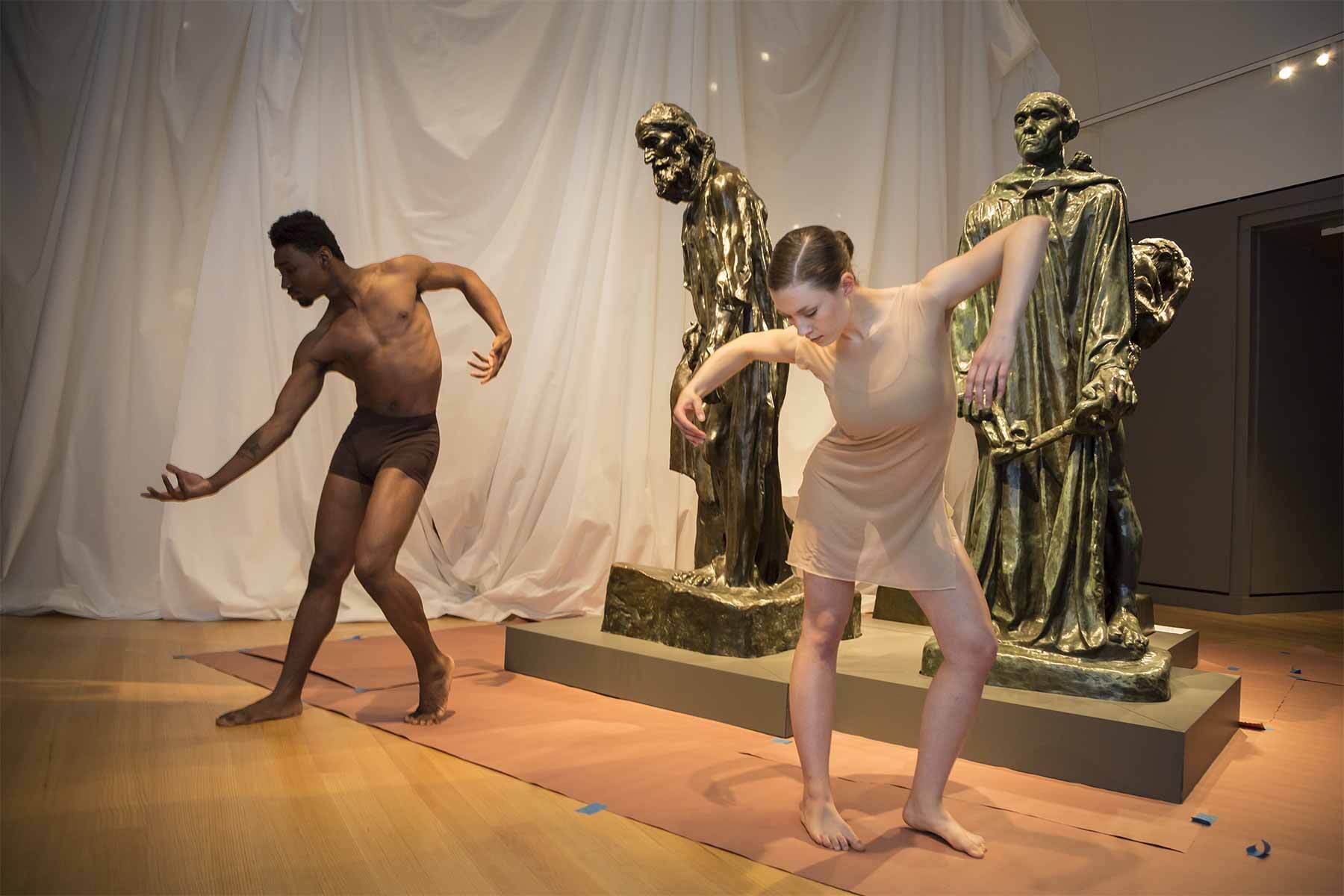
BoSoma Dancers in PEM’s 2016 Rodin exhibition. Photo by Kathy Tarantola/PEM.
Q: What are some other moments when you saw PEM making a real difference in our community?
A: In recent years we became certified as a KultureCity site, providing enhanced accessibility for people with sensory sensitivities. We also now offer Enchroma glasses for people who are color blind. These are very specific manifestations of the authenticity of our commitment to being a human-centered museum.
Programmatically, we now organize twice-a-year engagement opportunities for the community in partnership with Creative Collective. These bring many people together from the North Shore area to talk about how you support a creative community and find solutions to pressing challenges. This series has helped us build a more cohesive sense of community, and it's a way to reinforce how PEM can really be an effective bridge in the community to bring people together to talk about some challenging and inspiring things.
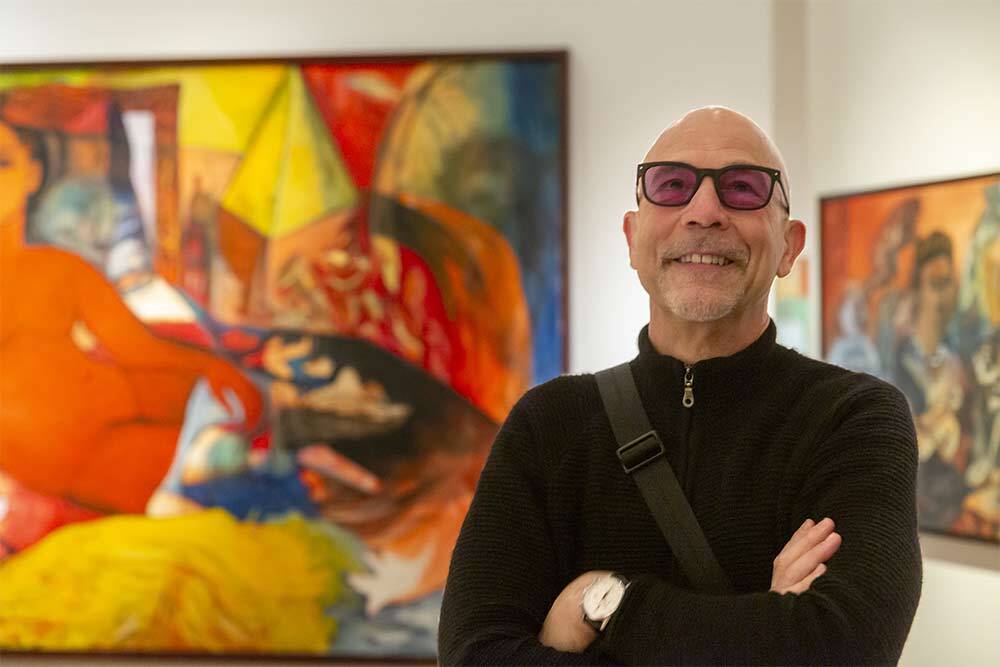
EnChroma volunteer Alan Distasio takes in PEM’s South Asian Art Gallery. Photo by Kathy Tarantola/PEM.
Q: What advice would you give to future museum leaders?
A: I think future museum leaders need to figure out their individual version of courage and humility and to understand the value of persistence when you believe in something. It's important to have your own personal North Star set of values that can shape you as a professional.
Some of it goes back to knowing what you are genuinely committed to. Where are your ethical boundaries? What are you prepared to fight for? What are you prepared to inspire? Humility is actually a statement about understanding that you cannot do it all by yourself. So understanding how to build relationships or teams or partners in order to get done what you want and need to get done is important.
Q: What’s your self-care plan that gives you the stamina and energy to keep going forward?
A: Yeah, I keep being told I have so much energy, thank God. Self-care…okay, well, I work a lot. I owe a tremendous amount to my family and friends. I've now been married to my husband Roger for 42 years, and he's been an incredible source of support. And valuing lifelong friendships, because those are the people you can turn to in the tough times and the good times. I don't have a lot of hobbies, but in the midst of working a lot, I have made time for family, and I have made time for travel. I do try to have a manicure regularly, and partly because I've had pinched nerve issues in my neck on and off, I've learned the value of a massage. I read a lot, mostly fiction. But it's valuing yourself enough that you give yourself the time you need to be your best. It's just really important.
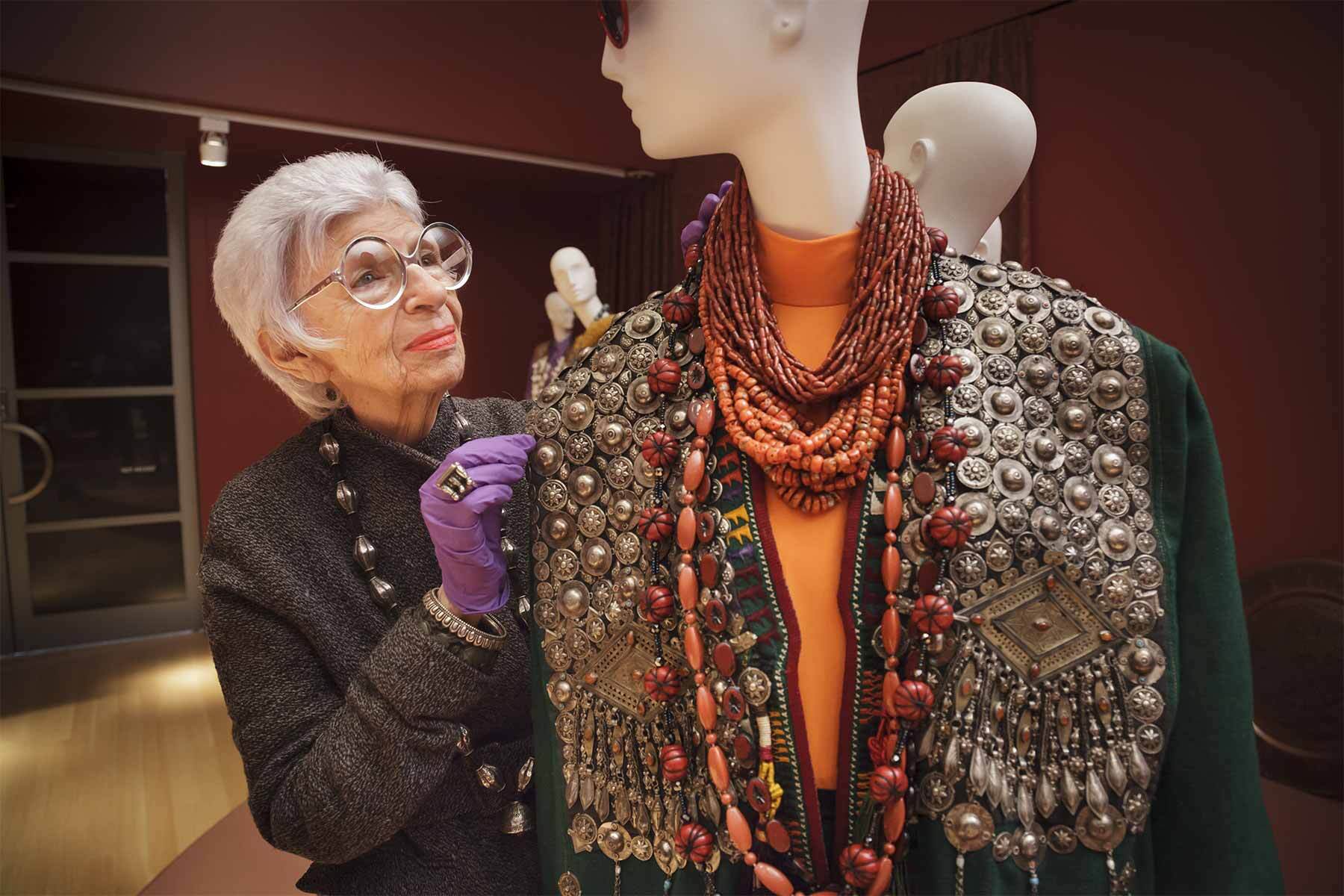
Iris Apfel in the Rare Bird of Fashion installation in 2009. Photo by Walter Silver/PEM.
Q: What did fashion icon Iris Apfel, featured in our Fashion & Design gallery, teach you about reinvention, challenging yourself and being a lifelong learner before her death in 2024 at the age of 102?
A: Ageism, unfortunately, is an active force in our culture. Part of what I found inspiring about Iris was not even the notion of reinvention, because for the most part, up until the end, she was healthy cognitively and physically. Making sure that you find your way of continuing to contribute and to be meaningful is important. Just because you're 65 doesn't mean you have to be retiring as an individual. So I think that's one of the biggest lessons for me from Iris.
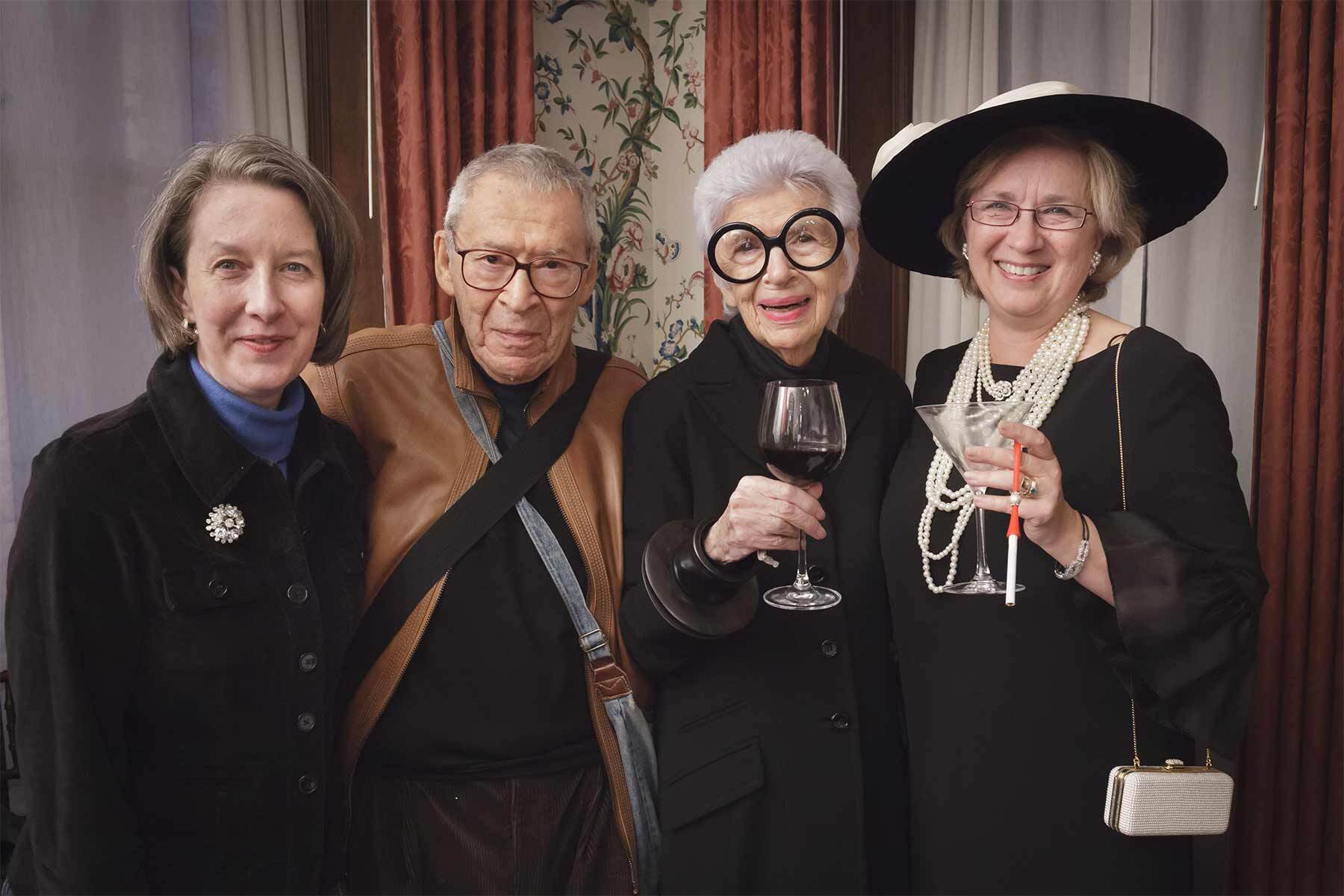
Curator-at-Large Paula Richter, the late Carl and Iris Apfel and Lynda Roscoe Hartigan at the opening of Rare Bird of Fashion in 2009. Photo by Walter Silver/PEM.
Lord knows there are some people, I'm sure, who would look at her style and go, “oh my, how bizarre” or “eccentric” or “how daring” or what have you. But her point was to find your way to express your identity. And sometimes she did that verbally. Oftentimes, she did that visually. But she also did it through her business acumen. So, multiple lessons were learned from Iris. It's important to find the ways in which you can believe in yourself. There have to be some unshakeable things that you hold to yourself.
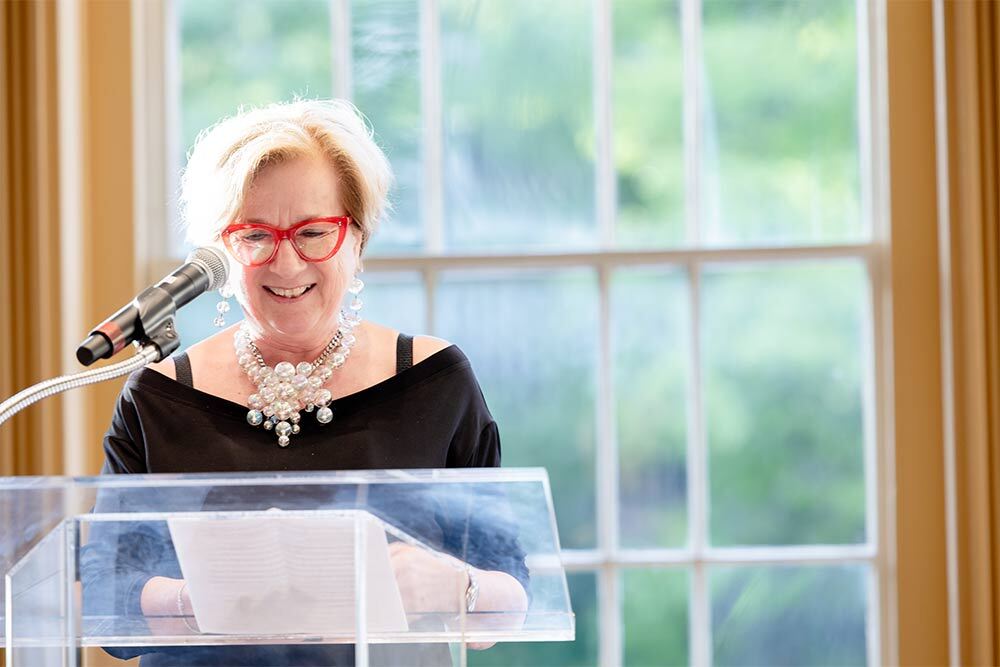
Lynda Hartigan giving remarks at the Studio Glass opening reception in 2024. Photo by David N. Tucker/PEM.
Q: What about taking this position at the Smithsonian excites you the most? What challenges do you expect?
A: When I became director at PEM in 2021, there was a lot of “Oh, Lynda, you're coming back.” And my message at the time was: “I am coming to lead the organization forward.” And so that's what excites me in a new and different way in terms of being the director of the Smithsonian American Art Museum. Certainly, people see that as a return for me, but I haven't been there for 22 years. It's a different place, almost an entirely new staff, entirely new board of commissioners. So, part of what excites me is: what am I going to learn?
The Smithsonian American Art Museum has an incredible collection of American art and culture and craft and visual culture. So being able to work with that kind of collection, to work with that staff, to also help to uphold the integrity of what the Smithsonian Institution is overarchingly about serving the public good through lifelong learning opportunities. Upholding that integrity in these times is possibly going to be the biggest challenge. But, I think in challenging times there are always opportunities and ways to do good work regardless of the circumstances.
What excites me and what will be a good challenge in the most positive way, is: what can that museum accomplish with authenticity, dignity and openness? Because I believe in the power of American artists to inspire us, to help us question and to help us find ways to be together as opposed to apart.
Q: How has it felt to receive all of this positive attention and heartfelt goodbyes from staff and locals as you forge your next chapter?
A: There are people who have told me the fact that I'm going to take this job has actually helped them renew their sense of patriotism, which is a reaction that I just would never have imagined.
I have to say, there’s been a tsunami, an avalanche, an outpouring of messages of support and encouragement that have been kind of overwhelming and definitely humbling. I've also been surprised at how many staff want to hug me. It's setting the bar pretty high for me. But, you know, truly, I've just been touched by the messages. I am at a point in my career where I know myself well enough that I know I'm up to the opportunity and the challenge, but I'm not going to do that alone. And I think one of the things I bring to this whole opportunity is the fact that I somehow managed to gather people to a common cause to do good or to think differently in ways that are constructive. So that's what I have to count on.
Q: What advice do you have for PEM’s next Executive Director and CEO?
A: Have the utmost respect for the staff and the talent and the volunteer leadership that is here. Make the most of it. Have the confidence in what can continue to be achieved here. Someone is going to obviously want to have their own spin on things. But part of what is so intrinsic to this organization is this entrepreneurial spirit. So, don't be afraid to try new things. Plan well because I do believe in this balance between creativity and discipline.
Also because we're a storied institution, understand the story of the place, but don't get trapped by it, because that story is evolving. Simply because something has been the way it has been doesn't mean that's the way it's going to work going forward. I think working to continue the relationship with the community is important. I have always maintained that if you are successful within your immediate community, that can be an example outward that helps you build the national and the international paths. So, respect our history but listen and be active in the present and plan for the future. Tall order. I expect a lot from the next person.
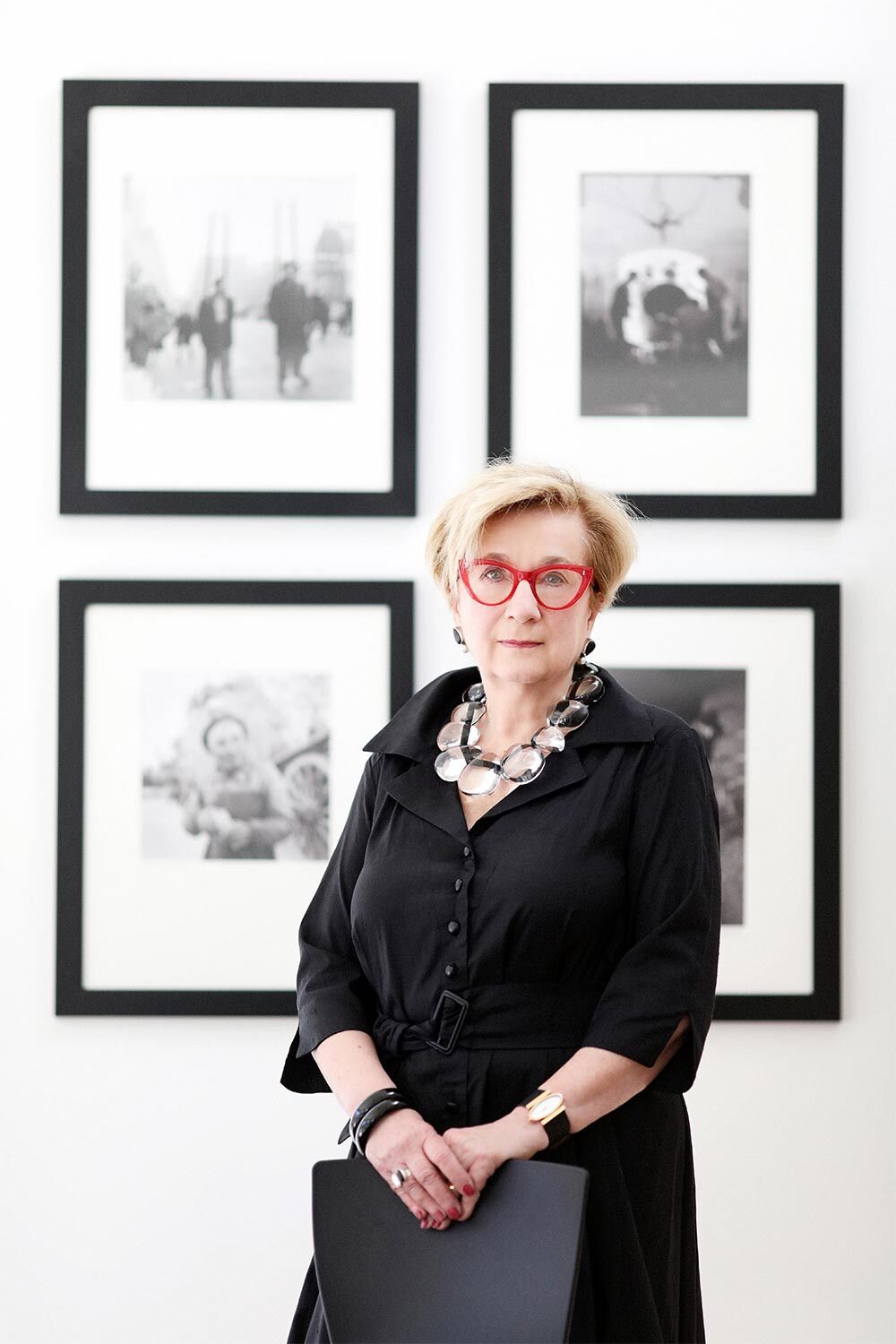
Photo by Alex Paul photography, Inc.
Keep Exploring
BLOG
Lynda Roscoe Hartigan and David Snider chat about PEM’s community engagement
9 min read
BLOG
Director and CEO Lynda Roscoe Hartigan joins the “Making the Museum” podcast
11 MIN READ

Blog
Lynda Roscoe Hartigan and Kurt Steinberg chat about the role that PEM plays in the community
2 Min read

Blog
Lynda Roscoe Hartigan and Salem Mayor Dominick Pangallo chat about the importance of arts and culture and Salem 400+
9 min read