CONNECTED | Sep 03, 2026
Curator Q+A: Behind the scenes of the East India Marine Society and its global collection
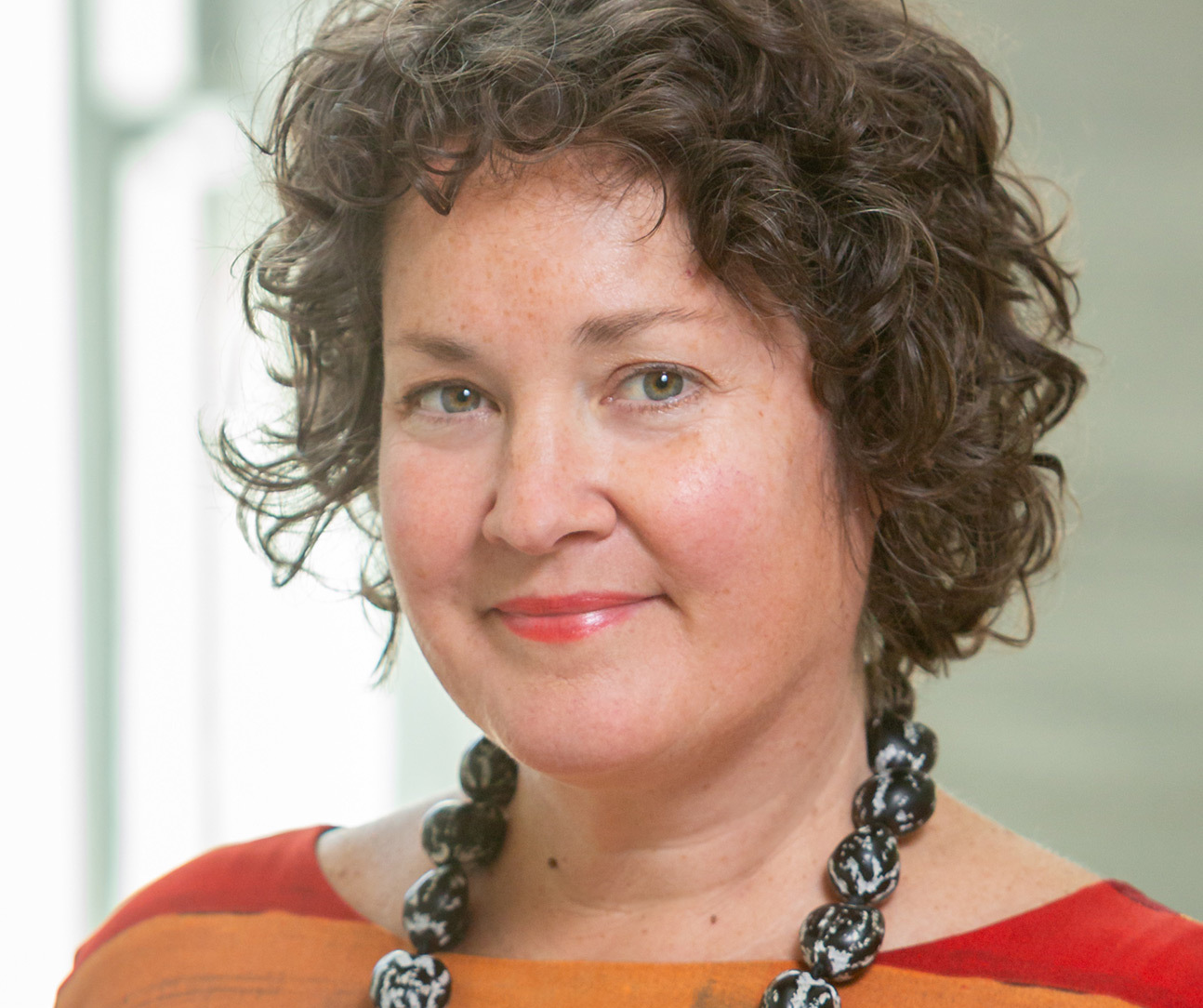
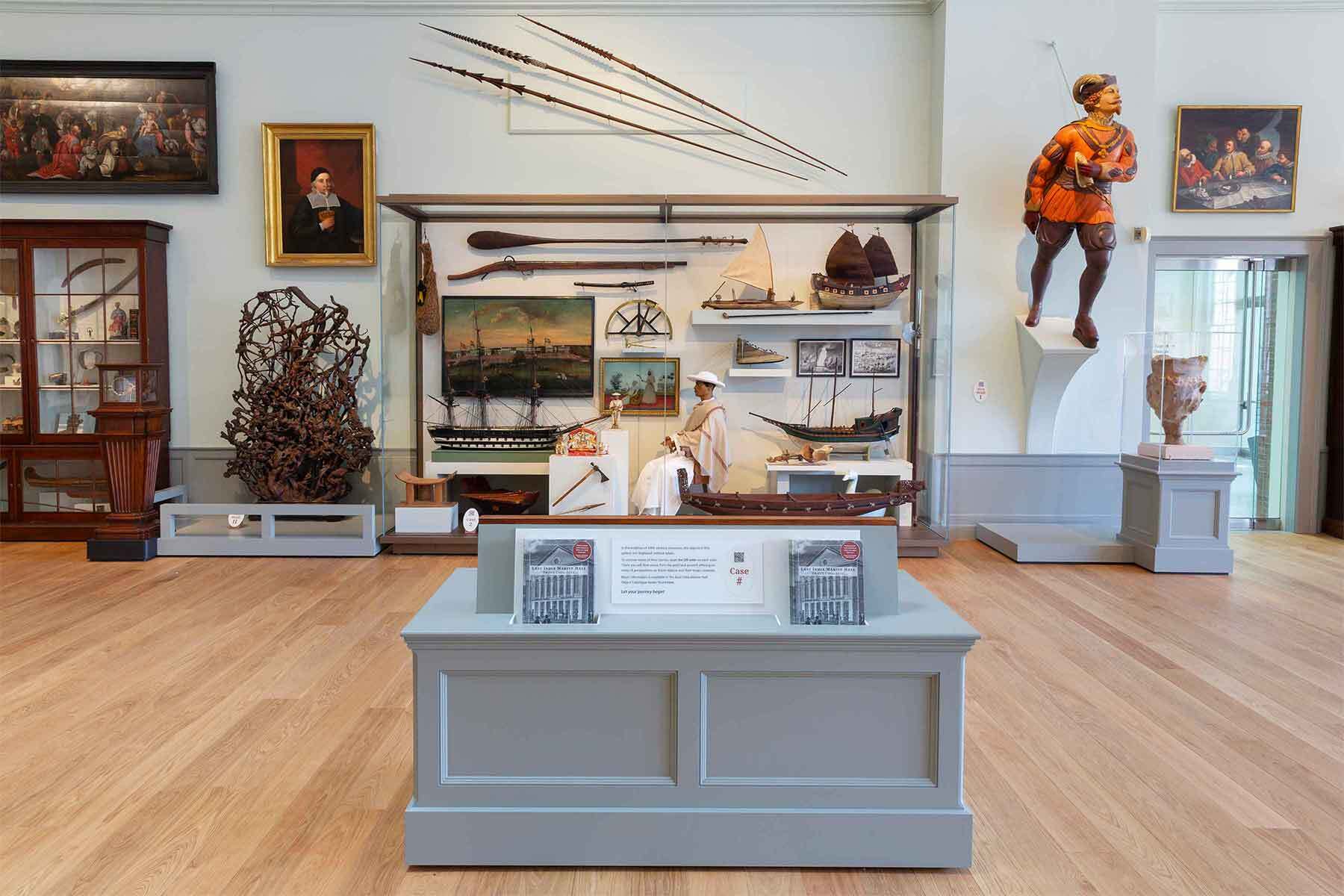
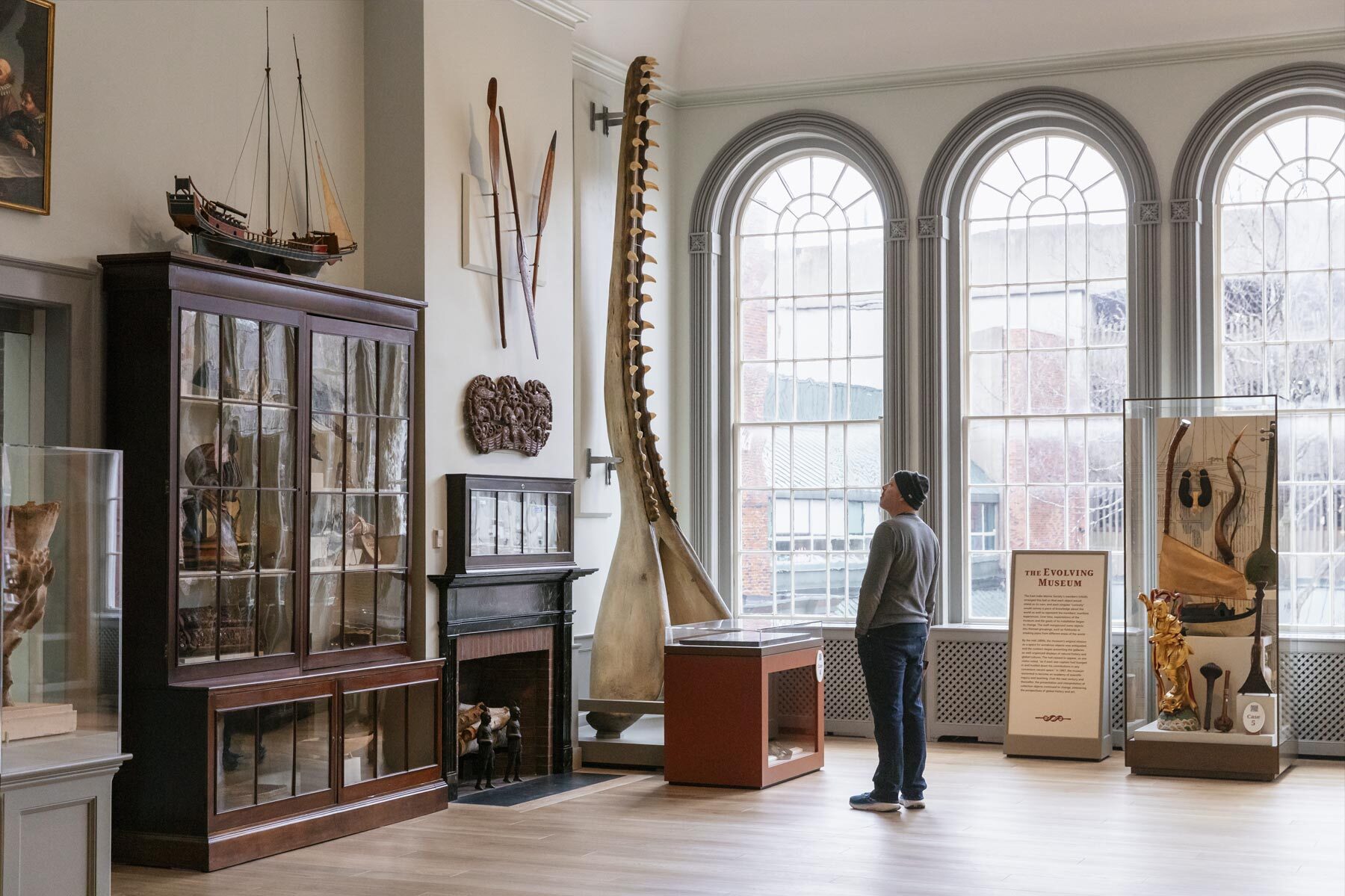
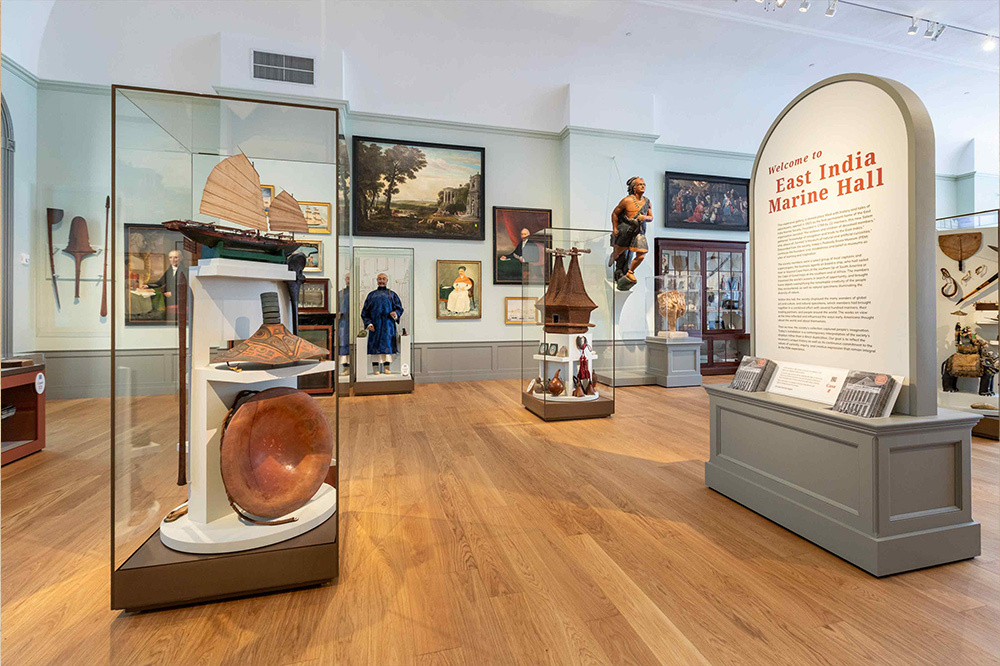
East India Marine Hall opened this spring with a new installation honoring the 200th anniversary of the historic hall. The space features some of the earliest collected objects brought to Salem by the museum’s founders, highlighting our local and global history while offering a better understanding of the museum’s core and originating values: curiosity, inquiry and inspiration. PEM’s Curator-at-Large George Schwartz is co-curator of the exhibition and author of "Collecting the Globe: The Salem East India Marine Society Museum.” We caught up with Schwartz to discuss his first visit to PEM, how the history of the museum was rediscovered and what mariner’s logbooks (and our own guestbooks) reveal.
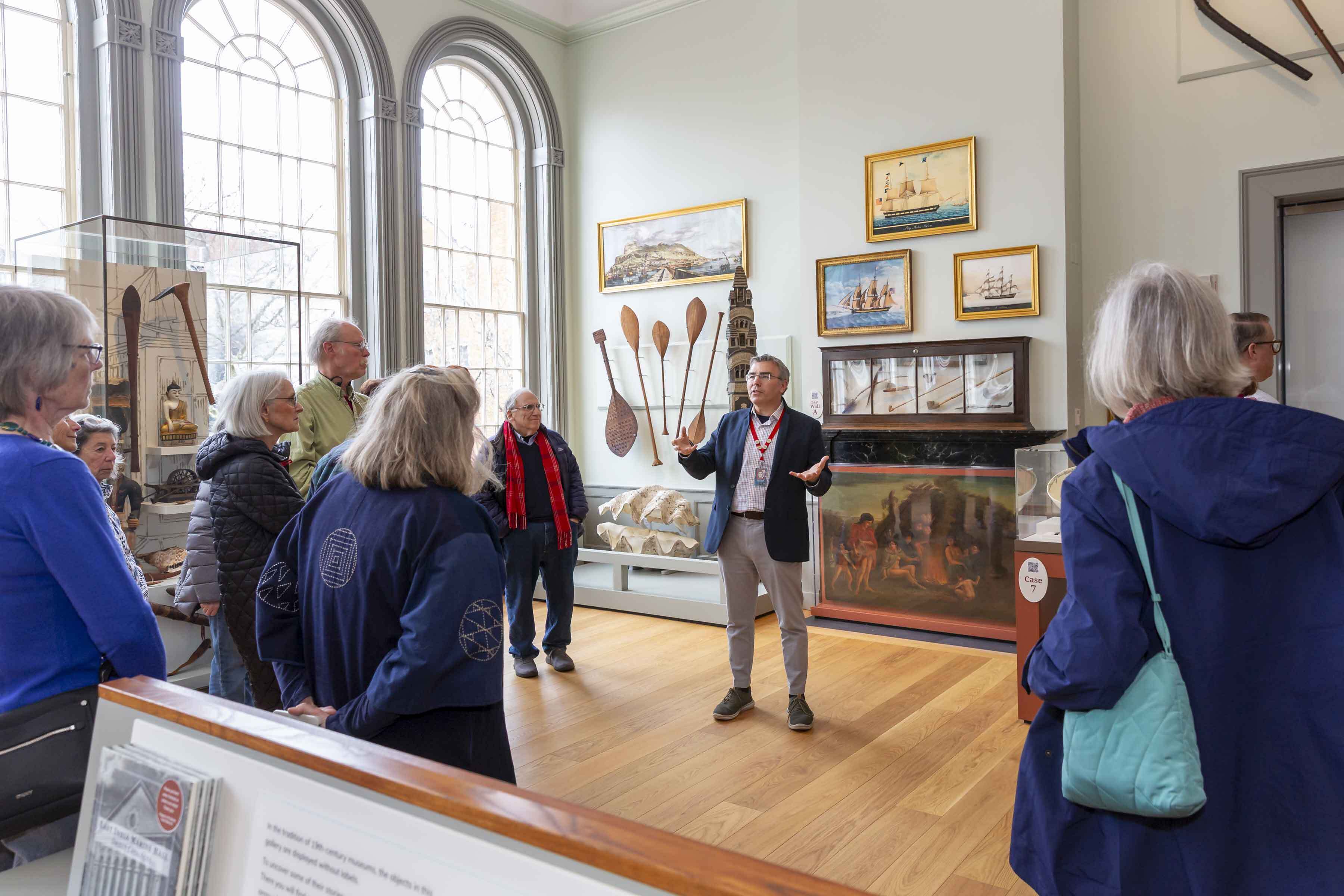
Curator George Schwartz conducting a tour of the reinstalled East India Marine Hall for PEM’s East India Marine Associates, 2026. Peabody Essex Museum. Photo by Kathy Tarantola/PEM.
Q: When did you first become acquainted with this collection, and how has it influenced your career?
A: My book comes from a voyage with this institution that I've had since I was a little kid. I grew up in New York City, far away from Salem, but came up for the first time and toured East India Marine Hall as a child. I think that experience had an impact on me, and sparked my interest in maritime history. I came back to PEM to work at the museum after college, when I started to focus on PEM’s origin story, and with the early collections of the institution. I was always fascinated by this East India Marine Society phase of the museum's history. Going back for a doctorate in American Studies, I took a deep dive to look at this early history of the museum. There's a wonderful trove of archives in the Phillips Library that relate to the Marine Society's endeavors. Meeting minutes, details on the provenance of objects, newspaper accounts, people writing about their experiences and the objects themselves — which is unrivaled for an institution from the early 1800s. Additionally, 2,000 of the 6,000 objects still remain in the collection.
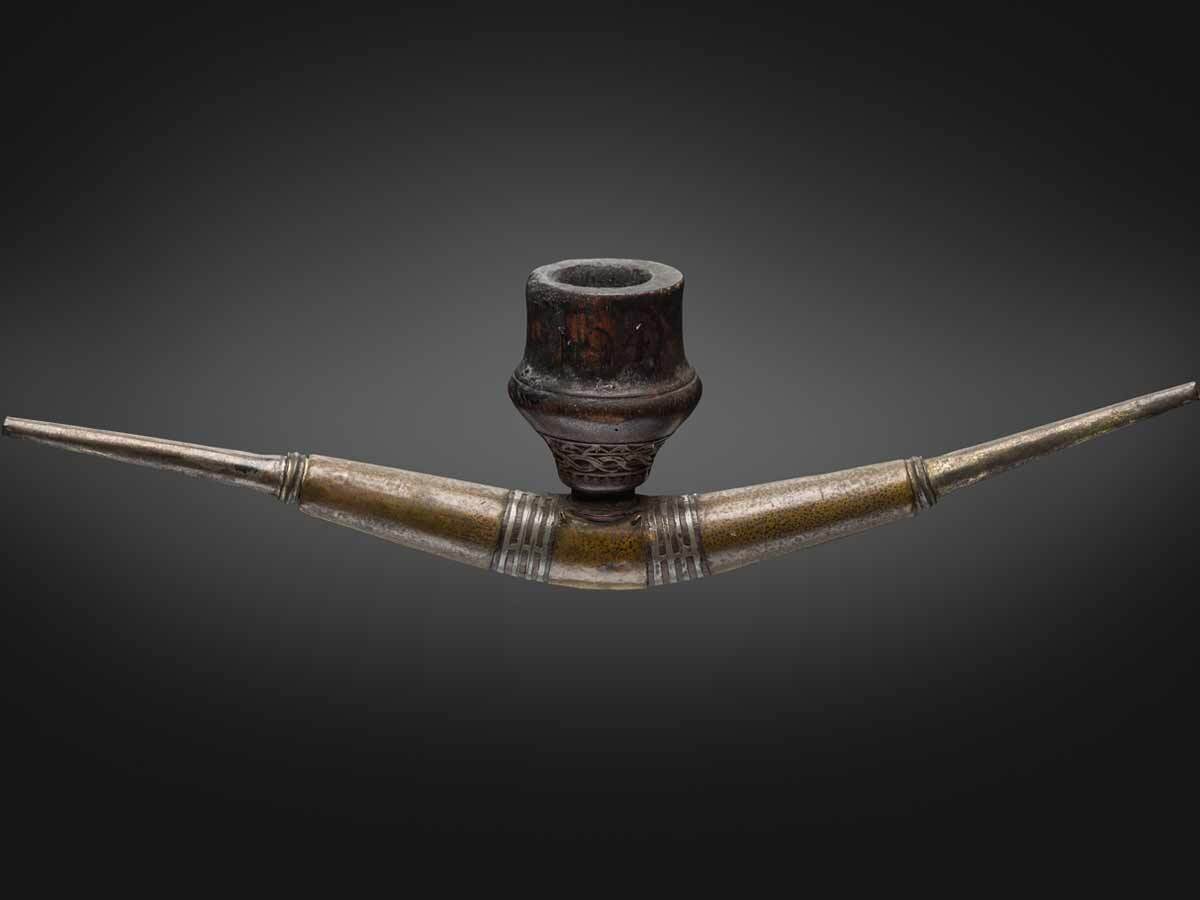
This puzzling two-stem smoking pipe was probably made by someone in Indonesia in about 1790. Captain Jonathan Carnes added it to the society’s collection in 1799, and it’s now back on display in East India Marine Hall. Photo by Walter Silver/PEM.
When scholars wrote about museums in America, it seemed to always be Charles Willson Peale's endeavors in Philadelphia in the 1780s. (He formed a museum in Independence Hall that he hoped would be a national museum, but it never became one.) Then came the beginning of the Smithsonian Institution in the 1840s, and in between, local sideshow museums and other institutions. The East India Marine Society's endeavors were missing from that scholarship and sometimes misconstrued, but the archives told a much richer and deeper story of a museum. The story was known not only in the United States — it was known by East India Marine Society trading partners around the world, by other mariners they met in different parts of the world and by people locally and around the United States who would come through Salem and sometimes donate an object. This created a global collection and a story that was well known around the country and around the globe at one time.
Q: How did Salem mariners record where they went and what they encountered?
A: One of the responsibilities of the captain or first officer was to record the daily course that the ship sailed, the wind, the weather and maybe some other observations. The logbook where all those notes were preserved became the official account of the voyage when that ship returned, and it was given to the ship’s owner. The East India Marine Society wanted to expand an understanding of navigation. Marine societies, which first popped up in America starting in the 1750s, along the Eastern Seaboard from Portland, Maine to Charleston, South Carolina, were benevolent organizations: When a mariner died at sea, the society gave money to support their family. They also used that money to upkeep the local port, and for constructing buoys, and later, lighthouses. But the East India Marine Society had global ambitions, and they wanted to expand an understanding and navigation across the globe. Their members already had an official logbook for every voyage, but they gave them a blank one and said, "Fill this one out too, and then give it back to us."
Q: Tell us about one object that tells a really compelling story.
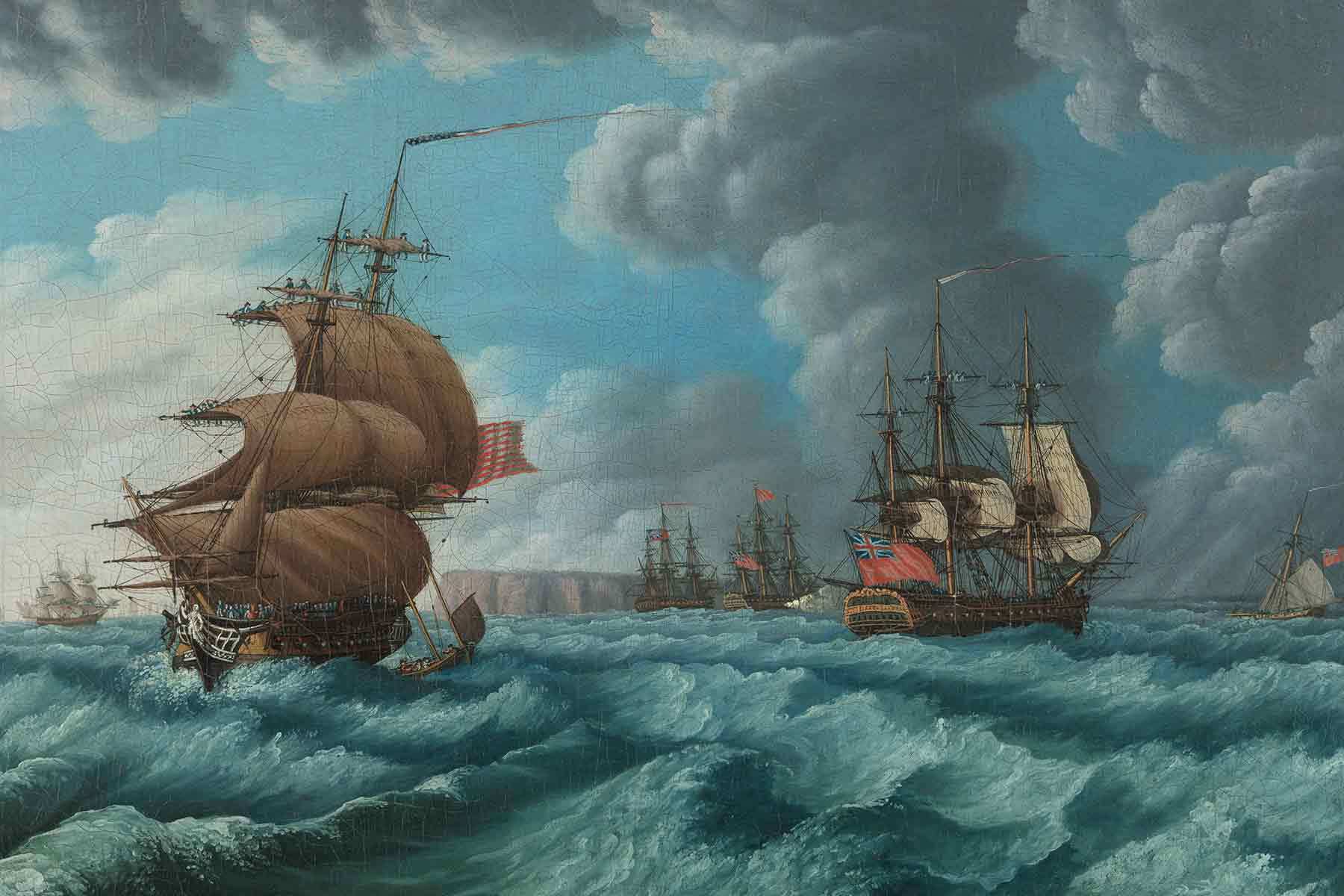
A: When you came to East India Marine Hall, the first object you would see was a painting done by an artist that came to Salem in 1799 named Michele Felice Cornè. He left Naples and boarded a ship owned by Salem merchant Elias Haskett Derby, probably to escape having to fight against Napoleon's army. He was a Mediterranean ship portrait painter who brought that painterly tradition to America. He taught local artists and took commissions. In 1803, he painted the sign that the Marine Society wanted for their hall, for their gallery. In the center of this painting is a Salem ship embarking on a voyage, and there's a large horizon line and pinkish hues in the sky, showing the optimism of a new voyage. In the foreground on the left is a figure that is likely an allusion to Columbia, an early personification of the country at the time, a woman in dress from the Empire period who greets you, who beckons you to come inside. That open gesture imparts for a visitor a sense of venturing forth, of taking the same voyage that maybe the society’s mariners did.
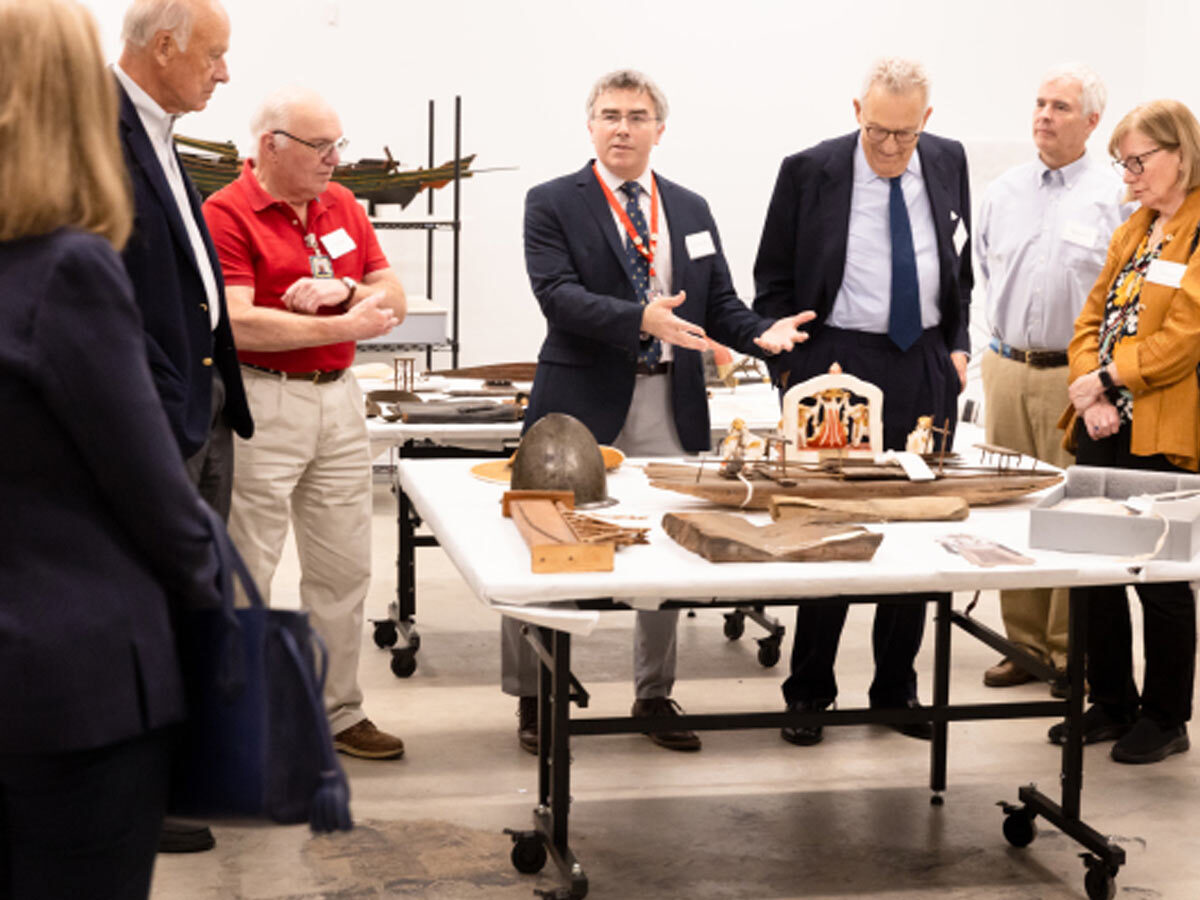
George Schwartz at the spring gathering of PEM’s Maritime Visiting Committee in the Hawkes Collection Center, showcasing some objects that underwent conservation for the East India Marine Hall installation. Photo by David Tucker/PEM.
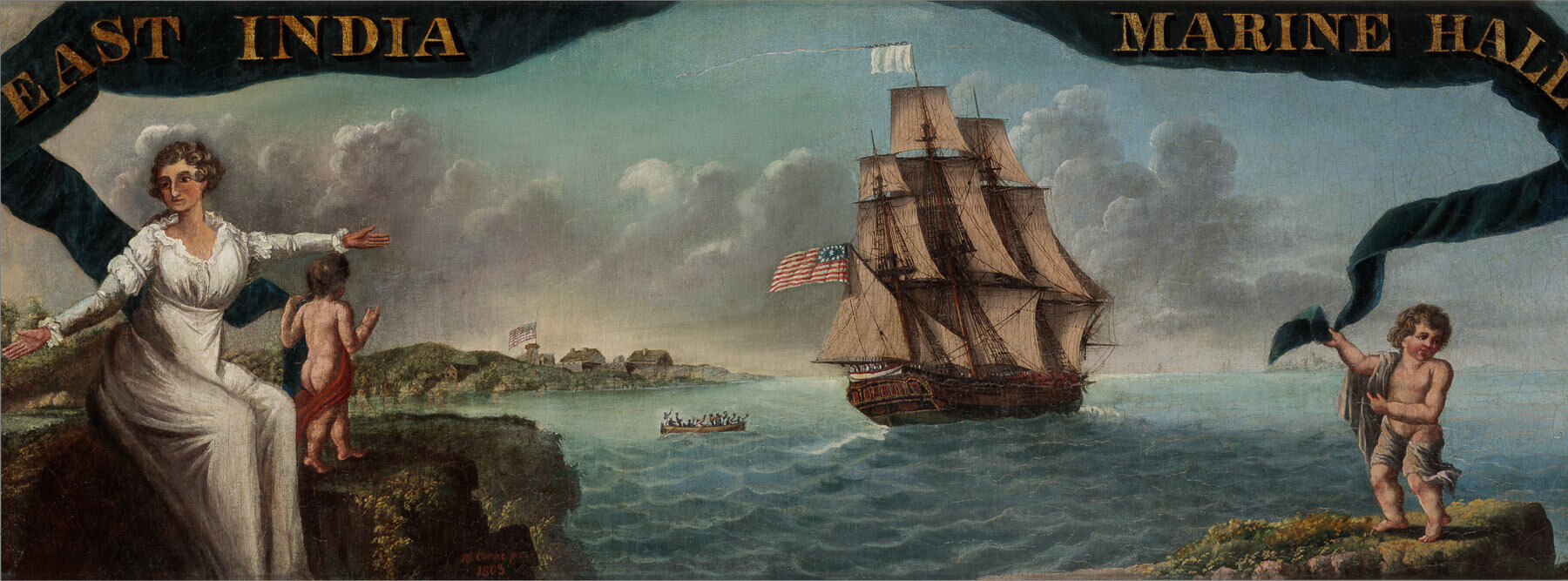
Michele Felice Cornè, partially repainted by Samuel Bartoll, East India Marine Hall Sign, 1803. Oil on canvas. Commissioned by the East India Marine Society, 1803. M235. Peabody Essex Museum. Photo by Richard Goodbody. Processing by John F. Morgan.
Now we know through X-rays of this painting taken at Salem Hospital that the figure in Empire dress was not Cornè's. It was painted by Samuel Bartoll, who was commissioned to put the lettering on the painting that says "East India Marine Hall." We took a closer look at Bartoll’s payment receipt, and realized, "Oh, it says 'altering the figure.' What does that mean?" We found that behind that woman, you can see the arms and knees of a figure that Cornè painted facing a different direction. Obviously, by 1825, they wanted something a little different. Anyway, it was the best day for some of those hospital radiologists. They were so excited. They're like, "Bring more stuff."
Q: What kind of records have been preserved about visitors’ experiences in the 19th century?
A: We have accounts that we unearthed during the reinstallation project of people who reflected on visiting the collection. One said, "To walk around East India Marine Hall was to circumnavigate the globe." Another visitor expressed her sentiments of being bound to this hall and transported to the “bosom of the ocean.” People got this watery sense, this voyaging sense, walking around seeing things like the jaw of a sperm whale or a giant coral.
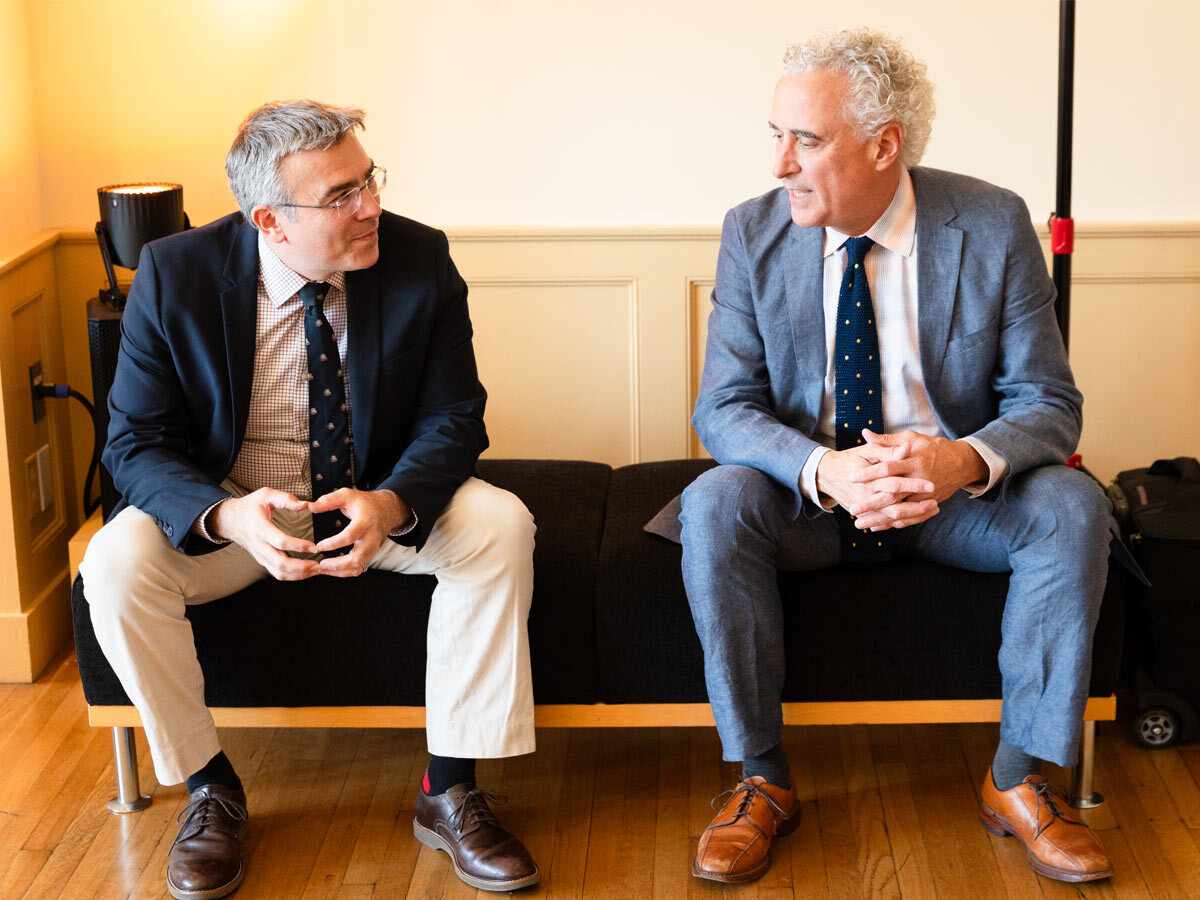
George Schwartz and PEM’s Associate Director of Exhibitions and the Russell W. Knight Curator of Maritime Art and History, Dan Finamore, at a dinner for the opening of East India Marine Hall. Photo by David Tucker/PEM.
It's funny. When I was doing my dissertation research, I came across a novel that was written in 1867 called Lottie Wilde's Picnic. There's a whole chapter about these kids visiting East India Marine Hall, talking about the objects that they saw on display. There are records of school groups coming, newspaper accounts of young people coming. I took pictures of all of these historical records and started to make a database. The guest books are great — they're like an old-fashioned hotel registry. As a visitor to the hall, you would write your name and where you're from. Lady Jane Franklin's name was in the East India Marine Hall visitors’ book. She was the wife of the Arctic explorer Sir John Franklin, who led a doomed expedition to find the Northwest Passage and got trapped in the ice. She spent many years trying to raise funds for expeditions to try to find Franklin’s ships and came to Salem at one point. We have her reflections about what it was like to go around East India Marine Hall.
Q: How are visitors today part of that same long line of curious people who have visited the hall over the past 200 years?
A: We have return visitors to the museum – Salem residents, North Shore residents — who will find objects that they saw years ago as a kid, and be gratified that those things are still here, and have this wonderful cyclical experience of going back to their youth and seeing these objects. There are also a whole host of objects that are waiting for the next generation to come to East India Marine Hall and find the one thing that speaks to them and sparks some curiosity or wonder that they'll carry with them as they decide what to do as they grow up. The hall has been the starting point for all this wonder and excitement and exploration that people can take throughout their lives. We have the voices of the past and we'll have the voices of future visitors, hopefully talking about East India Marine Hall and what it meant to circumnavigate the globe in the 21st century.
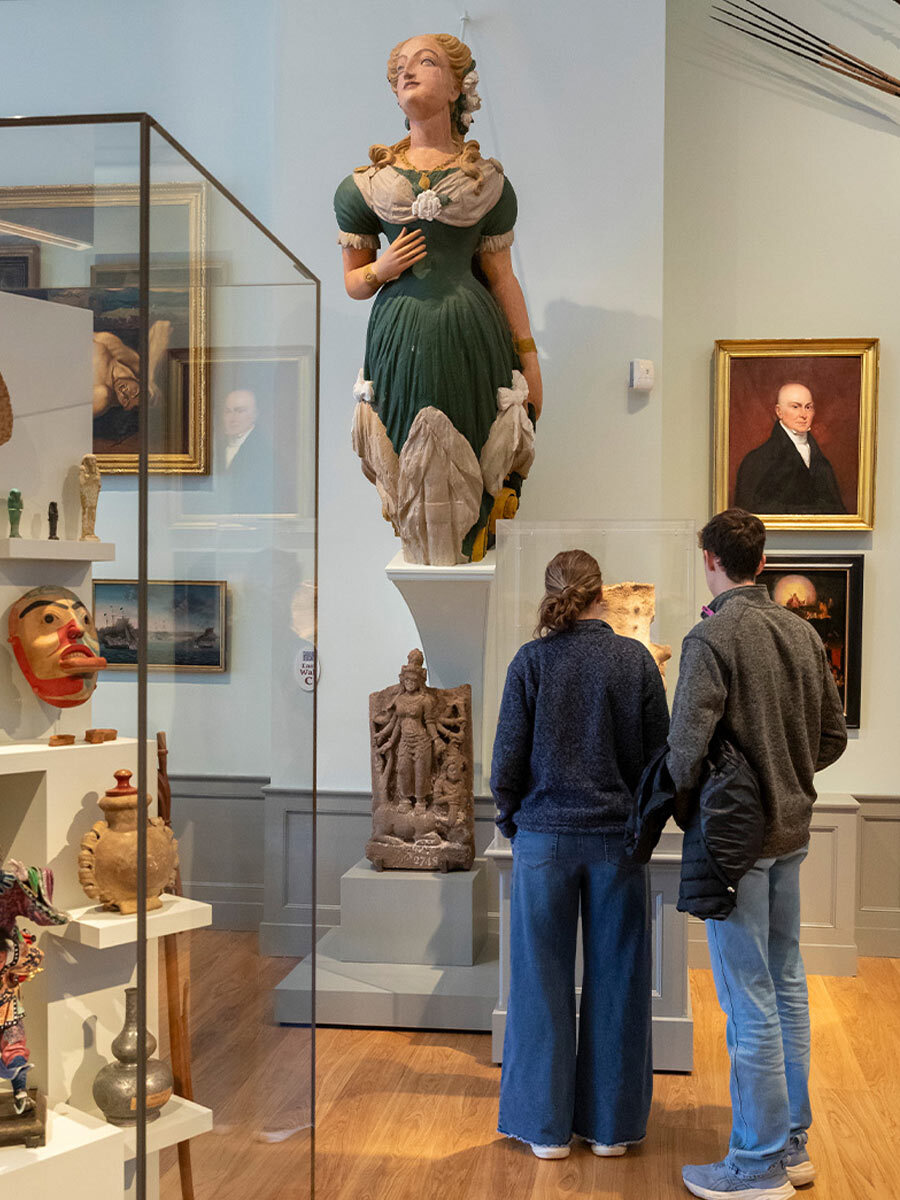
Visitors in East India Marine Hall. Photo by Kathy Tarantola/PEM.
Q: What do you hope people take away from their experience in the hall?
A: We like to call these early museums "cabinets of curiosity." That's a term that relates to the European Kunstkammer, Wunderkammer of the Renaissance era and later. Those collections were really established by nobles or scientists for private contemplation, or for their friends. In America, starting in the 1700s, you started to have an American version of that cabinet pop up. The American Philosophical Society in Philadelphia was formed and collected objects to display to its members. The East India Marine Society created a similar setup, but one that reflected Salem's place in the world as a global port, and mariners' experiences across the globe, of meeting new people, trading with people from different cultures, from different parts of the world. They chose objects that reflected those people and relationships.
You could wander around East India Marine Hall and have a tour from a society member, or use the catalogue and find out basic information about an object. If you went around on your own, it was your path to choose. Today, the gallery is set up with an introductory text that grounds you in the space. There are concept panels that give portions of the story, but it's really up to you to choose your path, and no two paths will be the same. That fostering of curiosity is true to the origins of the institution. The definition of curiosity, in that time period, was really seeking knowledge, or objects that held knowledge or inspiration and creativity. That is the DNA of the institution.
We hope that people will get that sense of voyaging walking around East India Marine Hall, and go into the rest of the museum with that story in their heads. We hope that people will understand, "Oh, this is why PEM has these collections. This is why PEM does the type of exhibitions and programs they do," because it started at the very beginning and that throughline of exploration, of wonder, of fascination, of learning, which began in 1799.
Related posts
Blog
Curator Q+A: Behind the Scenes of East India Marine Hall
8 min read
Blog
PEM members vote on a new card design for 2026
2 min read
PEMcast
PEMcast 42: Circumnavigating the globe in East India Marine Hall
25 min listen
Blog
What two PEM internships taught me about paperwork, preservation and why every detail matters
9 min read