PEM exhibition spotlights the 250th anniversary of American independence
Released April 02, 2026
Pressing Importance: Salem and the Declaration of Independence
On view May 2, 2026 through July 2027
SALEM, MA – The Peabody Essex Museum (PEM) presents Pressing Importance: Salem and the Declaration of Independence, a new exhibition featuring rare and iconic documents from the museum’s Phillips Library collection. Opening May 2, 2026, the exhibition coincides with the 250th anniversary of American independence and Salem 400+ commemorations and offers a rare opportunity to examine the critical role that Salem played in the printing and circulation of the Declaration of Independence.
“While the story of the Declaration’s signing in Philadelphia is widely known, far less familiar is how the document’s revolutionary message reached towns and cities across the colonies in the days that followed,” said Dan Lipcan, the Ann C. Pingree Director of PEM’s Phillips Library and curator of the exhibition. “And Salem had an outsized role in shaping the American story.”
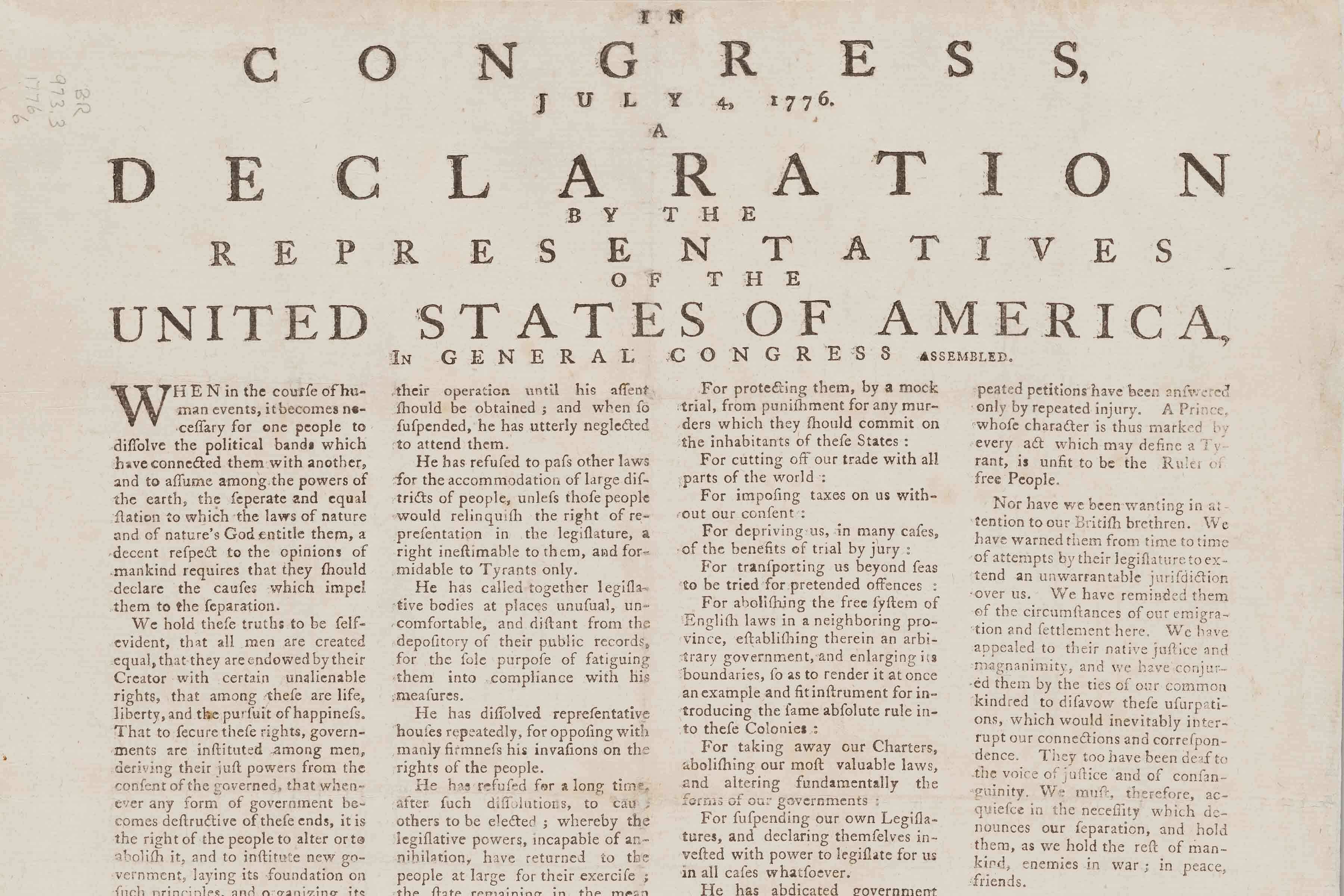
Salem printer Ezekiel Russell published and disseminated the Declaration of Independence at his print shop on Essex Street, just a few doors down from where PEM now stands. In mid-July of 1776 Russell produced one of the earliest broadside editions of the Declaration from his Salem press — an urgent and transformative act that helped inform, mobilize and inspire local citizens at a moment of profound political uncertainty. Through printing, the ideals articulated in the Declaration — freedom, liberty, and equality — were made tangible and accessible, turning a political statement into a shared civic text.
Early letters, newspapers, pamphlets and evocative broadsides reveal the breadth and urgency of Russell’s publishing work and his influence on revolutionary communication. One example is A Bloody Butchery, which commemorates the valor of colonial militiamen who died during the April 1775 Battles of Lexington and Concord.
Originally treated as ephemera, early broadside printings of the Declaration of Independence are now among the rarest surviving documents of the American Revolution. Their extreme sensitivity to light allows only limited display time, making Pressing Importance a particularly special and time-bound opportunity for visitors. Today, fewer than 100 copies survive across a dozen known editions. PEM is proud to steward of three exceptionally rare broadsides, two of which were printed in Salem.
“Broadsides were the most rapid form of communication at the time,” said Lipcan. “Early printings of the Declaration of Independence, like most broadsides, were never intended to last. Produced quickly for immediate public consumption, these documents were tacked to walls, read aloud in town squares and folded into coat pockets.”
Nearly all of the works on view are drawn from PEM’s Phillips Library collection, including two of the earliest surviving broadside editions of the Declaration, Revolutionary-era manuscripts, newspapers, pamphlets and broadsides. Together, these materials explore themes of freedom, communication and civic engagement, inviting visitors to reflect on the power of the printed word to shape history.
Hands-on tactile experiences allow visitors to touch cast metal type and fold take-away pamphlets to better understand the printing process at the time.
The exhibition also includes richly decorative 19th-century interpretations of the Declaration, created during an early revival of interest in the nation’s founding document some 40 years after its adoption. A contemporary 21st-century version by artist Mindy Belloff offers a subtle reimagining of the historic text, inviting reflection on its evolving meaning today and in its statements of equality.
IMAGE CREDITS
United States Continental Congress; John Rogers or Ezekiel Russell, printer. In Congress, July 4, 1776. A Declaration by the Representatives of the United States of America (detail), 1776. Ink on paper. Phillips Library, Peabody Essex Museum. KF4506.U558 1776 +++
SALEM 400+
This exhibition is part of Salem 400+, PEM’s multi-year commemoration of Salem’s layered histories and global impact. PEM is pleased to host a range of activities throughout 2026 that celebrate our storied city. Salem 400+ commemorates the city's quadricentennial while acknowledging the preexisting Indigenous community and explores the opportunities and connections of Salem’s multifaceted history while crafting a vision for current and future generations. PEM is actively participating in a number of ways to honor the lesser-known stories, including special projects, presentations, guided learning opportunities and in-school workshops to discuss identity, build community and collect the stories of today’s youth. Explore and follow along with #Salem400 and find related exhibitions, programs and events at pem.org/salem400.
PUBLICITY IMAGES
High-resolution images are available upon request.
SOCIAL MEDIA
Share your impressions with us on social media using #PressingImportance
SPONSORS
Pressing Importance: Salem and the Declaration of Independence is organized by the Peabody Essex Museum. This exhibition is made possible by Carolyn and Peter S. Lynch and The Lynch Foundation, Katie Huddleson, Karla and Jeff Kaneb, Pamela Newport, Mr. Robert N. Shapiro, Walter C. Meibaum III, Sarah Mcmanaway and Nick Theodorou, and James Rose. We thank Jennifer and Andrew Borggaard, James B. and Mary Lou Hawkes, The Creighton Family, Chip and Susan Robie, Karla and Jeff Kaneb, Timothy T. Hilton, and an anonymous donor as supporters of the Exhibition Innovation Fund. We also recognize the generosity of the East India Marine Associates of the Peabody Essex Museum.
ABOUT THE PHILLIPS LIBRARY
In 1992, the Stephen Phillips Library of the Peabody Museum and the James Duncan Phillips Library of the Essex Institute merged to create the Phillips Library, a unique research institution with deep ties to local, regional, national and international art, culture, history and literature. Its holdings focus on rare books and manuscripts, including logbooks from Salem ships that traveled the world and important collections relating to China, India, Japan and Korea. The library also preserves important documents from the history of Salem, Essex County and the greater United States. Over the years, library collections have featured in and supported PEM exhibitions. Researchers rely on the Phillips Library to write dissertations, scholarly books and articles and popular best-sellers. A series of changing exhibitions share these extraordinary collections to experience a glimpse into the breadth of the library’s holdings and the connections that can be made. The library reading room in Rowley is open to the public.
ABOUT THE PEABODY ESSEX MUSEUM
Founded in 1799, the Peabody Essex Museum (PEM) in Salem, Massachusetts, is the country’s oldest continuously operating museum. PEM provides thought-provoking experiences of the arts, humanities and sciences to celebrate the creative achievements and potential of people across time, place and culture. By connecting people through inquiry, empathy and dialogue, PEM encourages an understanding of our shared humanity and fosters a sense of belonging in a complex, ever-changing world. We build, steward and share our superlative collection, which includes African, American, Asian Export, Chinese, contemporary, Japanese, Korean, maritime, Native American, Oceanic and South Asian art, as well as architecture, fashion and textiles, photography, natural history and one of the nation’s most important museum-based collections of rare books and manuscripts. PEM offers a varied and unique visitor experience, with hands-on creativity zones, interactive opportunities and performance spaces. The museum’s campus, which offers numerous gardens and green spaces, is an accredited arboretum and features more than a dozen noted historic structures, including Yin Yu Tang, a 200-year-old Chinese home that is the only example of Chinese domestic architecture in the United States.
MEDIA CONTACTS
- Kristen Levesque | Exhibition Publicist | kristen_levesque@pem.org | 207-329-3090
- Amelia Kantrovitz | Exhibition Publicist | amelia_kantrovitz@pem.org | 617-794-4964