CONNECTED | Jul 06, 2026
What two PEM internships taught me about paperwork, preservation and why every detail matters
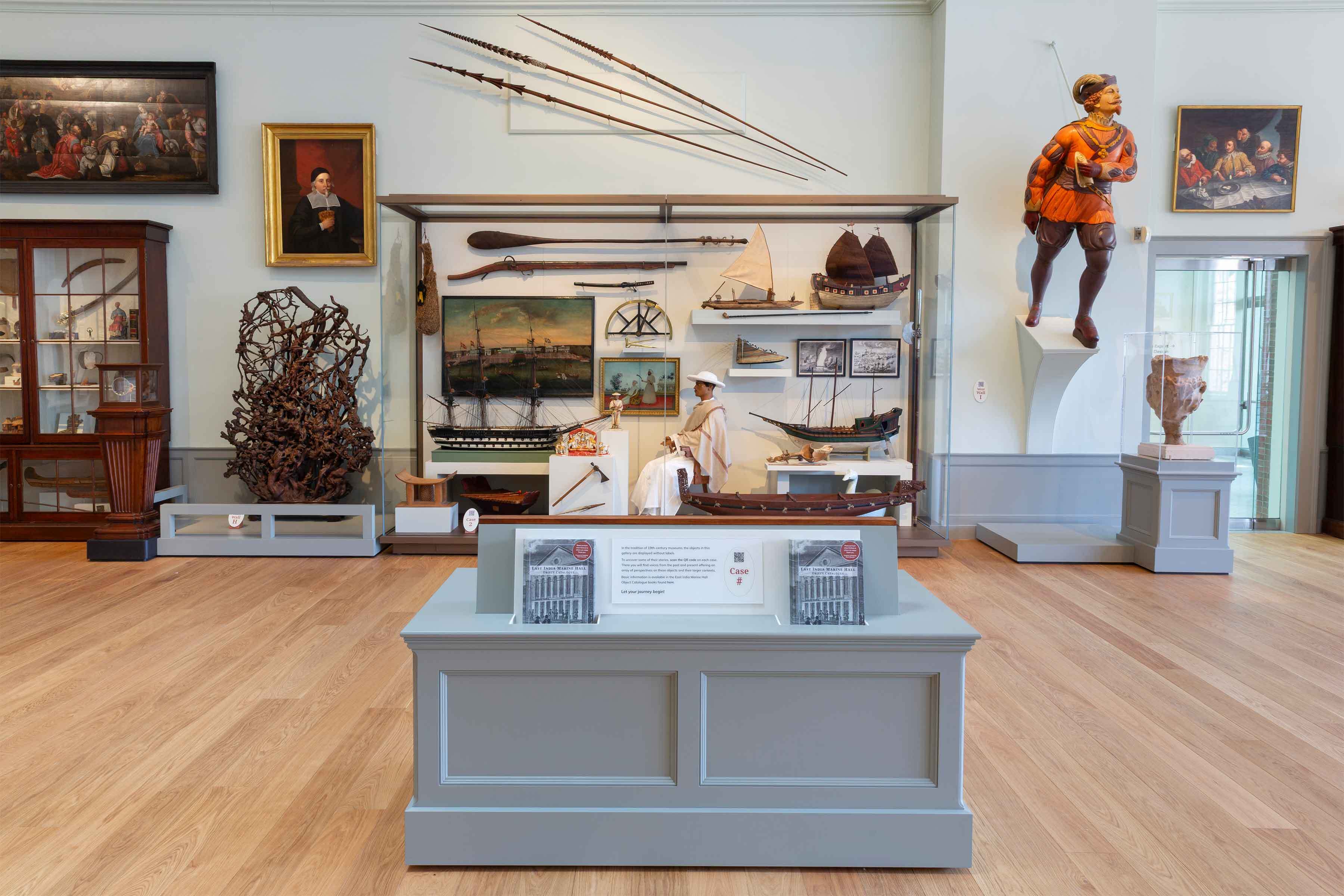
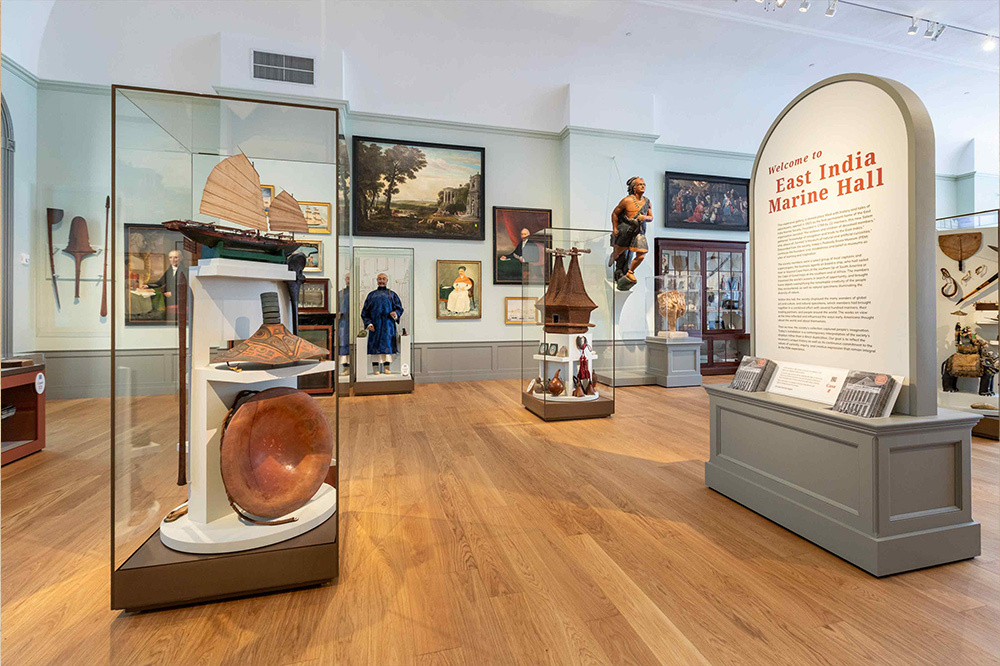
If you’ve visited the new installation of PEM's East India Marine Hall, you may have seen the life-size sculpture of Rajinder Dutt sitting amongst a cabinet of art and objects from around the world. Mr. Dutt was a prominent 19th-century Indian businessman who traded with members of the Salem East India Marine Society. In the 1840s, he had his likeness conjured from clay to be displayed at the museum, illustrating to Salem residents one of the global relationships that helped build the city’s wealth. As a visitor today, you might pause before him, admire his quiet dignity, and move on. But as an intern who first met Mr. Dutt in the conservation lab last summer, and saw him transform from an assemblage of appendages into the dignified figure sitting in East India Marine Hall, I cannot help but smile each time I see him, almost as if we share a secret.
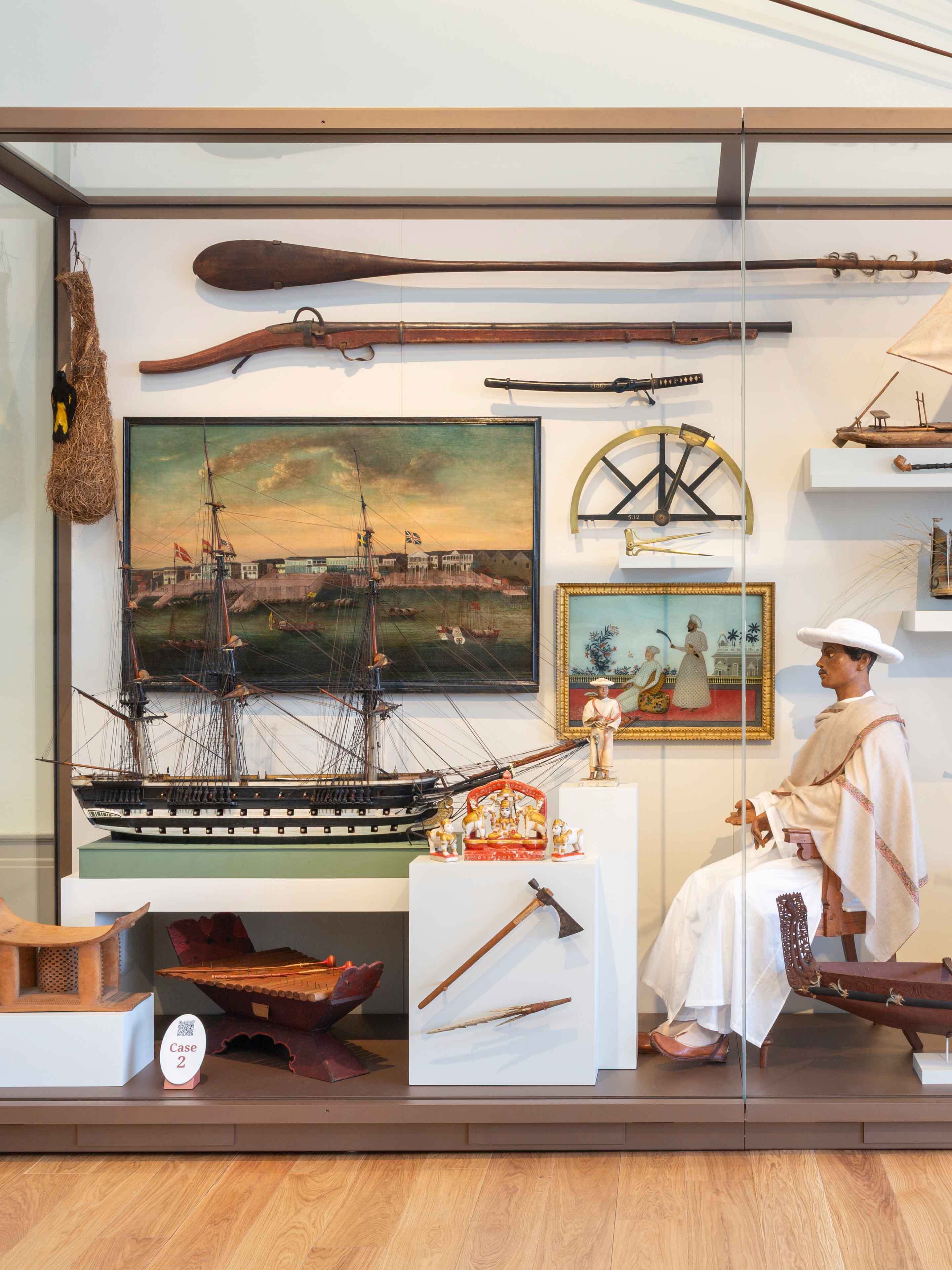
A cabinet in the new installation of East India Marine Hall at PEM. Photo by Kathy Tarantola/PEM.
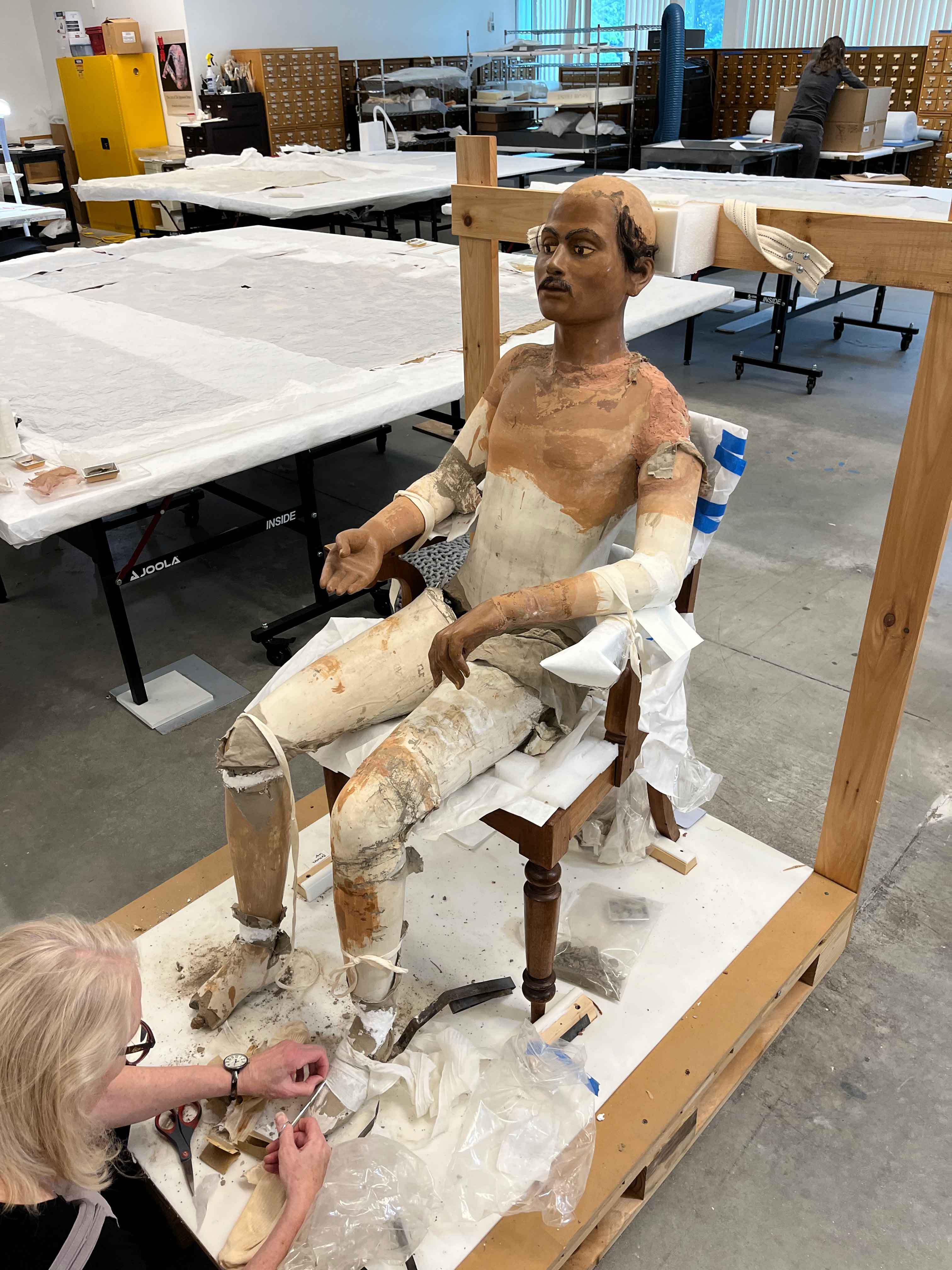
Conservator Mimi Levesque works with the life-size sculpture. Photo by Tristan R. Latham/PEM.
And in some ways, we do. I witnessed the painstaking work of our dedicated conservators, collections staff, registrars, handlers, movers, curators and everyone else involved to restore Mr. Dutt to his proper status in a museum installation. Even though my own work only briefly involved him, Mr. Dutt’s physical transformation mirrored the mental process I undertook during my time interning at PEM, evolving from an indeterminate set of historiographical pieces, to a proud structure grounded in worldly experience.
As a dual-degree master’s student in Archives Management and History at Simmons University, I arrived at PEM eagerly wanting to work at a museum. But the world that opened up to me here is deeper, more complex and more rewarding than I had ever imagined. I was lucky to complete two back-to-back internships here: first in Collections Registration from June to August 2025, and then as a Manuscripts Intern in the Phillips Library from September 2025 through April 2026. During my time, I was exposed to the daily work of registrars and archivists at the James B. and Mary Lou Hawkes Collections Center, where most of the museum collections and the Phillips Library are housed. This impressively deep repository of regional and worldwide aesthetic and intellectual material set the stage for me to build skills across a wide range of historical formats — skills I had gone over in the classroom, but now had to practice with real-world stakes.
Last summer, Collections and Registration introduced me to the intellectual infrastructure behind the PEM collection. A careful trail of paperwork documents every object a museum acquires; PEM has acquisition records that date back to 1799. Now, they are also supported by metadata recorded in a digital collections management system. I got to work on both of these parts of the documentation process, along with condition reports — a key benchmark for documenting an object’s physical state at the time of accession, so it can be compared to previous and future condition records from the same or other institutions.
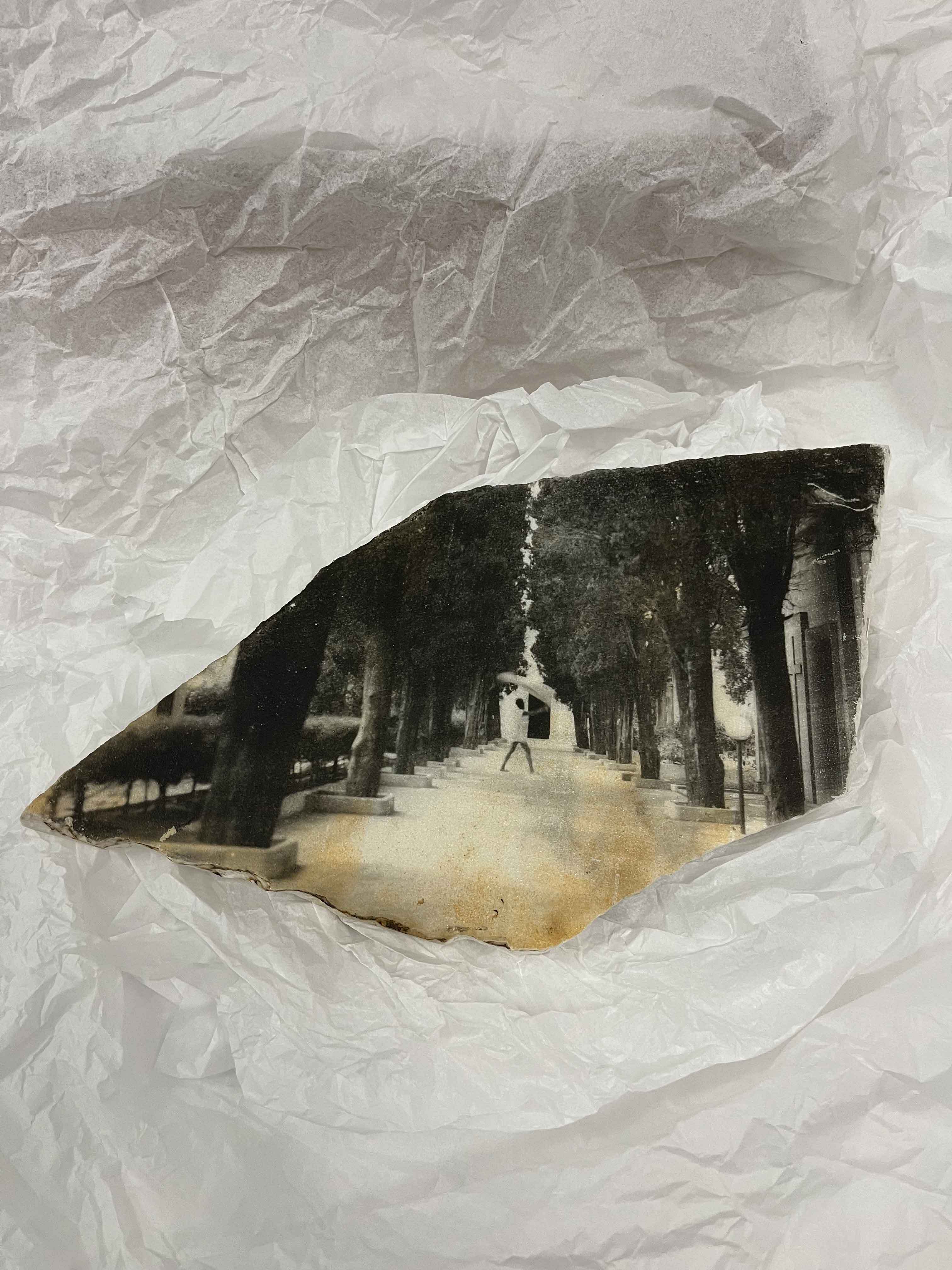
Gisela Torres, Conjure No. 3, 2020. Marble and paper. Museum purchase. 2025.19.1. © Gisela Torres. Peabody Essex Museum. Image courtesy of the artist.
One of those first condition reports was for an object titled Looking for Edmonia (Self-Portrait), by Gisela Torres. This black-and-white photograph, printed on a chunk of Carrara marble, was featured in Edmonia Lewis: Said in Stone. I feel proud to have been among the first people to carefully document this object at PEM and complete the steps to accept it into the collection. Standing in front of that work today, I remember how cool it felt through my glove, how it was thinner than I expected given its weight. Torres created the piece as an ongoing act of reclamation for Lewis, an artist-ancestor she came to realize was buried near her own London neighborhood. An object about a journey in memory feels appropriate as a symbol of my time as an intern, getting to see the full process from accession into the collection to exhibition in the galleries.
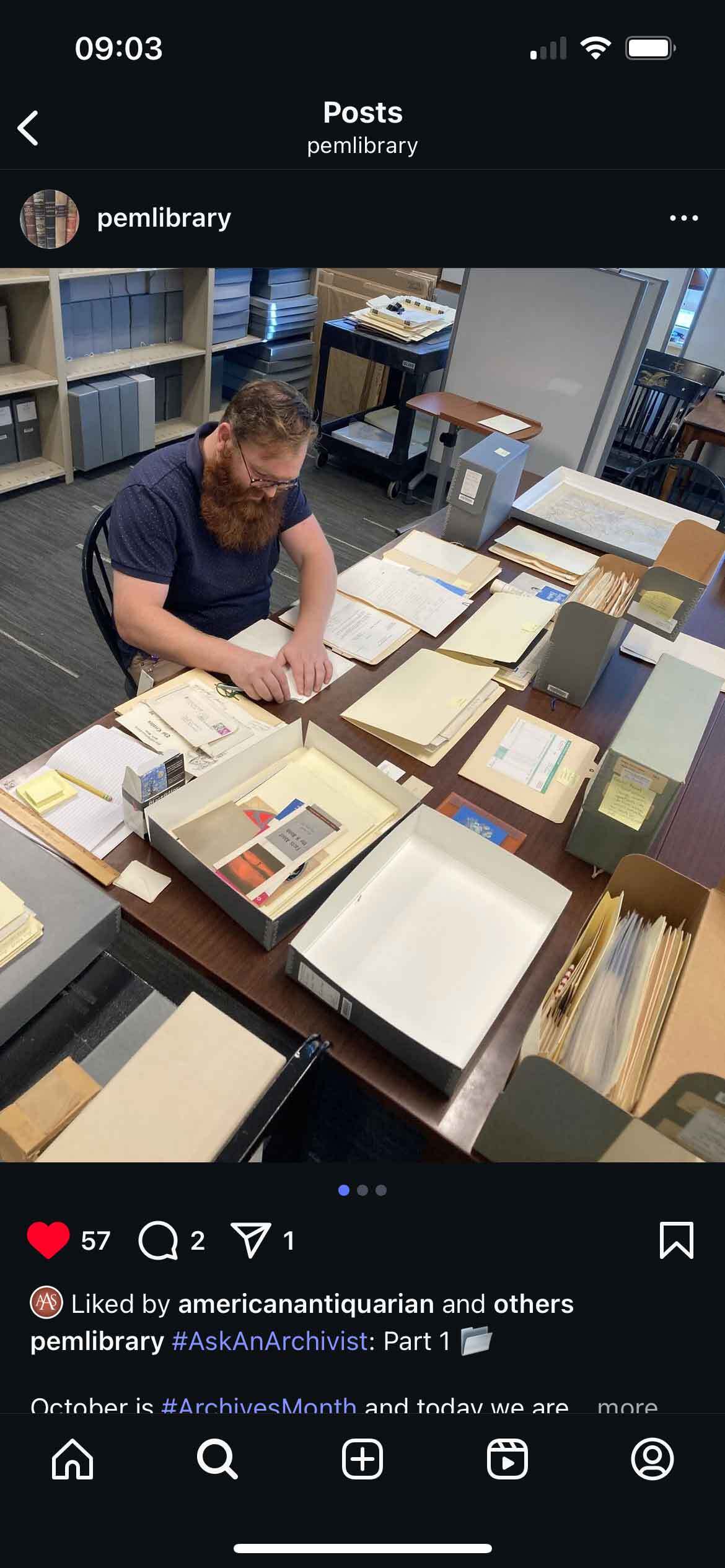
When I transitioned to the Phillips Library last fall, my work shifted from objects to manuscripts. Processing archival collections means rehousing fragile materials in acid-free sleeves, folders and boxes; physically and intellectually organizing them; and creating finding aids and catalogue records that allow curators and researchers to know what exists and where to find it.
Over seven months, I processed 12 collections: a 12-box personal papers collection for which I wrote a complete folder-level finding aid, plus 11 smaller collections whose catalogue records I input into the Phillips Library’s online catalogue. The moment a record goes live is quiet but meaningful. Now, anyone with internet access can discover our unique materials!
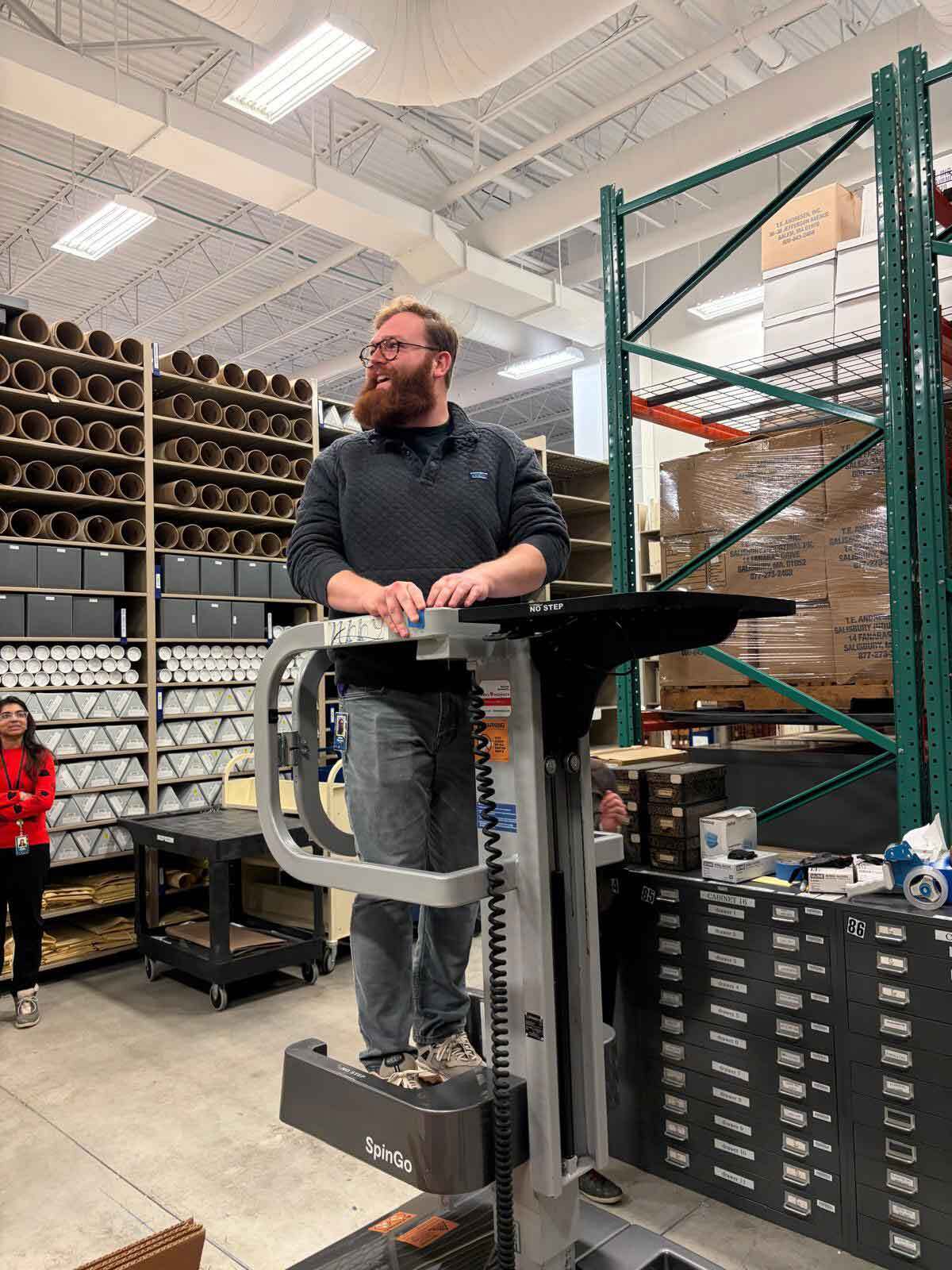
An important skill for archival work is handling a range of formats coming from various storage conditions. At PEM, I also gained valuable experience identifying preservation concerns. My supervisor took me on one memorable field trip to the library’s freezer to treat materials affected by “vinegar syndrome” (a form of natural chemical deterioration in acetate film) by moving them to cold storage to slow deterioration.
Some of the most meaningful work I did happened at the level of a single subject heading. These headings distill what each collection resource is about into a quick and accurate guide to its contents: names, places, time periods and topical categories. I was fortunate to learn this process for manuscript collections and art books entering the library using the Indigenous Peoples Subject Headings Crosswalk for related materials. This continuously growing resource, built collaboratively by PEM’s Native American Fellows and the Phillips Library’s technical staff, correlates outdated and harmful terminology used by many older materials with language that reflects how communities describe themselves. Here, an accurate, respectful description is not just a technicality, but a valuable way we can demonstrate how PEM is genuinely committed to the communities whose materials we care for. The value of both the Crosswalk itself and the human-centered principle on which it is built will stay in my mind at every institution I work for in the future.
One of the things I most want future interns to know is that some of the richest learning at PEM happens not at your desk, but alongside your peers.
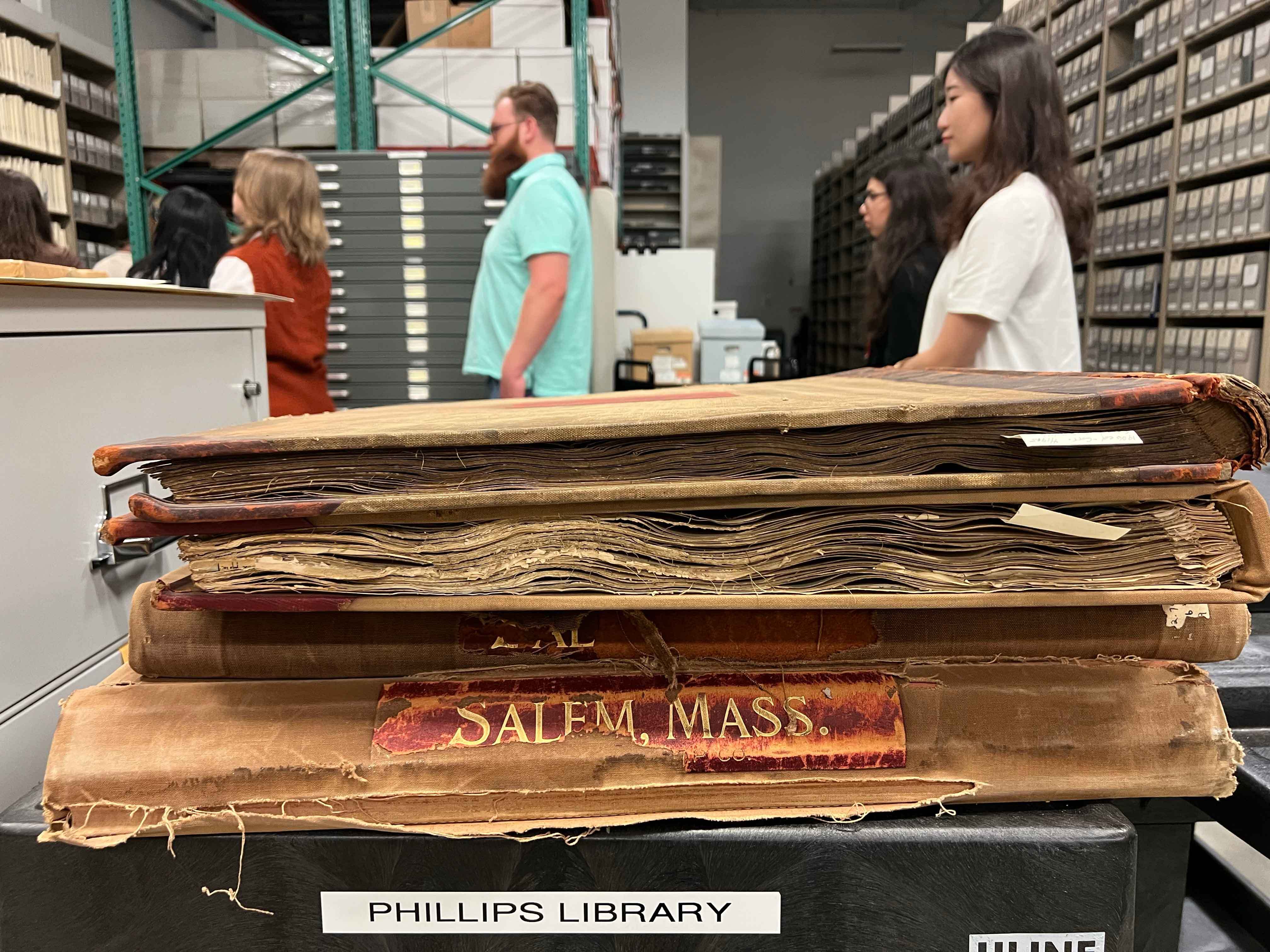
Gallery tours with my fellow interns were among the highlights of my entire experience. We were fortunate to experience the pinnacle of private tours: passionate and intelligent curators leading us through the exhibitions they had spent years developing. George Schwartz led our group through East India Marine Hall, and the experience of moving through that historic space with someone who could illuminate the exponentially layered history embedded in every object (especially after reading his fantastic book, Collecting the Globe) transformed how I understood the foundations of PEM. Jeffrey Richmond-Moll led us through Edmonia Lewis: Said in Stone, the exhibition I had a small, personal connection to from my condition report the summer before. Hearing Jeff speak about Lewis’ life, her decades of underrecognition and the collaborative scholarship that brought the exhibition to life made the background work of archives and collections registration feel like a direct and vital contribution to how stories like Lewis’ get told (or don’t). Finally, Chief Curator Petra Slinkard made time to walk my cohort of interns through the dazzling presentation of Andrew Gn: Fashioning the World, a 30-year retrospective of a designer who now has a lasting relationship with the museum. Being able to engage thoughtfully with these exceptionally impressive museum professionals was an invaluable experience that crystallized those three exhibitions in my mind as a blueprint for work I will continue to pursue in my own career. These tours were reminders that PEM is not just a place to gain technical skills: It is a place to think carefully about what collections are for, who they serve, and who has historically been left out.
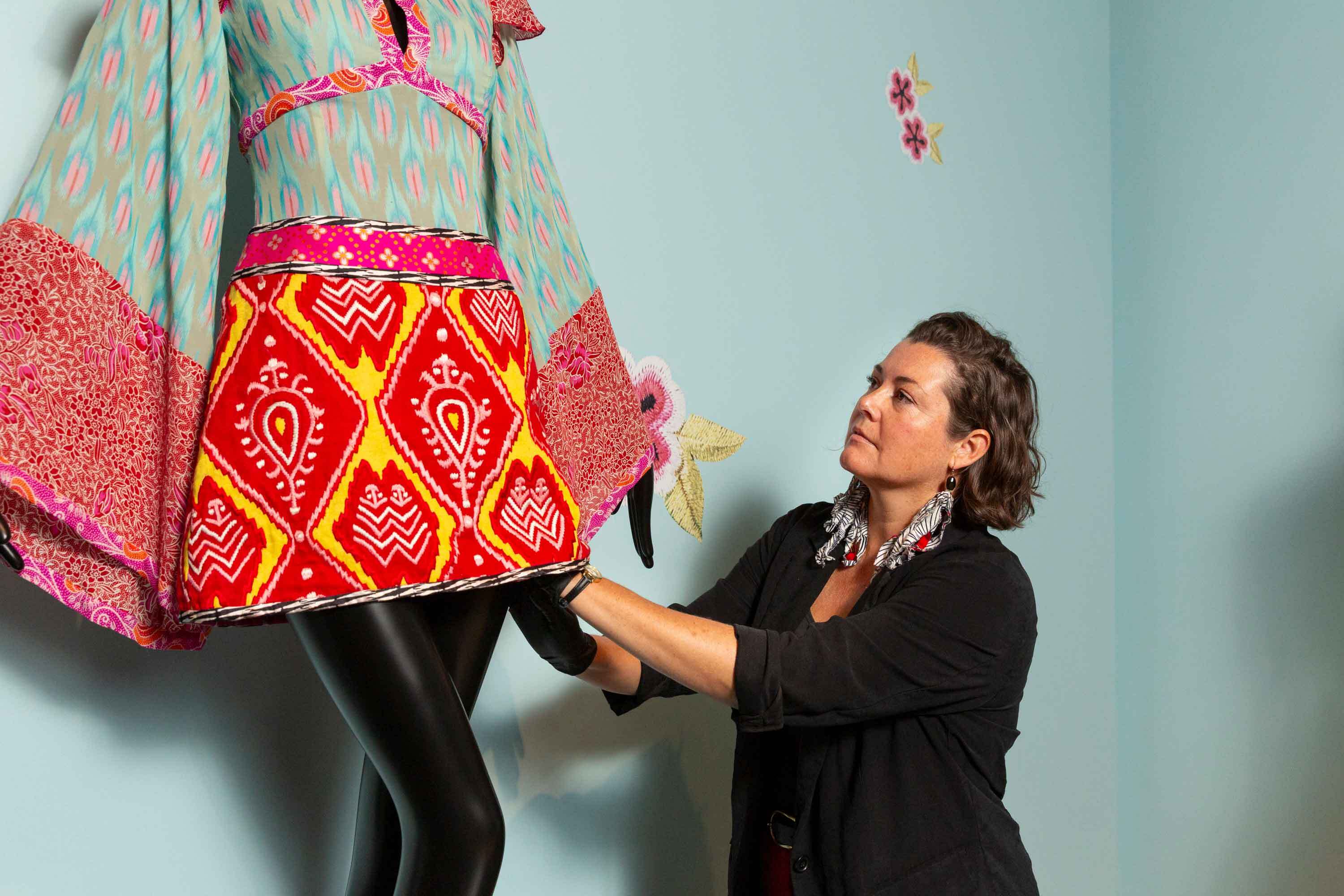
In the gallery of Andrew Gn: Fashioning the World with Petra Slinkard, PEM’s James B. and Mary Lou Hawkes Chief Curator and The Nancy B. Putnam Curator of Fashion and Textiles. Photo by Kathy Tarantola/PEM.
One final piece of advice for the interns who follow me: pay attention to the little things, and keep your mind open for learning in ways you do not expect. The condition report you work on might become the centerpiece of a major exhibition, so your question that might seem silly actually makes a huge difference. The conversation with coworkers might seem trivial, but it will provide you with incredibly helpful career path options you never even knew were possible.
PEM gave me technical fluency that I will use for the rest of my career, but more than that, it gave me a conviction, grounded in experience, about why museum work matters: what gets described, preserved and made findable, frames what future visitors are able to learn and interact with. Especially in our current moment in history, our collective role in amplifying marginalized voices is more important than ever.
To the staff at the Phillips Library, the Registration Department, Learning and Community Engagement, and everyone else I came in contact with during this incredible internship experience: thank you for letting me be part of it. You have graced me with skills, knowledge and passion I will carry with me for the rest of my life.
Interested in gaining hands-on experience at PEM? Applications for our Fall 2026 internship program are open! Join a dynamic museum community and explore opportunities across a wide range of departments, including Collections Management, Manuscripts Processing, Digital Projects, the Art & Nature Center and more. Whether you're passionate about art, culture, nature or museum operations, there's an opportunity to learn, contribute and grow at PEM.
Applications will be open from mid-June through July 19.
Keep Exploring
Blog
Talking about typography in new library exhibition Pressing Importance
9 min read
min read
PEMcast 42: Circumnavigating the Globe in East India Marine Hall
25 min listen
Blog
Ongoing effort seeks to identify and correct harmful terms in PEM’s library catalog
5 min read

Blog
Behind the scenes of caring for PEM’s Pacific barkcloth collection
5 min read